Group · Fats & oils
Sunflower oil
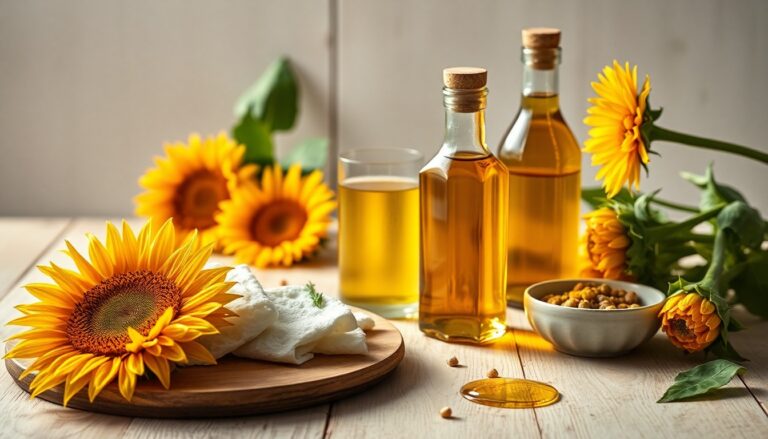
Sunflower oil is one of the most common vegetable oils in our kitchens. Pressed from sunflower seeds, it comes in a refined version, neutral in taste, and a virgin version, which is more fragrant. With 885 kcal and 100 g of fat per 100 g, it is a 100% fat product, with no protein, carbohydrate or fibre. Rich in polyunsaturated fatty acids (especially omega-6) and vitamin E, it provides fats the body can use. Versatile and affordable, it has a place in a balanced diet as long as it is eaten in moderation and alongside other oils with different profiles.
Macronutrient breakdown
Nutrition table per 100 g
| Calories | 900 kcal |
| Kilojoules | 3700 kJ |
| Protein | 0,3 g |
| Fat | 100 g |
Micronutrients per 100 g
All measured nutrients, ranked by share of the daily reference intake.
- Omega-6 LA56,3 g563 %
- Vitamin E57,3 mg478 %
- Total omega-30,07 g3 %
- Omega-3 ALA0,05 g3 %
- Vitamin A0,21 µg0 %
Anses Ciqual 2025. Source: Anses, 2025, Ciqual food composition table
Tips
In practice, sunflower oil can be used cold (vinaigrettes, homemade mayonnaise, marinades) as well as hot. The refined version stands up well to heat, so it suits frying pans and even the occasional deep-fry. The virgin version, which is more delicate, is better kept for dressing. To preserve its qualities, opt for gentle cooking whenever possible and avoid overheating it to its smoke point.
Nutritionally, sunflower oil is rich in vitamin E, a natural antioxidant, and in polyunsaturated fatty acids, in particular linoleic acid (omega-6). To balance your omega-6 / omega-3 ratio, remember to alternate with oils richer in omega-3, such as rapeseed oil or linseed oil. You can find all the options in the fats and oils family.
- Portion guide: one tablespoon (about 10 g) provides nearly 90 kcal. Measure rather than pouring by eye.
- Storage: away from light and heat, with the cap tightly closed, to limit rancidity.
- Pairings: ideal with raw vegetables, steamed vegetables or to lighten a vinaigrette flavoured with olive oil.
For active people, good-quality fats contribute to overall energy intake and to the absorption of fat-soluble vitamins. A drizzle of sunflower oil on your vegetables or starchy foods rounds off a meal well, without replacing the protein sources that are essential for recovery. During a bulking phase, oils make it easy to raise the calorie density of meals; during a cutting phase, they are measured more precisely.
Be careful with energy density, though: at 900 kcal per 100 g, sunflower oil is very high in calories, like all oils. If you are trying to lose weight or follow a balanced diet, quantity makes all the difference: use measured spoonfuls, vary your oils and pair it all with a diet rich in vegetables and minimally processed foods. Used well, sunflower oil is a simple, tasty everyday ally.