Group · Vegetables
Mixed vegetables (frozen)
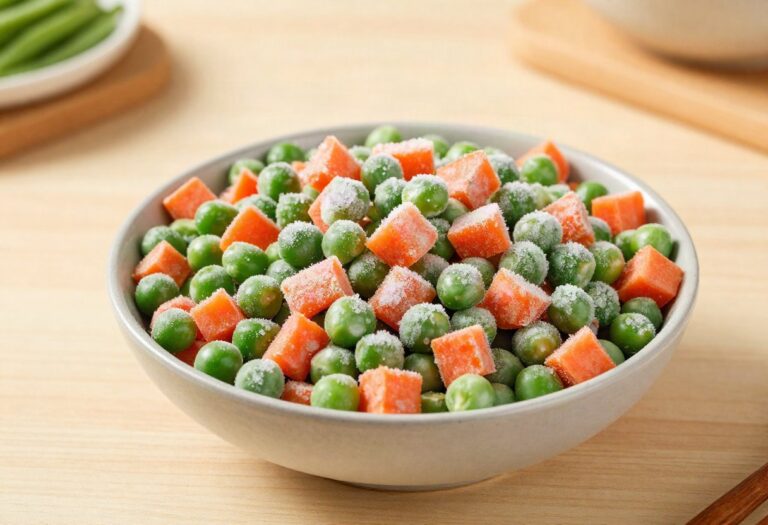
Frozen mixed vegetables are a practical blend of vegetables cut into small dice, usually made up of carrots, peas, green beans, turnips and sometimes sweetcorn. Frozen just after harvest, they keep a good share of their nutritional qualities while being available all year round. At around 62.4 kcal per 100 g, they stay low in calories and provide fibre (6 g), a little plant protein (4 g) and carbohydrate (7.5 g) with very little fat. They are a smart way to slip several vegetables onto a plate easily, save time in the kitchen and vary colours and textures in a balanced diet, without hurting your food budget.
Macronutrient breakdown
Nutrition table per 100 g
| Calories | 62 kcal |
| Kilojoules | 262 kJ |
| Protein | 4 g |
| Carbohydrate | 7,5 g |
| Fat | 0,5 g |
| Fibre | 6 g |
Tips
Frozen mixed vegetables are ready in a few minutes: steamed, in boiling salted water, pan-fried or straight in the microwave. To best preserve vitamins (especially vitamin C and folate) and minerals, favour gentle, short cooking, just long enough for the dice to be tender but still slightly crunchy. There is no need to defrost first: you can tip them straight into a hot pan.
On nutrition facts, this blend combines the beta-carotene richness of carrot, the fibre and protein of peas, and the lightness of green beans. A portion of 150 to 200 g is an excellent share of vegetables in a meal. Think about pairings: add them to a soup, egg-fried rice, an omelette, a light gratin or a warm mixed salad. A drizzle of olive oil and a few herbs are enough to lift the whole dish.
- Storage: keep the bag tightly closed in the freezer and never refreeze a product that has been defrosted.
- Slimming: their low energy density and fibre content promote fullness, ideal for filling the plate without overloading on calories. Just watch out for fatty sauces added on top.
- Sodium: plain versions are a better choice than tinned mixed vegetables, which are often saltier.
For active people, mixed vegetables provide complex carbohydrate and fibre that help replenish stores after exercise, while accompanying a source of protein (egg, fish, poultry). Combined with extra green beans or carrots, they easily complete a recovery plate. Their moderate glycaemic index makes them a good ally of balanced meals.
You can include them without hesitation in a balanced diet approach or in batch cooking, as they keep for a long time and suit many recipes. To discover other options, explore the whole vegetable family and vary the colours on your plate. In short, frozen mixed vegetables are a nutritious, economical and versatile standby, perfect for eating more vegetables every day without hassle.