Group · Vegetables
Raw sweetcorn
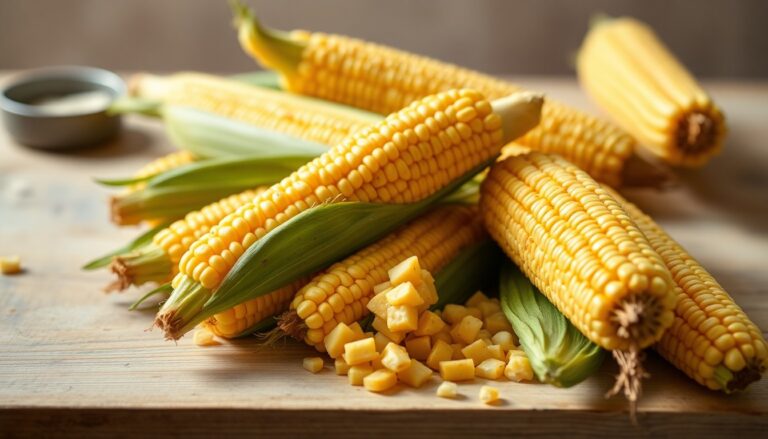
Raw sweetcorn is a golden kernel with a sweet flavour, classed as a vegetable but very rich in carbohydrate, which also makes it similar to starchy foods. Harvested on the cob in summer and early autumn, it comes in several varieties: sweetcorn, popping corn (for popcorn) and coloured corn. With around 105 kcal per 100 g, it provides energising carbohydrate, plant protein, a little fibre and a small amount of fat. Versatile and tasty, sweetcorn easily fits into a balanced diet, as long as you take its energy density into account. It is popular with families, active people and anyone who likes to vary their carbohydrate sources.
Macronutrient breakdown
Nutrition table per 100 g
| Calories | 105 kcal |
| Kilojoules | 444 kJ |
| Protein | 3,3 g |
| Carbohydrate | 19,8 g |
| Fat | 0,8 g |
| Fibre | 2,8 g |
Micronutrients per 100 g
All measured nutrients, ranked by share of the daily reference intake.
- Potassium294 mg15 %
- Vitamin B60,18 mg13 %
- Phosphorus87 mg12 %
- Vitamin B31,68 mg11 %
- Vitamin B10,1 mg9 %
- Vitamin C7,2 mg9 %
- Magnesium32 mg9 %
- Manganese0,16 mg8 %
- Vitamin B9dietary folate equivalents40 µg
See the other 9 nutrients
- Zinc0,7 mg7 %
- Vitamin B20,09 mg6 %
- Copper0,05 mg5 %
- Iron0,68 mg5 %
- Vitamin B50,29 mg5 %
- Vitamin E0,09 mg1 %
- Vitamin A5,08 µg1 %
- Vitamin K10,4 µg1 %
- Calcium4 mg1 %
Anses Ciqual 2025. Source: Anses, 2025, Ciqual food composition table
Tips
Raw sweetcorn lends itself to many preparations. Fresh, it can be enjoyed grilled or boiled on the cob, simply seasoned with a little fat and herbs. You can also strip the cobs and add the kernels to mixed salads, vegetable stir-fries or soups. To preserve its nutrition as well as possible, choose gentle, short cooking rather than long boiling.
- Recommended portion: half a cob to a whole cob (around 80 to 150 g of kernels) is enough, as sweetcorn is more calorific than most green vegetables.
- Storage: eat it soon after buying, as the kernels quickly lose their natural sugar. You can also freeze it once shucked.
- Pairings: it goes well with peppers, tomatoes or beans for colourful, filling dishes.
Nutritionally, sweetcorn provides carbohydrate (around 19.8 g per 100 g), plant protein, fibre and micronutrients such as some B vitamins and the carotenoid antioxidants responsible for its colour. Its glycaemic index is moderate to high depending on the cooking and the ripeness of the kernel, so it is worth combining it with fibre and protein to slow the absorption of sugars.
Tips for active people: thanks to its carbohydrate content, sweetcorn is a good source of energy for refilling glycogen stores. You can include it in a meal before prolonged effort, or after training in a complete dish combining starchy foods, protein and vegetables. For recovery, combine it with a portion of chicken or legumes, for example, to optimise your amino acid intake. If you are looking for more protein ideas, discover our protein snack recipes.
Weight control: because it is more calorie-dense than green vegetables, sweetcorn should be enjoyed in moderation if you are trying to lose weight. Count it as a source of carbohydrate rather than a simple side vegetable, and limit very sweet versions or those in sauce. To lighten your plates, alternate with low-calorie vegetables such as courgette or cucumber. Also explore the whole vegetable family to add variety and put together balanced meals through the seasons.