Group · Fruit
Mirabelle
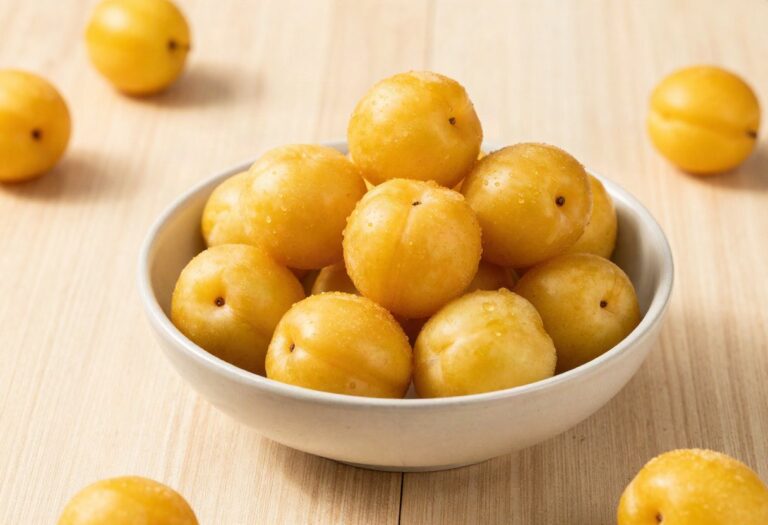
Small, round and golden, the mirabelle is a variety of plum renowned for its sweet, fragrant flesh. Native mainly to Lorraine, it is harvested over a short period, generally between the end of August and the beginning of September, which makes it a much-awaited summer fruit. With around 74.6 kcal per 100 g, it remains light and naturally has its place in a balanced diet. Its yellow-orange colour signals its richness in simple carbohydrates, water and fibre. Eaten fresh, in a tart, as jam or as a compote, the mirabelle wins people over with its sweetness while providing useful vitamins and minerals every day.
Macronutrient breakdown
Nutrition table per 100 g
| Calories | 75 kcal |
| Kilojoules | 315 kJ |
| Protein | 0,7 g |
| Carbohydrate | 18 g |
| Fat | 0,2 g |
| Fibre | 2,2 g |
Micronutrients per 100 g
All measured nutrients, ranked by share of the daily reference intake.
- Vitamin E1,52 mg13 %
- Potassium240 mg12 %
- Copper0,08 mg8 %
- Vitamin C5,29 mg7 %
- Vitamin B60,07 mg5 %
- Vitamin B50,27 mg5 %
- Vitamin A28,8 µg4 %
- Manganese0,07 mg4 %
- Vitamin B9dietary folate equivalents12,5 µg
See the other 8 nutrients
- Phosphorus21 mg3 %
- Vitamin K11,82 µg2 %
- Magnesium8,2 mg2 %
- Calcium11 mg1 %
- Total omega-30,03 g1 %
- Zinc0,11 mg1 %
- Vitamin B20,02 mg1 %
- Iron0,13 mg1 %
Anses Ciqual 2025. Source: Anses, 2025, Ciqual food composition table
Tips
The mirabelle is ideally enjoyed fully ripe, when its skin becomes tender and slightly speckled. A portion of about 120 to 150 g, or a small handful, is enough for a treat while keeping an eye on your intake. Rinse it gently just before eating and keep it for a few days at room temperature, or a little longer in the fridge to slow down ripening.
In terms of nutrition facts, the mirabelle has about 18 g of carbohydrate, 2.2 g of fibre and only 0.2 g of fat per 100 g. Its fibre contributes to digestive comfort and fullness, while its water content makes it a refreshing fruit. It provides carotenoids responsible for its lovely golden shade, as well as vitamin C and potassium. Its moderate glycaemic index makes it a good snack, especially eaten whole rather than as juice or jam, where the sugar is concentrated.
- In the kitchen: clafoutis, tarts, jams, compotes, or simply raw as an afternoon snack.
- Pairings: a plain yoghurt, a few almonds or a handful of oat flakes for a balanced snack.
- Storage: freeze it stoned to enjoy its benefits out of season.
For active people, the mirabelle is a source of easily absorbed natural carbohydrates, ideal as a snack before moderate exercise or to kick-start recovery after a session. Pair it with a source of protein, such as fromage blanc, to optimise muscle recovery. If you are looking for tasty ideas, take a look at these high-protein snack recipes that go well with seasonal fruit.
If you are watching your weight, favour fresh mirabelles: candied or syrup versions see their energy density rise sharply because of the added sugar. Like the plum it is close to, or the delicate greengage, it remains a moderately sweet fruit to include without overdoing it. Vary your treats by exploring other treasures in the fruit family, and compare the calories in foods to adjust your portions to your goals. By eating the mirabelle whole and in season, you get the full benefit of its freshness, fibre and natural sweetness.