Group · Bread
Pumpernickel bread
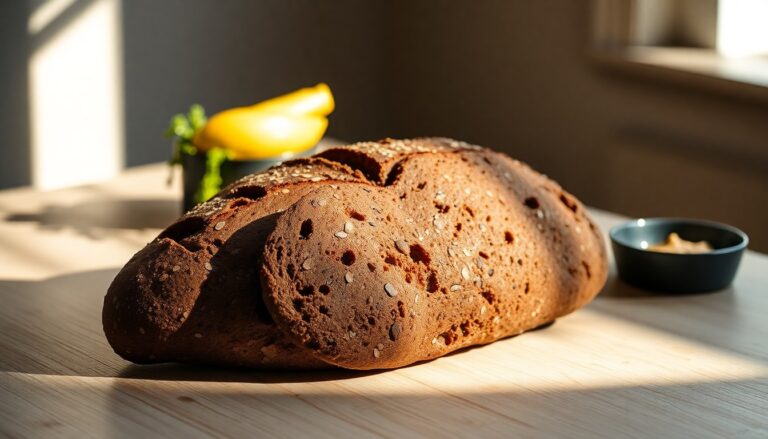
Pumpernickel bread is a dark bread of German origin, traditionally made from wholegrain rye flour and whole rye grains. Its dark colour, dense texture and slightly tangy flavour come from long, slow baking at a low temperature, sometimes for many hours. It is a rustic, fibre-rich bread that stands apart from ordinary white breads thanks to its nutritional density. Per 100 g, it provides around 250 kcal, 9.06 g of protein, 51.5 g of carbohydrate, 1 g of fat and 4.5 g of fibre. Its profile makes it a useful ally in a balanced diet, valued for how filling it is and its generally moderate glycaemic index.
Macronutrient breakdown
Nutrition table per 100 g
| Calories | 260 kcal |
| Kilojoules | 1100 kJ |
| Protein | 9,1 g |
| Carbohydrate | 51,5 g |
| Fat | 1 g |
| Fibre | 4,5 g |
Micronutrients per 100 g
All measured nutrients, ranked by share of the daily reference intake.
- Manganese0,74 mg37 %
- Vitamin B949,3 µg25 %
- Phosphorus110 mg16 %
- Copper0,14 mg14 %
- Vitamin B10,11 mg10 %
- Zinc0,86 mg9 %
- Iron1,2 mg9 %
- Potassium170 mg9 %
See the other 9 nutrients
- Vitamin B50,44 mg7 %
- Magnesium27 mg7 %
- Calcium33 mg4 %
- Omega-6 LA0,3 g3 %
- Vitamin E0,26 mg2 %
- Total omega-30,05 g2 %
- Vitamin B30,28 mg2 %
- Omega-3 ALA0,03 g1 %
- Vitamin A0,21 µg0 %
Anses Ciqual 2025. Source: Anses, 2025, Ciqual food composition table
Tips
Pumpernickel bread is best enjoyed in thin slices, as its compact texture is very filling. One or two slices are enough at breakfast or lunch. Its strong flavour goes wonderfully with savoury toppings such as smoked salmon, fresh cheese, avocado, hummus or a thin layer of butter. You can also serve it as a nibble with drinks, cut into small squares with toppings, or alongside a soup.
Nutrition facts and benefits: thanks to the wholegrain rye, this bread is a good source of fibre (4.5 g per 100 g), which supports fullness and regular digestion. Its glycaemic index is lower than that of white breads, so energy is released more gradually. It also provides minerals such as magnesium, iron and potassium, as well as B vitamins.
- Calories: 260 kcal per 100 g, to compare with other breads using the food calorie table.
- Storage: its density means it keeps well for several days, wrapped in a clean cloth or an airtight package.
- Serving: enjoy it as it is or lightly toasted to bring out its aromas.
For active people: pumpernickel is an excellent source of complex carbohydrates to replenish glycogen stores. Eaten a few hours before exercise, it provides lasting energy. For recovery, pair it with a source of protein such as an egg, chicken breast or fresh cheese for a complete meal. For a snack, also consider varying things with some protein snack ideas that complement your carbohydrate intake well.
Weight control: although filling, this bread is still fairly high in calories. It is better to keep portions in check, and especially the toppings, which often push up the calorie count. Choose light accompaniments and avoid fatty cold cuts. If you are trying to lose weight, it fits well into a sensible balanced diet.
If you enjoy tasty wholegrain breads, also try rye bread or wholemeal bread, and discover the full range of the bread family to vary your meals while keeping a good nutritional profile.