Group · Seafood
Clam
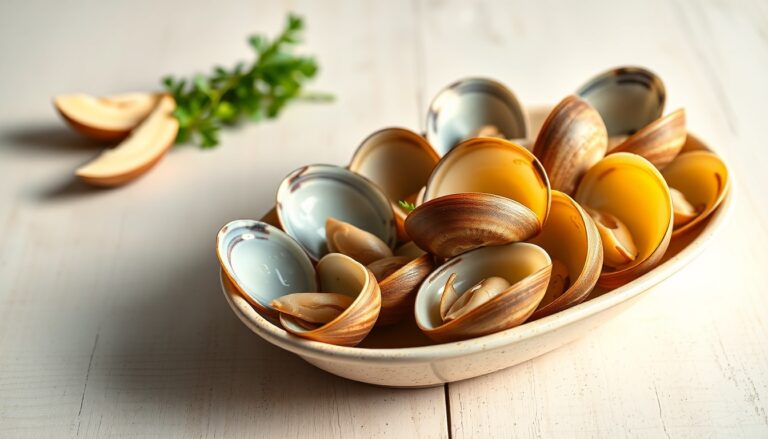
The clam is a bivalve shellfish prized for its tender flesh and delicate, iodine-rich taste. It comes in several varieties, such as the grey clam, the Manila clam or the praire, sold fresh in the shell, frozen or tinned. A star of seafood platters, it is eaten raw, cooked or added to many dishes. Nutritionally, the clam is an interesting ally: with only 99.2 kcal per 100 g, it provides nearly 16.2 g of protein for very little fat. It is therefore a source of lean protein rich in sea flavours, which easily fits into a balanced, light diet.
Macronutrient breakdown
Nutrition table per 100 g
| Calories | 99 kcal |
| Kilojoules | 420 kJ |
| Protein | 16,2 g |
| Carbohydrate | 5,4 g |
| Fat | 1,5 g |
Micronutrients per 100 g
All measured nutrients, ranked by share of the daily reference intake.
- Vitamin B1239,5 µg1580 %
- Selenium51,8 µg94 %
- Iron9,67 mg69 %
- EPA0,16 g64 %
- DHA0,14 g56 %
- Iodine80 µg53 %
- Copper0,5 mg50 %
- Manganese0,75 mg38 %
See the other 14 nutrients
- Phosphorus231 mg33 %
- Vitamin C22,1 mg28 %
- Potassium432 mg22 %
- Vitamin B20,29 mg21 %
- Zinc2,05 mg21 %
- Vitamin B32,03 mg13 %
- Total omega-30,3 g12 %
- Vitamin A81 µg10 %
- Vitamin B920,1 µg10 %
- Vitamin B10,11 mg10 %
- Vitamin B60,13 mg9 %
- Calcium72,5 mg9 %
- Vitamin B50,47 mg8 %
- Magnesium12,9 mg3 %
Anses Ciqual 2025. Source: Anses, 2025, Ciqual food composition table
Tips
The clam lends itself to a thousand culinary uses. Raw with a squeeze of lemon, cooked in a marinière, in spaghetti alle vongole, in a risotto or sautéed with garlic and parsley, it adds a refined, iodine-rich touch. Choose clams that are really fresh: the shell should be closed or close when touched, a sign that the shellfish is alive. Before cooking, soak them in salted water to remove the sand.
Serving tips:
- Allow a portion of about 150 to 200 g of clams in the shell for a light main course.
- Favour gentle, quick cooking: overcooked, the flesh turns rubbery.
- Keep fresh clams in the fridge, covered with a damp cloth, and eat them within 24 to 48 hours.
- Pair them with starchy foods (pasta, rice) for a complete, balanced meal.
Nutrition facts and benefits: the clam is a goldmine of good-quality lean protein, with an excellent protein-to-calorie ratio. Naturally low in fat and carbohydrate, it has a low calorie content. It also provides minerals and trace elements typical of shellfish, notably iron, zinc and iodine, as well as B vitamins. Its glycaemic index is negligible, which makes it a suitable food for a slimming approach or a balanced diet.
For active people: with its protein at a low calorie density, the clam is interesting when cutting or maintaining. It contributes amino acids useful for muscle recovery, while staying light on digestion. Combined with a source of carbohydrate after training, it helps replenish energy without overloading the meal. Fans of fitness nutrition will appreciate its richness in marine micronutrients.
Points to watch: always eat very fresh clams, as raw shellfish carry a health risk if poorly stored. Beware of rich preparations: butter, cream or frying push up the calorie bill. A simple marinière or steaming remains the best slimming choice. Watch out too for the salt naturally present in the iodine-rich flesh.
Fancy a change? Explore other treasures of the sea such as mussels or scallops, and discover the whole seafood family to put together light, tasty meals.