Group · Starchy foods
Mashed potatoes
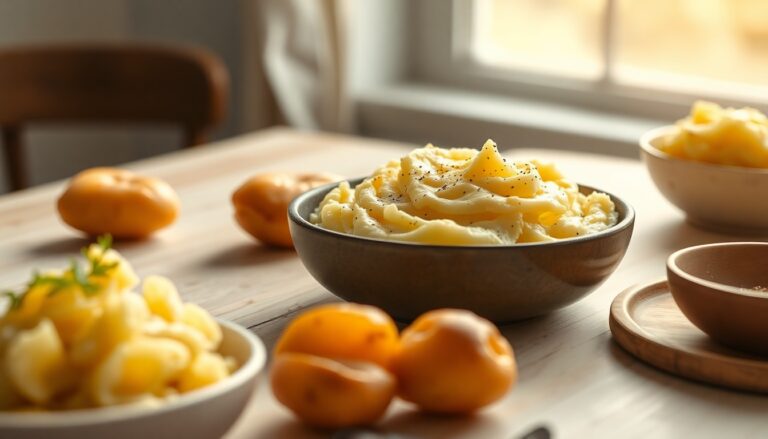
Mashed potato is one of the best-loved side dishes in France, both comforting and easy to digest. Made from mashed potatoes, sometimes with added milk and fat, it comes in ready-made (flaked) or homemade versions. At around 94.8 kcal per 100 g, it stays relatively light for a starchy food, as long as you watch the additions of butter and cream. A source of carbohydrate (15.7 g), it also provides a little plant protein and fibre. Its soft texture makes it a classic of family meals, adaptable to every craving and easy to fit into a balanced diet.
Macronutrient breakdown
Nutrition table per 100 g
| Calories | 95 kcal |
| Kilojoules | 399 kJ |
| Protein | 1,9 g |
| Carbohydrate | 15,7 g |
| Fat | 2,4 g |
| Fibre | 1,5 g |
Micronutrients per 100 g
All measured nutrients, ranked by share of the daily reference intake.
- Vitamin B60,23 mg16 %
- Potassium260 mg13 %
- Vitamin B50,48 mg8 %
- Vitamin B10,09 mg8 %
- Vitamin C6,1 mg8 %
- Vitamin B31,1 mg7 %
- Phosphorus45,5 mg7 %
- Copper0,06 mg6 %
See the other 13 nutrients
- Magnesium15,2 mg4 %
- Vitamin D0,2 µg4 %
- Vitamin B98 µg4 %
- Calcium31,1 mg4 %
- Iodine5 µg3 %
- Manganese0,07 mg3 %
- Vitamin B20,04 mg3 %
- Vitamin A22,5 µg3 %
- Vitamin B120,07 µg3 %
- Vitamin K11,9 µg3 %
- Zinc0,22 mg2 %
- Iron0,21 mg2 %
- Vitamin E0,07 mg1 %
Anses Ciqual 2025. Source: Anses, 2025, Ciqual food composition table
Tips
To get the best from mashed potato, go easy on added fat. A sensible portion is around 150 to 200 g as a side. You can lighten your preparation by replacing some of the butter with a drizzle of olive oil or a little skimmed milk, which keeps calorie density in check without sacrificing creaminess.
Preparation methods and practical tips:
- Choose the homemade version to control the salt, hidden sugar and additives of instant mixes.
- Steaming the potatoes, rather than boiling them in lots of water, limits losses of vitamin C and potassium. To go further, discover the principles of gentle cooking to preserve nutrients.
- Keep your mash for 1 to 2 days in the fridge in an airtight container, and reheat it gently with a little milk.
- Vary the flavours with nutmeg, garlic, parsley or a mix with sweet potato.
Nutrition facts and benefits: mash provides carbohydrates with a rather high glycaemic index, especially when very smooth. To slow absorption and increase fibre, pair it with green vegetables and a source of lean protein. It remains a good comforting base, but watch the calories from fatty additions if you are mindful of your weight.
For active people: mash is useful for recovery, because its fast carbohydrates help replenish glycogen after exercise. You can serve it with fish or poultry for a complete meal. When bulking up, it is an easy source of energy to scale up. If you want to top up your intake, take a look at our ideas for protein snacks and our tips on nutrition for fitness.
You can rotate your plate with other options from the starchy foods family, such as boiled sweet potato or plainer homemade mashed potato. To compare intakes and plan your meals, explore the whole starchy foods family. With controlled cooking and portions suited to your activity, mash easily finds its place in a balanced, varied diet, without excess.
If you have diabetes: the glycaemic index of potato ranges from 53 boiled to 86 as instant mash. See the details in our guide to potatoes and diabetes.