Group · Starchy foods
Boiled sweet potato
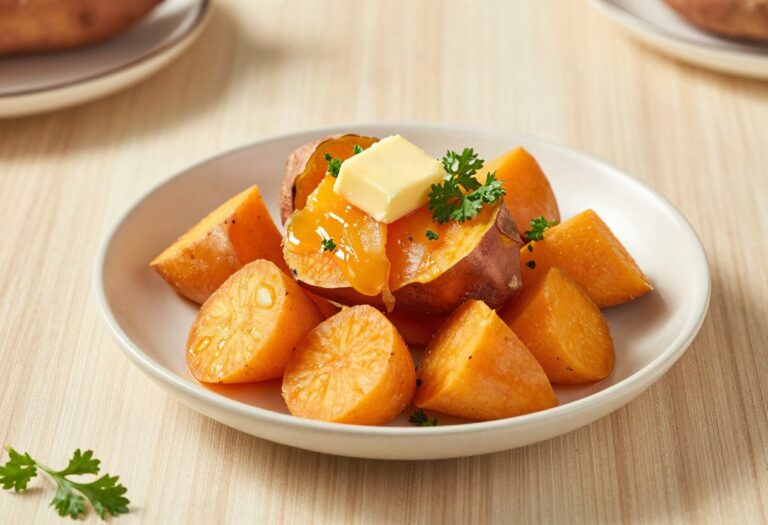
Boiled sweet potato is a soft, melting tuberous root, prized for its orange colour and slightly sweet flavour. Cooked in water, it keeps a tender texture that makes it a versatile starchy food, both filling and light. At only 79.1 kcal per 100 g, it stands out for its low calorie density, its gradual carbohydrates and its richness in fibre. Available all year round, it comes in orange-, white- or purple-fleshed varieties. Its natural sweetness appeals to food lovers and to people mindful of what they eat alike. Naturally gluten-free, it fits easily into a balanced plate, as a side or as the base of a complete dish.
Macronutrient breakdown
Nutrition table per 100 g
| Calories | 79 kcal |
| Kilojoules | 335 kJ |
| Protein | 1,7 g |
| Carbohydrate | 16,3 g |
| Fat | 0,2 g |
| Fibre | 2,9 g |
Micronutrients per 100 g
All measured nutrients, ranked by share of the daily reference intake.
- Vitamin A873 µg109 %
- Vitamin C16,2 mg20 %
- Manganese0,38 mg19 %
- Potassium353 mg18 %
- Vitamin B60,23 mg16 %
- Copper0,13 mg13 %
- Vitamin B50,73 mg12 %
- Vitamin B10,08 mg7 %
- Vitamin B9dietary folate equivalents6 µg
See the other 10 nutrients
- Vitamin E0,83 mg7 %
- Vitamin B31,01 mg6 %
- Phosphorus43 mg6 %
- Magnesium22,5 mg6 %
- Vitamin B20,08 mg6 %
- Iron0,71 mg5 %
- Calcium32,5 mg4 %
- Vitamin K12,2 µg3 %
- Zinc0,26 mg3 %
- Iodine3 µg2 %
Anses Ciqual 2025. Source: Anses, 2025, Ciqual food composition table
Tips
Boiled sweet potato is ideal when you are looking for a gentle, easily digested starchy food. Allow a portion of around 150 to 200 g cooked for a meal, the equivalent of a standard side. To preserve its nutrition facts, drop it into simmering water with the skin on, then peel it after cooking: this limits losses of water-soluble vitamins. You can also opt for gentle cooking by steaming to keep as much flavour and as many nutrients as possible.
In terms of key nutrients, sweet potato provides beta-carotene (provitamin A), vitamin C, potassium, manganese and fibre, which support digestion and fullness. Its carbohydrates come with a moderate glycaemic index once boiled, more favourable than the roasted or fried version. With 16.3 g of carbohydrate and 2.9 g of fibre per 100 g, it is a welcome source of gradual energy in a balanced meal.
To vary things, pair it with a source of protein (fish, egg, pulses) and green vegetables. You can mash it lightly, cut it into cubes in a warm salad, or add it to a curry. If you like tubers, also discover yam and cassava, or explore the whole starchy foods family to plan your menus.
- Active people: boiled sweet potato is an excellent source of carbohydrate to replenish glycogen stores after exercise. Combine it with a portion of protein to optimise recovery.
- Before training: eaten 2 to 3 hours beforehand, it provides steady energy without weighing down digestion.
- Bulking up: easy to portion, it complements a calorie-rich plan built on clean foods.
To go further on nutrition and performance, take a look at our guidelines on nutrition for fitness.
For weight control, boiled sweet potato is low in calories, but its sweet flavour sometimes tempts you to add butter, sugar or syrup: go easy on these additions to enjoy its benefits without piling on calories. Keep cooked portions for 2 to 3 days in the fridge in an airtight container, or freeze them in cubes. Well portioned and simply cooked, it fits perfectly into a balanced, satisfying plate.