Group · Vegetables
Rocket
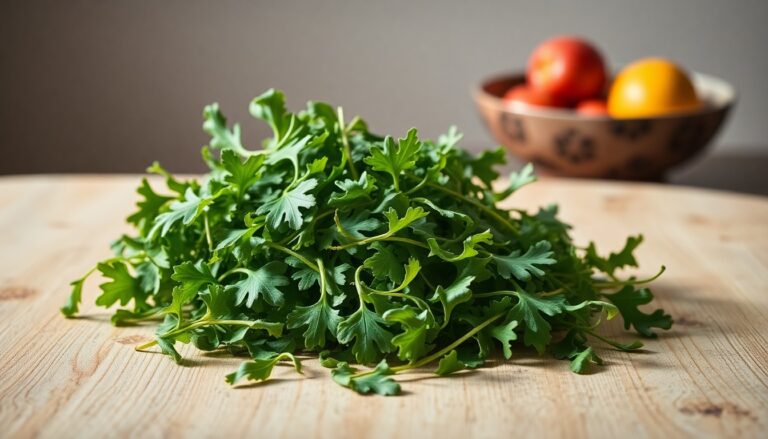
The rocket (also called arugula) is a green salad leaf with a peppery, slightly spicy taste, popular throughout Mediterranean cooking. Its long, serrated leaves come as cultivated rocket, which is milder, and wild rocket (with small leaves), which is more pungent. Very low in calories, with only 27.9 kcal per 100 g, it fits perfectly into a balanced diet and any weight-loss plan. Rich in water, fibre and micronutrients, it brings freshness and character to your plates. Raw or lightly wilted with heat, rocket goes as well with mixed salads as with hot dishes. It is a versatile leafy vegetable, ideal for lifting your meals without adding to your daily calorie total.
Macronutrient breakdown
Nutrition table per 100 g
| Calories | 28 kcal |
| Kilojoules | 117 kJ |
| Protein | 2,6 g |
| Carbohydrate | 2,1 g |
| Fat | 0,7 g |
| Fibre | 1,6 g |
Micronutrients per 100 g
All measured nutrients, ranked by share of the daily reference intake.
- Vitamin K1109 µg145 %
- Calcium160 mg20 %
- Vitamin C15 mg19 %
- Potassium369 mg18 %
- Manganese0,32 mg16 %
- Vitamin A119 µg15 %
- Magnesium47 mg13 %
- Iron1,46 mg10 %
- Vitamin B9dietary folate equivalents97 µg
See the other 9 nutrients
- Copper0,08 mg8 %
- Phosphorus52 mg7 %
- Vitamin B50,44 mg7 %
- Vitamin B20,09 mg6 %
- Vitamin B60,07 mg5 %
- Zinc0,47 mg5 %
- Vitamin B10,04 mg4 %
- Vitamin E0,43 mg4 %
- Vitamin B30,31 mg2 %
Anses Ciqual 2025. Source: Anses, 2025, Ciqual food composition table
Tips
The rocket is most often eaten raw, to preserve its peppery flavour and its nutritional values. A portion of 30 to 50 g is enough to flavour a plate. You can lay it as a bed for a salad, slip it into a sandwich, scatter it over a pizza straight from the oven or blend it into an original pesto. To bring out its aromas, a simple drizzle of olive oil, a few shavings of Parmesan and a squeeze of lemon work wonders.
- Tasty pairings: cherry tomatoes, avocado, beetroot, walnuts or seeds add contrast and creaminess.
- Gentle cooking: added at the end of cooking to a sauté or a risotto, it wilts in a few seconds while keeping its nutrients.
- Storage: keep it in the fridge in a lightly damp cloth and eat it within two to three days, as its thin leaves wilt quickly.
As for key nutrients, rocket provides fibre that helps digestion, vitamin K, vitamin C, folate (vitamin B9) as well as calcium, potassium and the antioxidant compounds typical of cruciferous vegetables. With around 25 calories per 100 g, 2.58 g of protein and 2.1 g of carbohydrate, it has a very low calorie density and a negligible glycaemic index, which makes it an ally of light meals. You will find similar profiles in other salad leaves such as lamb’s lettuce or watercress, equally useful for varying your leaves.
For active people, rocket is not a source of energy in itself, but it is an ideal addition to a recovery meal: combined with a protein source (egg, chicken, fish) and starchy foods, it adds volume, freshness and micronutrients without making digestion heavy before a session. Its water and minerals also contribute to good everyday hydration.
For weight control, it is a great asset: you can fill your plate with rocket to increase the volume of the meal and the feeling of fullness, as long as you watch the dressing, which is often higher in calories than the salad itself. Choose a light vinaigrette. Discover more green vegetables in the vegetables family, and compare its figures in the food calorie table. Available almost all year round, with a peak in spring and summer, rocket deserves a regular place on your menus to give them some zing.