Group · Vegetables
Watercress
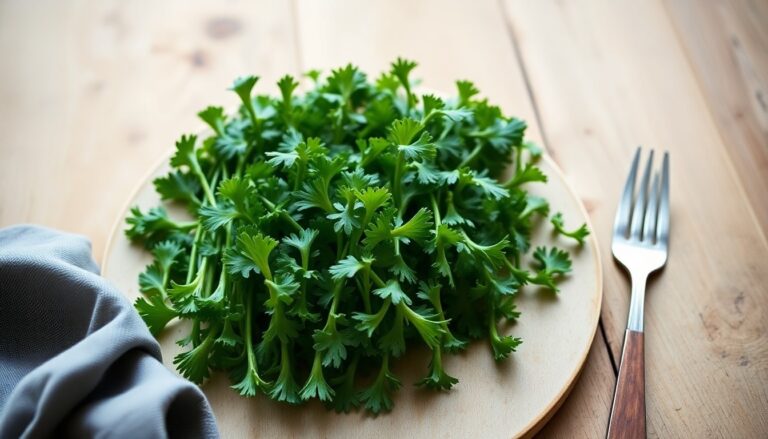
Watercress is a leaf vegetable with a sharp, peppery flavour, long grown in cress beds fed by pure water. The main types are watercress (the best known) and the more delicate garden cress. Deep green, crunchy and refreshing, it slips as easily into salads as into velvety soups. Nutritionally, watercress is particularly interesting for anyone watching what they eat: at just 15.5 kcal per 100 g, it combines great lightness with a good density of micronutrients. A source of fibre, vitamins and minerals, it has its place on a balanced, varied, colourful plate, every day or as part of a slimming approach.
Macronutrient breakdown
Nutrition table per 100 g
| Calories | 16 kcal |
| Kilojoules | 66 kJ |
| Protein | 2,3 g |
| Carbohydrate | 1,2 g |
| Fat | 0,1 g |
| Fibre | 0,5 g |
Micronutrients per 100 g
All measured nutrients, ranked by share of the daily reference intake.
- Vitamin K1250 µg333 %
- Vitamin C43 mg54 %
- Vitamin A160 µg20 %
- Potassium330 mg17 %
- Calcium120 mg15 %
- Manganese0,24 mg12 %
- Vitamin B60,13 mg9 %
- Iodine13,8 µg9 %
- Vitamin B9dietary folate equivalents9 µg
See the other 10 nutrients
- Phosphorus60 mg9 %
- Vitamin B20,12 mg9 %
- Vitamin E1 mg8 %
- Vitamin B10,09 mg8 %
- Copper0,08 mg8 %
- Magnesium21 mg6 %
- Vitamin B50,31 mg5 %
- Iron0,2 mg1 %
- Vitamin B30,2 mg1 %
- Zinc0,11 mg1 %
Anses Ciqual 2025. Source: Anses, 2025, Ciqual food composition table
Tips
Watercress is ideally eaten raw to preserve its taste and nutritional qualities. A handful of well-washed leaves lifts a mixed salad, goes with fish, garnishes a sandwich or is blended into a creamy soup with potatoes. To limit the bitterness, pair it with mild flavours: a drizzle of olive oil, a few walnuts, a little avocado. If cooking, favour gentle, quick cooking to keep as many vitamins as possible.
Nutrition facts and benefits: with 15.5 kcal, 2.3 g of protein, 1.11 g of carbohydrate and 0.5 g of fibre per 100 g, watercress has an excellent fullness-to-calories ratio. Its glycaemic index is low and its energy density very low, which makes it an ally of light plates. It provides vitamin C, vitamin K, beta-carotene and minerals such as calcium and iron, valuable nutrients also found in other leafy greens such as spinach or rocket.
- Portion: a big handful raw (around 30 to 50 g) in a salad, or 150 g cooked in a soup.
- Seasonality: best from spring to autumn, but available for much of the year.
- Storage: very delicate, keep it cool for a few days, with the stems in a little water or wrapped in a damp cloth.
- Pairings: citrus fruits, soft-boiled egg, fresh cheese, beetroot, pulses.
For active people: watercress is a low-calorie plant food but rich in micronutrients, perfect for completing a recovery plate without weighing on the energy balance. It goes well with a source of protein (fish, egg, poultry) and a portion of starchy foods after exercise. During a cutting or fat-loss phase, it helps fill the plate while staying light. To go further on overall balance, discover our guidelines on fitness nutrition.
Weight control: watercress is one of the most advantageous vegetables when you want to eat in volume without excess calories. The vigilance is mainly about the seasoning: oil, creamy sauces and croutons can quickly push up the energy count. Measure the vinaigrette and rely on herbs and spices to lift the dish. Explore more low-calorie vegetables to vary things through the seasons, and compare nutrients using the calorie table.