Group · Seafood
Cuttlefish
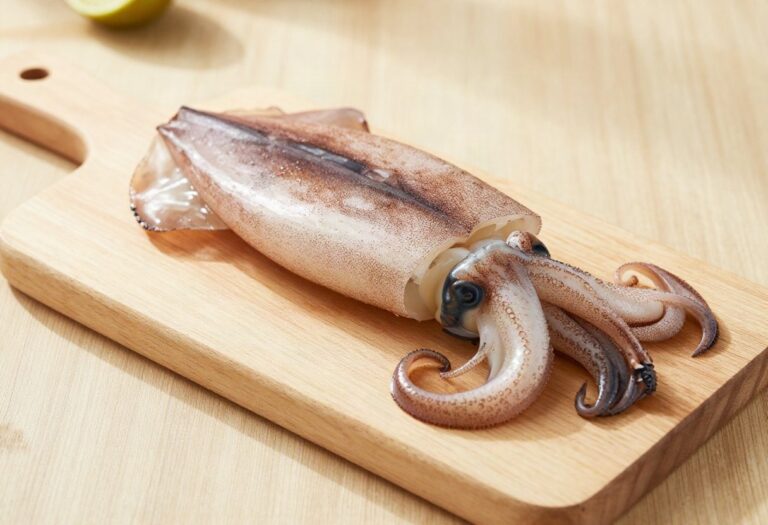
The cuttlefish is a cephalopod mollusc related to squid and octopus, recognisable by its oval body and its famous cuttlebone. It is sold fresh, frozen or cleaned as ready-to-cook cuttlefish bodies, and is eaten pan-fried, grilled, in its ink (on the plancha or in a black risotto) or stewed. Nutritionally, it is a particularly interesting food: very rich in protein (about 16.2 g per 100 g), low in carbohydrate and fat, with only 76.3 kcal per 100 g once cooked. Its firm, iodine-rich flesh fits easily into a balanced diet that is both tasty and light, and is loved by fans of Mediterranean cooking.
Macronutrient breakdown
Nutrition table per 100 g
| Calories | 76 kcal |
| Kilojoules | 323 kJ |
| Protein | 16,2 g |
| Carbohydrate | 0,6 g |
| Fat | 1,1 g |
Micronutrients per 100 g
All measured nutrients, ranked by share of the daily reference intake.
- Selenium65 µg118 %
- Vitamin B122,5 µg100 %
- DHA0,22 g88 %
- Copper0,76 mg76 %
- Phosphorus236 mg34 %
- EPA0,07 g28 %
- Vitamin B20,37 mg26 %
- Vitamin B60,33 mg24 %
See the other 17 nutrients
- Vitamin E2,4 mg20 %
- Iron2,74 mg20 %
- Zinc1,81 mg18 %
- Potassium351 mg18 %
- Iodine21 µg14 %
- Vitamin B32,1 mg13 %
- Total omega-30,3 g12 %
- Vitamin B50,5 mg8 %
- Magnesium31 mg8 %
- Vitamin B914 µg7 %
- Vitamin C5,3 mg7 %
- Vitamin B10,06 mg5 %
- Calcium37,1 mg5 %
- Manganese0,08 mg4 %
- Vitamin A25 µg3 %
- Omega-3 ALA0,01 g0 %
- Omega-6 LA0,01 g0 %
Anses Ciqual 2025. Source: Anses, 2025, Ciqual food composition table
Tips
Cuttlefish lends itself to many preparations. For tender flesh there are two schools of thought: very quick cooking (1 to 2 minutes over a high heat, pan-fried or grilled) or long, gentle cooking (simmered for 30 to 45 minutes in tomato sauce or in its ink). In between, the flesh turns rubbery. Cut the bodies into strips or score them in a criss-cross pattern, and sauté them with a drizzle of olive oil, garlic, parsley and a dash of lemon to bring out their iodine-rich flavour. A typical portion is around 120 to 150 g.
In terms of nutrition facts, cuttlefish is a true concentrate of good-quality protein, with very few calories, almost no carbohydrate and a moderate amount of fat. It also provides minerals such as phosphorus, selenium and zinc, as well as B vitamins. This protein density makes it a great ally for weight loss or a balanced diet, as long as you watch how it is prepared: fried or coated in fatty sauces, it loses its light advantage.
- Clever pairings: green vegetables, brown rice, ratatouille or salad for a complete, colourful meal.
- Storage: when fresh, eat it within 24 to 48 hours; frozen, it keeps for several months.
- Seasonality: catches are more plentiful in spring on the Atlantic and Mediterranean coasts.
For active people, cuttlefish is an excellent post-exercise source of protein, ideal for supporting muscle recovery and building lean mass, without an excess of calories or fat. You can include it in a recovery meal with a source of complex carbohydrates. If you are looking for other protein-rich ideas, discover our protein snack recipes and our guidelines on fitness nutrition.
Like all cephalopods, it pairs well with other seafood: try varying with squid or octopus to diversify your plates. You will find all the shellfish, crustaceans and molluscs in the seafood family, and you can compare their values with the food calorie table. Favour well-controlled cooking to preserve both texture and nutrients.