Group · Starchy foods
Cornmeal
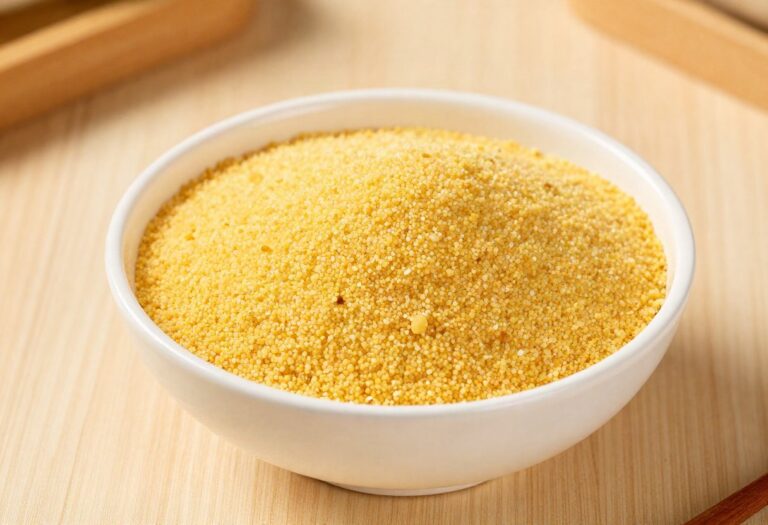
Cornmeal is made by milling dried maize kernels, ground more or less finely. Depending on the grind, you will find it as polenta (coarser grain), as a finer meal, or in the make-up of certain flours. Naturally gluten-free, it is an interesting alternative to wheat-based starchy foods for varying your sources of carbohydrate. Golden yellow in colour, it features in many cuisines, from Italy to Latin America. With around 350 kcal per 100 g, rich in complex carbohydrates and providing fibre, it easily has a place in a balanced diet, provided you take care over the seasoning and cooking.
Macronutrient breakdown
Nutrition table per 100 g
| Calories | 350 kcal |
| Kilojoules | 1480 kJ |
| Protein | 7,9 g |
| Carbohydrate | 74 g |
| Fat | 1,8 g |
| Fibre | 3,2 g |
Micronutrients per 100 g
All measured nutrients, ranked by share of the daily reference intake.
- Vitamin B935 µg18 %
- Phosphorus104 mg15 %
- Magnesium35 mg9 %
- Potassium144 mg7 %
- Vitamin B50,39 mg7 %
- Vitamin B10,07 mg6 %
- Vitamin B60,08 mg6 %
- Vitamin B20,06 mg4 %
See the other 2 nutrients
- Vitamin A2,08 µg0 %
- Calcium1,55 mg0 %
Anses Ciqual 2025. Source: Anses, 2025, Ciqual food composition table
Tips
Cornmeal lends itself to many preparations. The best known is polenta: pour it in a thin stream into a boiling liquid (water, stock or plant-based milk), stirring until you get a creamy texture. It can then be served soft, or cooled and cut into slices to grill or pan-fry. It is also used to make flatbreads and cakes, or to lightly coat vegetables in a crumb.
In terms of nutrition facts, cornmeal provides nearly 74 g of carbohydrates, 7.88 g of protein, 1.8 g of fat and over 3.2 g of fibre per 100 g. This fibre supports digestive comfort and contributes to fullness. Naturally free of gluten, it is of interest to people with gluten intolerance who want to diversify their starchy foods.
- Recommended portion: allow 40 to 60 g of dry semolina-type meal per person, which makes a generous plate once cooked.
- Cooking: favour gentle, gradual cooking to avoid lumps and preserve the texture.
- Pairings: it goes well with vegetables, herbs, a drizzle of olive oil or a touch of grated cheese for extra indulgence.
- Storage: keep it in an airtight container, away from damp.
For active people, cornmeal is an excellent source of complex carbohydrates for replenishing glycogen stores. Eaten a few hours before exercise, it provides lasting energy; after training, combined with a source of protein (eggs, fish, pulses), it supports recovery. To go further on organising meals around activity, take a look at our advice on nutrition for fitness.
If you are watching your weight, keep its dry calorie density in mind: it is mostly the added fats (butter, cheese, fried foods) that weigh down the dish. Favour versions cooked in water or stock. You can compare its values with those of other starchy foods such as corn flour or quinoa, and consult our calorie table to adjust your portions.
To discover other options and vary your side dishes day to day, explore the whole family of starchy foods. Alternating your sources of carbohydrate remains a good habit for enjoying a range of nutrients while keeping the pleasure at the table.