Group · Drinks
Whisky
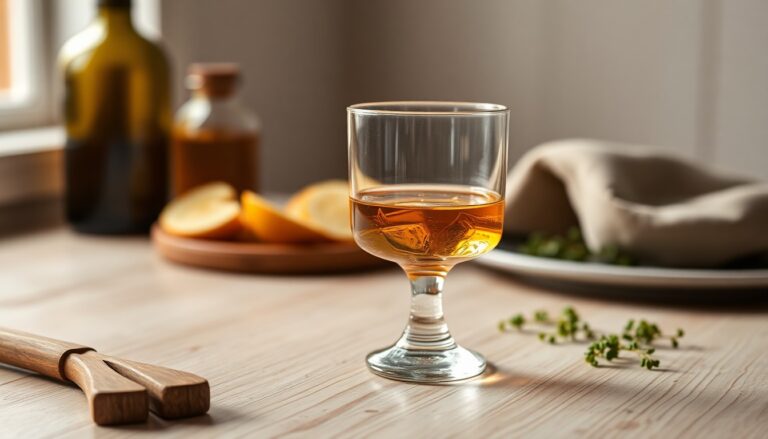
Whisky is a spirit made by distilling malted grains (barley, rye, maize or wheat), then ageing it in oak casks that give it its amber colour and complex aromas. There are many varieties: single malt, blended, bourbon, scotch or Irish whiskey, each with its own flavour profile (peaty, woody, vanilla, fruity). In terms of nutrition facts, whisky provides 252 kcal per 100 g, with no protein, carbohydrate or fat: its calories come purely from the alcohol. It is therefore a sipping drink, to be enjoyed in moderation. In a balanced diet, it has an occasional place, like any spirit, and provides no essential nutrient despite its refined taste.
Macronutrient breakdown
Nutrition table per 100 ml
| Calories | 252 kcal |
| Kilojoules | 1050 kJ |
| Carbohydrate | 0,1 g |
Micronutrients per 100 ml
All measured nutrients, ranked by share of the daily reference intake.
- Copper0,01 mg1 %
- Iodine1,25 µg1 %
- Vitamin B10,01 mg1 %
- Phosphorus3 mg0 %
- Manganese0,01 mg0 %
- Vitamin B30,05 mg0 %
- Zinc0,02 mg0 %
- Iron0,02 mg0 %
See the other 2 nutrients
- Vitamin B20 mg0 %
- Potassium1 mg0 %
Anses Ciqual 2025. Source: Anses, 2025, Ciqual food composition table
Tips
Whisky is enjoyed above all for its aromatic bouquet. A reasonable serving is about 3 cl (one measure), which is roughly 70 kcal. You can enjoy it neat, on ice (on the rocks), with a splash of water to release the aromas, or in a cocktail. Be careful, though: mixed with cola or lemonade, the calories climb quickly because of the added sugars.
How to drink it sensibly
- Favour quality over quantity: a good single malt is meant to be savoured slowly, in small sips.
- Serve it at room temperature or slightly cool, never piping hot or ice cold.
- Have a large glass of water alongside it to stay hydrated and limit the effects of alcohol.
- Store the bottle upright, away from light and heat; once opened, whisky keeps for a long time.
Weight control and calories
Whisky contains no carbohydrate, fat or protein: its 252 kcal per 100 g are empty calories, with no nutritional value. Alcohol is also processed first by the body, which slows down the use of fat. If you are watching your waistline, limit how often and how much you drink, and choose whisky neat over a sugary cocktail. Compare its calorie density with that of other spirits such as vodka or rum in the drinks family.
Advice for active people
If you play sport, be aware that alcohol has no place in performance or recovery. It dehydrates you, disrupts muscle protein synthesis and affects the quality of your sleep, which is essential for repair. After a session, opt instead for a proper recovery snack: water, carbohydrate and protein. Whisky remains a drink for pleasure, best kept for moments of relaxation, away from intense training days.
In short, whisky is a fine spirit that deserves careful tasting rather than regular drinking. Enjoy it in moderation, as part of an overall balanced diet, and always remember that water is your best hydration ally.