Taurine: what it is, benefits, side effects and energy drinks
The short answer
Taurine is a small sulfur-containing compound, related to amino acids, that your body makes on its own and that you get from meat, fish and shellfish. It is best known as an ingredient in Red Bull and other energy drinks, which usually contain 4,000 mg per liter, about 1,000 mg per 250 ml (8.4 oz) can. As for benefits, a meta-analysis of 34 trials found small drops in blood sugar, blood fats and blood pressure, and exercise studies show a slight performance boost, with low-certainty evidence. The 2023 Science study that framed taurine as an anti-aging molecule was done in animals. Is taurine bad for you? On its own it is well tolerated up to 3 g a day; in energy drinks, the real issue is caffeine.
This article is for information and does not replace medical advice. If you have heart or kidney disease, take long-term medication, or are pregnant or breastfeeding, talk to your doctor before taking a taurine supplement.
What is taurine?
Taurine (2-aminoethanesulfonic acid) looks like an amino acid but is not used to build proteins. It sits freely inside cells, especially in the heart, muscles, retina and brain. Your body makes it from two sulfur amino acids, cysteine and methionine, and food tops up the supply. It is called “conditionally essential”: healthy adults make enough, but needs may rise in some situations.
Does taurine come from bulls? Only its name: it was first isolated in the 19th century from ox bile (Bos taurus). The taurine in energy drinks and supplements is made synthetically, so it is suitable for vegetarians and vegans.
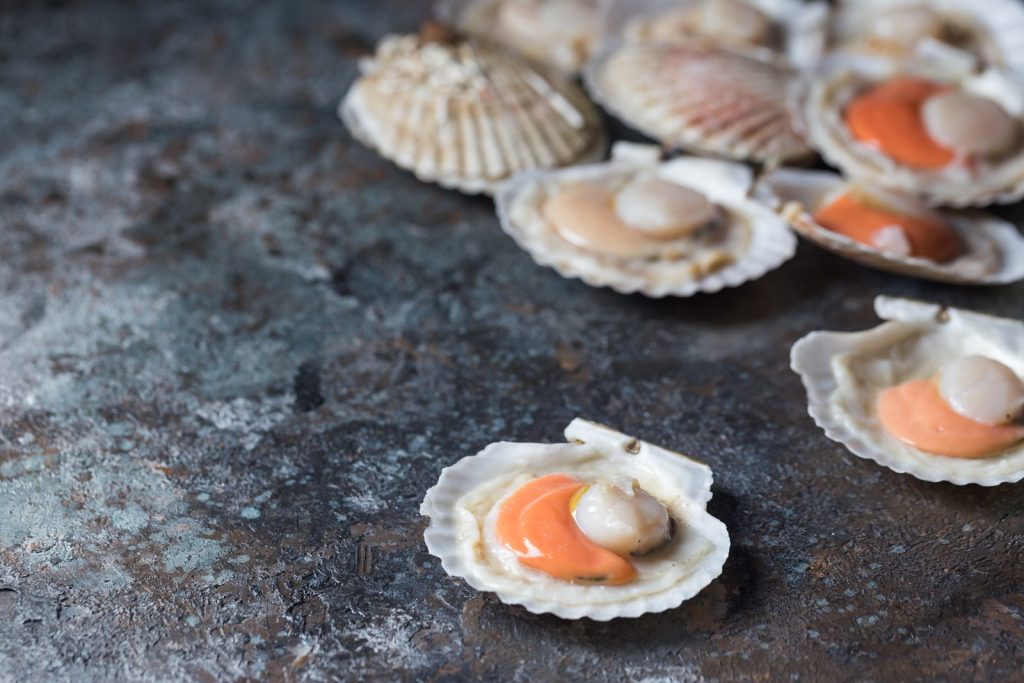
Food sources: only animal foods, such as chicken, fish and especially shellfish like mussels and oysters. A British study (Rana and Sanders, 1986) found no taurine in vegan diets, yet vegans’ blood levels were only slightly lower than omnivores’, because the body compensates.
Taurine in Red Bull and energy drinks
A 2022 risk assessment of energy drinks (Nutrients) describes the typical formula:
| Ingredient | Usual content | 250 ml can | 500 ml |
|---|---|---|---|
| Taurine | 4,000 mg per liter | About 1,000 mg | About 2,000 mg |
| Caffeine | About 320 mg per liter | About 80 mg | About 160 mg |
| Glucuronolactone | 2,400 mg per liter | About 600 mg | About 1,200 mg |
The authors found that drinking more than 500 ml a day pushes taurine intake above the reference value they used, and that caffeine threatens sleep much earlier in lighter people. To fit a can into your caffeine budget, see how much coffee per day.
Is the taurine in Red Bull bad for your heart? There is no evidence it is. A review (Schaffer et al., 2014) notes that heart-related reports linked to energy drinks mostly involve excess caffeine, and quotes the EU Scientific Committee on Food (2003): if caffeine and taurine interact at all, taurine might reduce caffeine’s cardiovascular effects. This still needs confirming in humans, but taurine is not the main suspect.
Taurine benefits: what the studies show
Aging: the 2023 Science study was in animals
In June 2023, a study in Science (Singh et al.) reported that blood taurine falls with age in mice, monkeys and humans. Taurine supplements extended lifespan in mice and improved health markers in monkeys. The authors themselves called for human trials, and their university has filed patent applications.
In 2025, a Canadian team (Marcangeli et al.) tested the idea in 137 men aged 20 to 93 and found no link between blood taurine and age, muscle mass, strength or physical performance. Taurine is not a proven anti-aging supplement.
Blood sugar, cholesterol and blood pressure: modest effects
The latest meta-analysis (Nie et al., 2026) pooled 34 randomized trials in adults:
| Outcome | Average effect of taurine vs placebo |
|---|---|
| Fasting blood sugar | -5.9 mg/dL |
| HbA1c | -0.21 points |
| Triglycerides | -14 mg/dL |
| Total / LDL cholesterol | -12 mg/dL / -5 mg/dL |
| Blood pressure | -4.4 mmHg systolic / -2.5 mmHg diastolic |
| Most effective dose | 1.5 to 3 g a day |
In the best-known blood pressure trial (Sun et al., 2016), 120 people with prehypertension took 1.6 g a day for 12 weeks: office systolic pressure fell by 7.2 mmHg, versus 2.6 mmHg on placebo. Real but modest effects, far smaller than medication.
Taurine for exercise: a small boost, weak evidence
A 2025 meta-analysis (Deng et al.) of 23 trials and 308 participants found a small-to-moderate gain after a single pre-exercise dose, mainly in endurance and strength. There was no dose-response between 1 and 6 g, about 1 hour before exercise looked best, and the certainty of evidence was low to very low. In energy drinks and pre-workouts, taurine comes with caffeine, which does most of the work: see pre-workout: what it does and side effects.
Brain, sleep, fatigue: no solid evidence
A meta-analysis of 7 trials and 402 people (Cao et al., 2025) found no effect on cognitive scores. A 2026 trial in 220 people with cirrhosis (1 g a day for 12 weeks) showed no overall benefit on fatigue. We found no solid human trial on sleep; taurine is often paired with magnesium, but magnesium is what has been studied (see our best magnesium supplement comparison).
Taurine side effects: is taurine bad for you?
The reference risk assessment (Shao and Hathcock, 2008) found no consistent adverse effects in clinical trials, so no toxic dose could be set. It identified an observed safe level of 3 g a day from supplements for healthy adults; higher doses have been used without problems, but data are too limited to confirm long-term safety. In the cirrhosis trial, 11.8% of patients on taurine had side effects, all mild. Jitters, palpitations or poor sleep after an energy drink usually come from caffeine.
| Situation | Why |
|---|---|
| Pregnancy and breastfeeding | Little data on supplements: ask your doctor first; avoid energy drinks (caffeine) |
| Children and teens | No reason to supplement without advice; avoid energy drinks (caffeine) |
| Kidney disease | Taurine is cleared by the kidneys: ask your doctor |
| Blood pressure or diabetes medication | Taurine slightly lowers both: tell your doctor |
| Heart disease or rhythm problems | No proven risk from taurine alone, but avoid energy drinks (caffeine) |
Taurine supplement dosage
- Studied doses: 1.5 to 3 g a day for blood pressure and metabolism; 1 to 6 g in a single dose before exercise.
- Prudent ceiling: 3 g a day from supplements, counting any energy drinks.
- Timing: about 1 hour before exercise; otherwise any time, with a meal if your stomach is sensitive.
- Supplement or energy drink? A can gives you 1 g of taurine plus 80 mg of caffeine and often sugar. If taurine is what you want, a capsule is the cleaner option.
Dynveo: pure taurine capsules, tested batch by batch
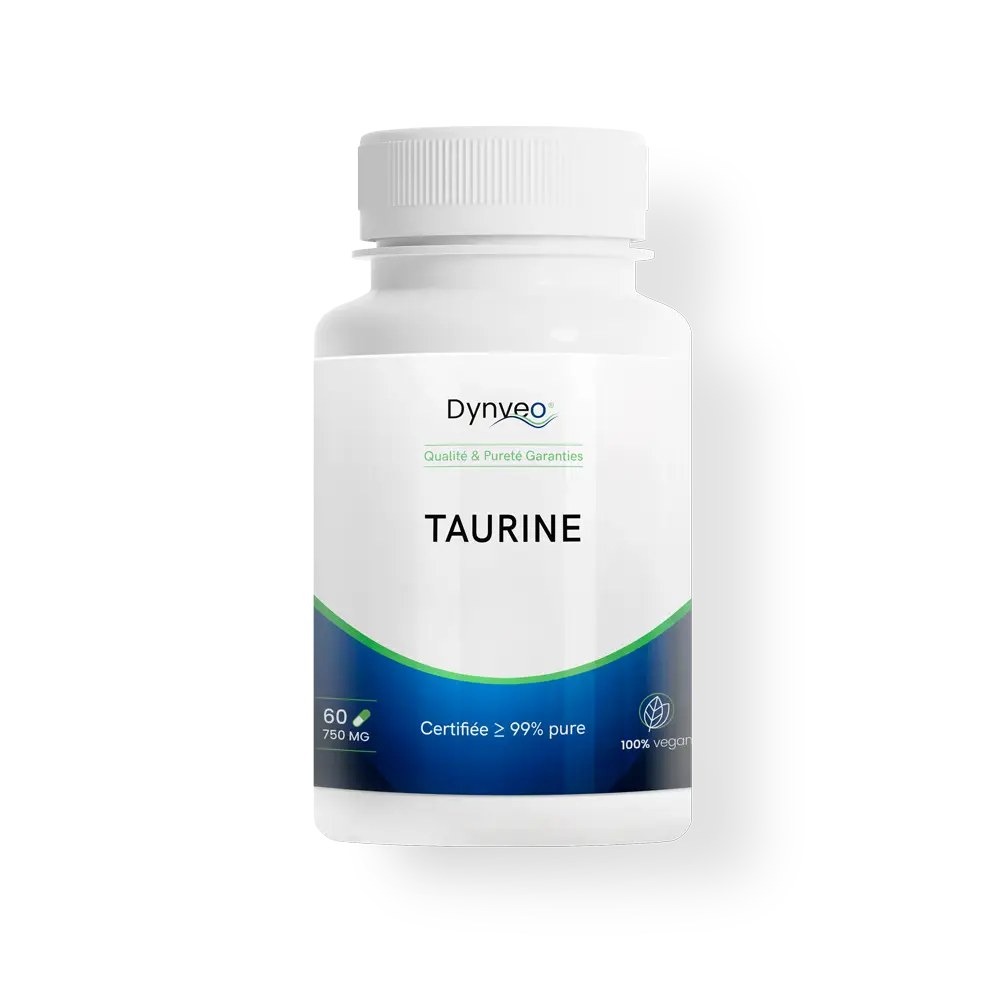
Dynveo is a French supplement maker based in the south of France, which packs its taurine at its own site in Teyran. Its Taurine keeps things simple:
- 100% taurine, purity stated at 99% or more (HPLC-tested), with no excipients or additives;
- 1,500 mg a day in 2 capsules of 750 mg, vegetable (pullulan) capsules, vegan;
- certificates of analysis published for each batch (microbiology, active content, heavy metals);
- suggested use: in the morning, or 30 to 60 minutes before training, with a large glass of water;
- 60 capsules, a one-month supply;
- €10.90 per jar (price checked on 22/11/2026), about €0.36 a day; also sold as a powder (250 g for €44.90, about €0.27 a day at 1.5 g).
How does the dose compare? 1.5 g a day sits at the bottom of the 1.5 to 3 g range linked to the best effects in the 2026 meta-analysis, close to the 1.6 g of the blood pressure trial, and half the 3 g safe level. Studies did not test this specific product and do not guarantee its effect. Ask your doctor first if you are pregnant or breastfeeding, have kidney disease or take blood pressure or diabetes medication.
Partner link: we earn a commission if you order through this link, at no extra cost to you.
Frequently asked questions
What does taurine do?
In trials it slightly lowers blood pressure, blood sugar and blood fats and may modestly improve exercise performance. It is not a proven stimulant: the kick from an energy drink comes from caffeine and sugar.
Is taurine bad for you?
Not at usual doses: it is well tolerated up to 3 g a day in healthy adults. Energy drink risks mostly come from caffeine, sugar and mixing with alcohol.
Is taurine made from bull urine or semen?
No. The name comes from ox bile, where it was discovered, but commercial taurine is made synthetically.
Does taurine help you sleep?
There is no proven effect in humans either way. If an energy drink keeps you awake, the caffeine is to blame.
Sources
- Singh P. et al. Taurine deficiency as a driver of aging. Science, 2023; 380(6649): eabn9257. PubMed 37289866
- Marcangeli V. et al. Experimental Evidence Against Taurine Deficiency as a Driver of Aging in Humans. Aging Cell, 2025; 24(10): e70191. PubMed 41061678
- Nie Z. et al. Effects of Oral Taurine Supplementation on Cardiometabolic Risk Factors: A Meta-analysis and Systematic Review of Randomized Clinical Trials. Nutr Rev, 2026; 84(10): 2028-2051. PubMed 41275513
- Sun Q. et al. Taurine Supplementation Lowers Blood Pressure and Improves Vascular Function in Prehypertension. Hypertension, 2016; 67(3): 541-9. PubMed 26781281
- Deng H. et al. Does One Shot Work? The Acute Impact of a Single Taurine Dose on Exercise Performance: A Meta-Analytic Review. Scand J Med Sci Sports, 2025; 35(9): e70123. PubMed 40852891
- Shao A., Hathcock J.N. Risk assessment for the amino acids taurine, L-glutamine and L-arginine. Regul Toxicol Pharmacol, 2008; 50(3): 376-99. PubMed 18325648
- Caffeine, D-glucuronolactone and Taurine Content in Energy Drinks: Exposure and Risk Assessment. Nutrients, 2022; 14(23): 5103. PubMed 36501132