Valerian root: benefits for sleep, side effects and dosage

The short answer
Valerian root has long been used for nerves and sleep. The European Medicines Agency (EMA) recognises it for mild nervous tension and sleep disorders, but the evidence is mixed: people report sleeping better, yet objective measures such as time to fall asleep don’t improve. It works gradually, over 2 to 4 weeks of regular use. It is usually well tolerated; rare cases of liver injury have been reported, and the EMA warns it may impair driving.
This article is for information and does not replace medical advice. If you take an antidepressant, sleeping pill or anti-anxiety medicine, have liver disease, are pregnant or have long-lasting insomnia, ask your doctor or pharmacist.
What is valerian root?
Valerian (Valeriana officinalis) is a tall flowering plant whose strong-smelling root is used in herbal medicine. The EMA monograph sets two levels:
- well-established use: a dry root extract made with ethanol (40% to 70%), for mild nervous tension and sleep disorders. The EMA says these extracts improved sleep latency and quality in controlled studies, without tying the effect to any single compound;
- traditional use: powdered root, tea, tinctures and other extracts, for mild stress and to aid sleep, based on long-standing use only.
Valerian root for sleep: what the studies show
Results depend on what is measured. Asked whether they sleep better, people on valerian do a little better than on placebo. When sleep onset is timed, the difference vanishes.
| Study | What was analysed | Result |
|---|---|---|
| Bent et al., 2006 | 16 trials, 1,093 people | Sleep rated as improved 1.8 times more often than placebo (6 trials), but poor-quality trials and publication bias |
| Fernández-San-Martín et al., 2010 | 18 placebo-controlled trials | Subjective improvement more frequent (1.37 times); sleep latency: 0.7 minutes difference, not significant |
| Leach and Page, 2015 | 14 trials, 1,602 people with insomnia (valerian, chamomile, kava, wuling) | No difference from placebo on 13 outcomes; more adverse events per person with valerian |
| Valente et al., 2024 | Umbrella review of 8 systematic reviews | Good safety; possible subjective benefit; no evidence of efficacy for insomnia |
Trials used very different extracts, doses and durations, often in small groups. The 2024 review concludes that, despite wide use, valerian lacks solid support for insomnia. It may help some people feel they sleep better, especially with mild tension, but it is not a treatment for chronic insomnia.
Valerian root for anxiety
The EMA indication is mild nervous tension, not anxiety disorders or depression. Persistent anxiety deserves a medical opinion. For everyday stress, see our guide on diet and stress management.
Valerian root vs melatonin
They work differently. Melatonin shifts your body clock and is best proven for jet lag; valerian is a calming herb with a gradual effect. Gentler alternatives include passionflower and chamomile tea, with similarly modest evidence.
Valerian root side effects: is valerian root safe?
| Situation | EMA position |
|---|---|
| Side effects | Digestive symptoms (nausea, abdominal cramps), frequency unknown |
| Driving, machinery | May impair ability to drive: don’t drive if affected |
| Pregnancy, breastfeeding | Safety not established: not recommended |
| Children under 12 | Not recommended, lack of data |
| Drug interactions | None reported in the monograph |
| Overdose (about 20 g of root) | Fatigue, cramps, chest tightness, light-headedness, tremor, dilated pupils; resolved within 24 hours |
Valerian and the liver: rare cases
The NIH LiverTox database states that valerian has been linked to rare instances of clinically apparent liver injury. Isolated hepatitis cases have been published, one responding to steroids; many involved multi-herb products, which makes valerian’s role hard to pin down. If you have liver disease, ask first, and stop and see a doctor if you notice unusual fatigue, dark urine or yellowing skin.
Valerian and driving
Two placebo-controlled trials are reassuring: 600 mg of extract in the evening did not affect reaction time, alertness or concentration the next morning in 102 volunteers, after one dose or two weeks (Kuhlmann et al., 1999), and a single 1,600 mg dose did not impair driving simulator performance (Thomas et al., 2016), though that study may have been too small. Still, follow the EMA rule: if you feel drowsy, don’t drive, and don’t combine valerian with alcohol.
Medications
The EMA lists no interactions, but an analysis of Australian reports from 2000 to 2015 (Hoban et al., 2019) found that, for the four herbs studied including valerian, life-threatening reactions occurred in people also taking prescription drugs. On antidepressants, sleeping pills, anti-anxiety or anti-seizure medicines, ask first.
Valerian root dosage
| Form | Single dose (EMA) | For sleep |
|---|---|---|
| Ethanol dry extract (well-established use) | 400 to 600 mg | 30 to 60 min before bed, plus an earlier evening dose if needed; max 4 doses a day |
| Valerian root tea | 0.3 to 3 g in 150 ml boiling water | 30 to 60 min before bed |
| Powdered root | 0.3 to 2 g | 30 to 60 min before bed |
- How long does it take to work? The EMA says onset is gradual: valerian is not for a single bad night. Use it regularly for 2 to 4 weeks.
- When to get help: if symptoms persist or worsen after 2 weeks, see a doctor or pharmacist.
- Habits matter too: regular hours, morning light, little caffeine after lunch, and the right dinner; see foods that help you sleep.
Dynveo: valerian with theanine and melatonin
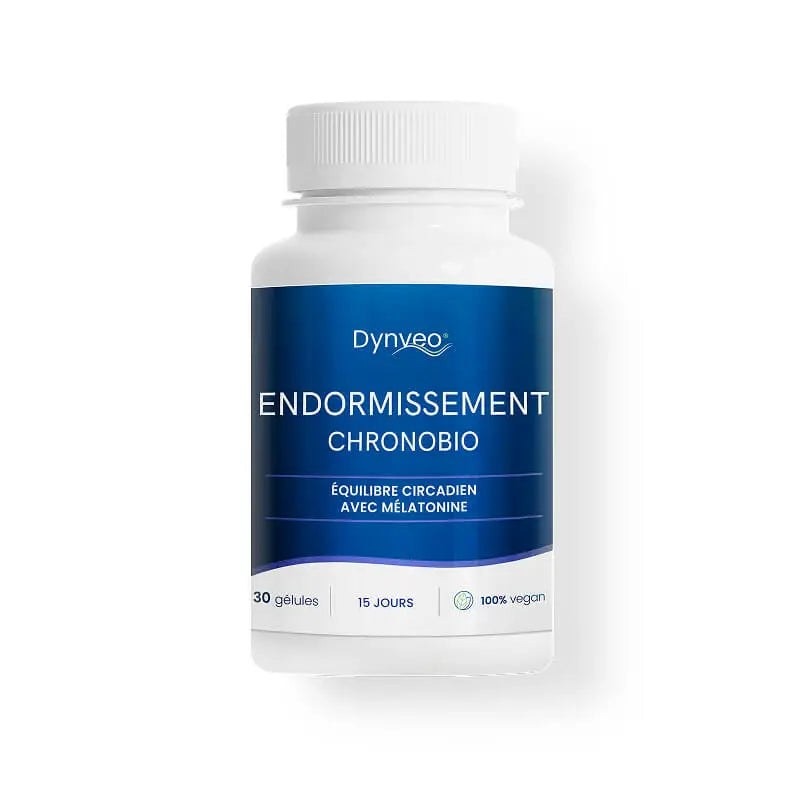
Our partners don’t sell valerian on its own. Dynveo’s Complexe Endormissement Chronobio contains a meaningful amount in a short, fully disclosed formula:
- 300 mg of valerian root extract, standardised to 0.7% valerenic acid;
- 200 mg of L-theanine from green tea extract (BeTheanine), caffeine kept under 1%;
- 1.9 mg of melatonin extracted from St John’s wort;
- 2 capsules a day, 30 to 45 minutes before bed; pullulan plant capsules, no additives; the brand claims French manufacturing and publishes batch tests;
- 30 capsules, a 15-day supply; the brand suggests 7 to 15 days at first;
- €16.90 per jar (price checked on 22/11/2026), about €1.13 a day.
How does the dose compare? 300 mg is a little below the EMA’s 400 to 600 mg single dose, and the extraction solvent is not stated, so comparison with studied extracts is approximate. The formula’s point is a three-way approach to falling asleep, including melatonin, mainly useful when your body clock is off. The studies above looked at valerian alone, not at this product.
Because it contains melatonin, the same precautions apply: the brand advises against it in pregnancy, breastfeeding, children and teens, asks for medical advice with sedatives, sleeping pills, antidepressants, anti-seizure drugs, epilepsy, asthma, autoimmune or mood disorders, and says not to drive in the hours after taking it.
See Dynveo Sleep Onset Complex →
Partner link: we earn a commission if you order through this link, at no extra cost to you.
For other bedtime formulas, see our best sleep supplement comparison.
Frequently asked questions
What is valerian root good for?
The EMA recognises it for mild nervous tension and sleep disorders. Studies mostly show a perceived improvement in sleep, not a measured one.
Does valerian root help you sleep?
It is not a sleeping pill. Taken regularly for a few weeks it may help some people, but the evidence is weak.
What are the side effects of valerian root?
Digestive upset, possible drowsiness (caution when driving) and rare liver injury. Avoid in pregnancy, breastfeeding and under 12.
Can you take valerian root every night?
The EMA recommends 2 to 4 weeks of continued use; if sleep problems persist after 2 weeks, see a doctor.
Is valerian root safe with antidepressants?
No interactions are listed by the EMA, but serious reactions to herbs often involve prescription drugs taken at the same time. Ask your doctor first.
Sources
- EMA, Committee on Herbal Medicinal Products. European Union herbal monograph on Valeriana officinalis L., radix. EMA/HMPC/150848/2015, 2016. ema.europa.eu
- Bent S. et al. Valerian for sleep: a systematic review and meta-analysis. Am J Med, 2006; 119(12): 1005-12. PubMed 17145239
- Fernández-San-Martín M.I. et al. Effectiveness of Valerian on insomnia: a meta-analysis of randomized placebo-controlled trials. Sleep Med, 2010; 11(6): 505-11. PubMed 20347389
- Leach M.J., Page A.T. Herbal medicine for insomnia: A systematic review and meta-analysis. Sleep Med Rev, 2015; 24: 1-12. PubMed 25644982
- Valente V. et al. Does valerian work for insomnia? An umbrella review of the evidence. Eur Neuropsychopharmacol, 2024; 82: 6-28. PubMed 38359657
- Kuhlmann J. et al. The influence of valerian treatment on reaction time, alertness and concentration in volunteers. Pharmacopsychiatry, 1999; 32(6): 235-41. PubMed 10599933
- Thomas K. et al. Effects of valerian on subjective sedation, field sobriety testing and driving simulator performance. Accid Anal Prev, 2016; 92: 240-4. PubMed 27110643
- LiverTox. Valerian. National Institute of Diabetes and Digestive and Kidney Diseases, 2020. PubMed 31643579
- Hoban C.L., Byard R.W., Musgrave I.F. Analysis of spontaneous adverse drug reactions to echinacea, valerian, black cohosh and ginkgo in Australia from 2000 to 2015. J Integr Med, 2019; 17(5): 338-343. PubMed 31113761