GABA supplement: what it does, benefits for sleep and stress, side effects and dosage
The short answer
GABA (gamma-aminobutyric acid) is the brain’s main “brake” neurotransmitter: it calms nerve activity. As a supplement it is sold for stress and sleep, but a key question is still open: does swallowed GABA reach the brain? It was long thought not to cross the blood-brain barrier, and studies disagree. Human trials are small and often industry-linked; a 2020 systematic review found limited evidence for stress and very limited evidence for sleep. It seems well tolerated, but it can lower blood pressure slightly, and there is no pregnancy data.
This article is for information and does not replace medical advice. Ongoing anxiety or insomnia deserves a conversation with your doctor.
What is GABA and what does it do?
GABA is an amino acid your body does not use to build proteins. In the brain it is the main inhibitory neurotransmitter: it quiets neurons, and several sedative drugs act on its system. Your brain makes its own GABA from glutamate. Supplement GABA is usually produced by bacterial fermentation; it is also found naturally in green tea leaves, rice germ and fermented foods. GABA is not an antidepressant, and no trial shows it treats depression.
Does GABA cross the blood-brain barrier?
- oral GABA is absorbed quickly: blood levels peaked 30 minutes after a dose in a Japanese study (Yamatsu et al., 2016);
- a Leiden University review (Boonstra et al., 2015) notes that studies on blood-brain barrier passage are contradictory and used very different methods;
- the authors suggest either some passage into the brain or an indirect effect via gut nerves that signal to the brain;
- they conclude the mechanism is “far from clear” and call for brain imaging studies after oral GABA.
GABA supplement benefits: what the studies show
A systematic review (Hepsomali et al., 2020) included 14 placebo-controlled trials and found limited evidence for stress and very limited evidence for sleep. The 2015 review noted that most positive findings came from researchers with a potential conflict of interest.
| Study | People and dose | Result | Limits |
|---|---|---|---|
| Yoto et al., 2012 (stress) | 63 adults, 100 mg once | Smaller drop in some brain waves and better mood 30 minutes later during stressful tasks | Single-blind, immediate effect only |
| Byun et al., 2018 (insomnia) | 40 adults, 300 mg/day of rice germ GABA, 4 weeks | Time to fall asleep 13 to 6 minutes, sleep efficiency 79% to 86% on sleep lab testing, in the GABA group | Only 10 on placebo; before/after comparison |
| Yamatsu et al., 2016 (sleep) | Small crossover, EEG | Faster sleep onset, more deep (non-REM) sleep | Single-blind, small sample |
| Guimarães et al., 2024 | 30 overweight women exercising, 200 mg/day, 90 days | Better sleep efficiency and lower depression scores on questionnaires | Very small sample |
The results point the same way but are fragile: few participants, short durations, questionnaire outcomes and not always true double-blinding. No trial compares GABA with proven insomnia or anxiety treatments.
GABA for sleep: how fast does it work?
Stress studies measured effects 30 to 60 minutes after a dose, when blood levels peak. Sleep studies measured after 4 weeks to 3 months of daily use. If nothing changes after a month, there is little point continuing.
GABA side effects and safety
A 2021 United States Pharmacopeia (USP) safety review (Oketch-Rabah et al.) found:
- no serious adverse events at up to 18 g a day for 4 days, or 120 mg a day for 12 weeks;
- no spontaneous case reports of harm;
- a transient, moderate drop in blood pressure (under 10%) in some studies, so a possible risk of low blood pressure with blood pressure medication;
- possible rises in growth hormone and prolactin, hence caution in pregnancy and breastfeeding, where no data exist.
Check with your doctor if you take blood pressure medication, sleeping pills, anti-anxiety drugs, antiepileptics or antidepressants, and never swap a prescribed treatment for GABA. Avoid it in pregnancy, breastfeeding and in children.
How to take GABA: dosage
- Studied doses: 100 mg once for stress; 200 to 300 mg a day for sleep, for 4 to 12 weeks.
- Timing: about 30 minutes before a stressful event or bedtime.
- Better-studied options: melatonin, L-theanine, glycine or magnesium glycinate; see our best sleep supplement comparison.
- Food first: foods that help you sleep and a diet for stress; natural GABA comes from brown rice, kimchi, kefir and green tea, in smaller amounts than capsules.
Nutrimea: a pure GABA made in France
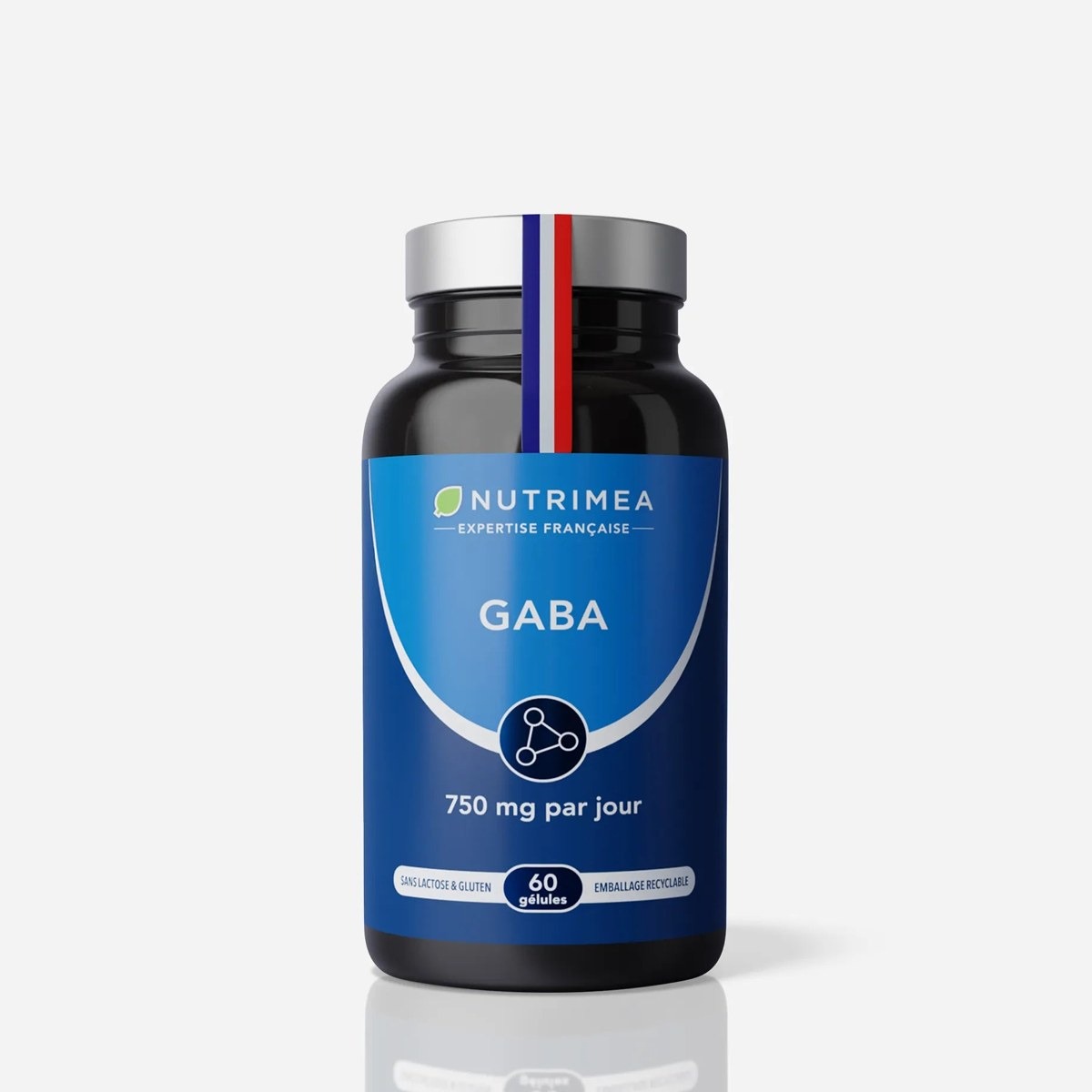
If you want to try GABA, Nutrimea’s GABA keeps things simple and transparent. The product page lists:
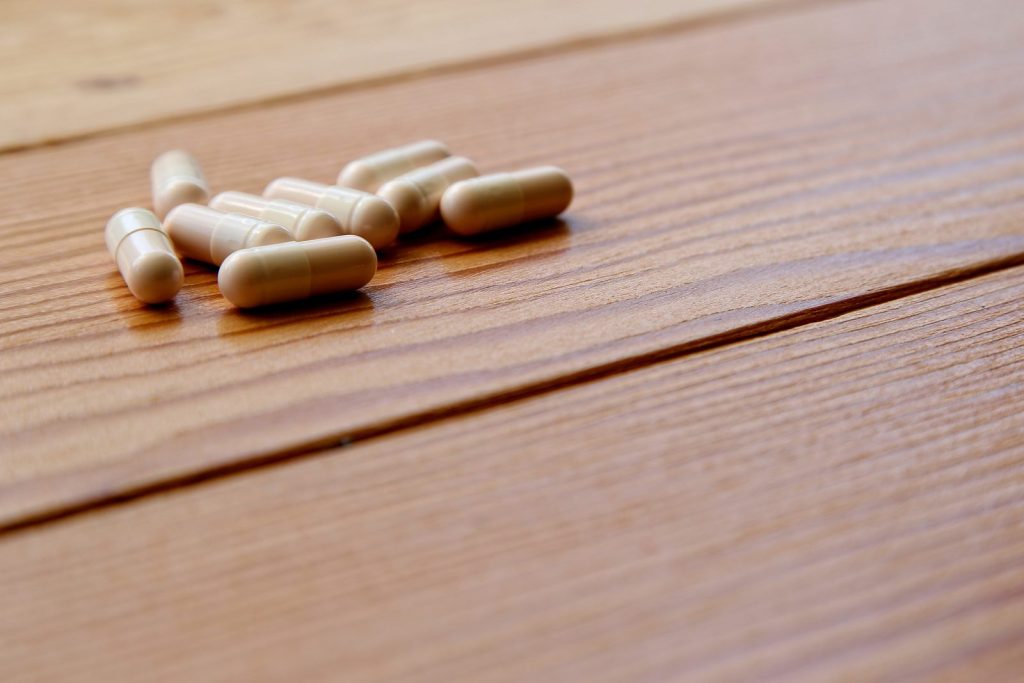
- over 99% pure GABA as the only active ingredient, in a plant-based capsule with a fatty acid anti-caking agent;
- 750 mg of GABA per 2 capsules (375 mg each); 2 capsules a day, morning and evening or together; 60 capsules, a 1-month supply;
- vegan capsules, GMO-free, lactose- and gluten-free, microbiological quality testing, and made in France;
- €17.90 per bottle (reference price checked on 22/11/2026), about €0.60 a day.
How does the dose compare? One capsule (375 mg) is close to the 300 mg used in the insomnia trial. The full 750 mg is higher than the 100 to 300 mg used in stress and sleep trials, though far below the doses the USP found free of serious effects. Starting with one capsule in the evening is a reasonable option to discuss with your pharmacist. The studies above did not test this product. The page asks pregnant and breastfeeding women to seek advice and does not recommend it for children or teens.
Partner link: we earn a commission if you order through this link, at no extra cost to you.
Frequently asked questions
What does GABA do?
In the brain, it slows down nerve signals. As a supplement, small trials suggest a calming effect under stress and slightly faster sleep onset, with limited evidence.
Does GABA help you sleep?
A few small trials with 200 to 300 mg a day found faster sleep onset and better sleep efficiency. Reviews rate the evidence as very limited.
What are the side effects of GABA?
Few in trials. It may lower blood pressure slightly; be careful with blood pressure drugs and sedatives, and avoid it in pregnancy and breastfeeding.
Is GABA an antidepressant?
No. It is a neurotransmitter, but GABA supplements have not been shown to treat depression.
Which foods contain GABA?
Green tea, rice germ and fermented foods such as kimchi and kefir. Your brain also makes its own.
Sources
- Boonstra E. et al. Neurotransmitters as food supplements: the effects of GABA on brain and behavior. Front Psychol, 2015; 6: 1520. PubMed 26500584
- Hepsomali P. et al. Effects of Oral GABA Administration on Stress and Sleep in Humans: A Systematic Review. Front Neurosci, 2020; 14: 923. PubMed 33041752
- Oketch-Rabah H.A. et al. United States Pharmacopeia (USP) Safety Review of Gamma-Aminobutyric Acid (GABA). Nutrients, 2021; 13(8): 2742. PubMed 34444905
- Byun J.I. et al. Safety and Efficacy of GABA from Fermented Rice Germ in Patients with Insomnia Symptoms. J Clin Neurol, 2018; 14(3): 291-295. PubMed 29856155
- Yamatsu A. et al. Effect of oral GABA administration on sleep and its absorption in humans. Food Sci Biotechnol, 2016; 25(2): 547-551. PubMed 30263304
- Yoto A. et al. Oral intake of GABA affects mood and activities of central nervous system during stressed condition. Amino Acids, 2012; 43(3): 1331-7. PubMed 22203366