Quercetin: benefits, allergies, exercise, best foods, side effects and interactions
The short answer
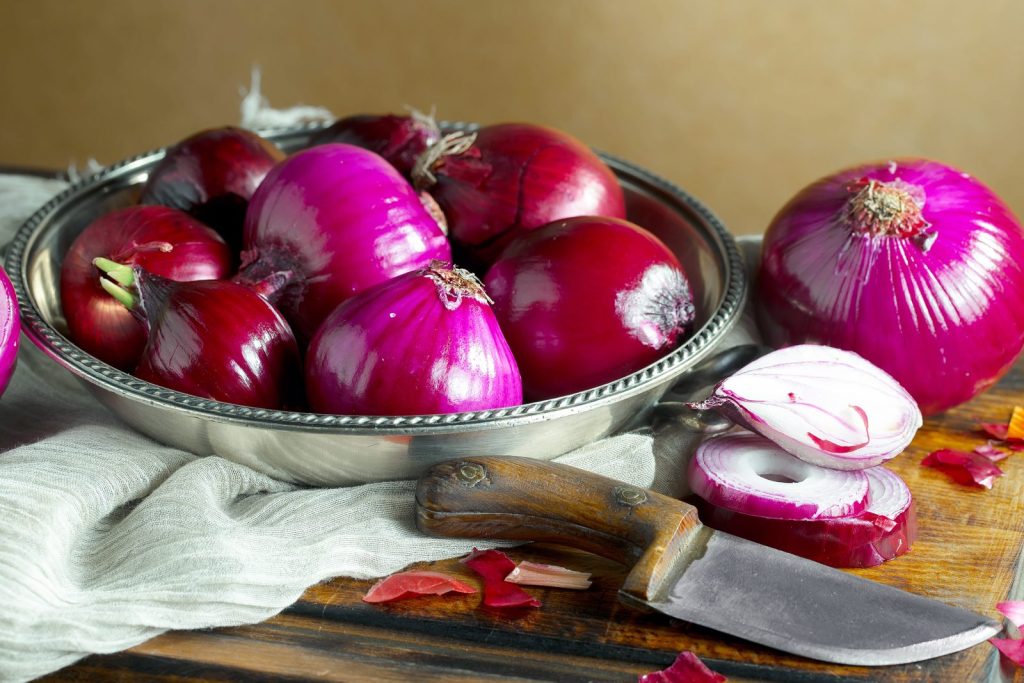
Quercetin is a plant pigment from the flavonoid family, found mainly in capers, red onions, kale, berries and apple skins. As a supplement, its benefits in humans are real but modest: a small drop in blood pressure from 500 mg a day, a “trivial” endurance gain of about 1% to 2%, slightly better muscle recovery, and one encouraging randomized trial for hay fever. It is poorly absorbed, hence enhanced forms such as phytosome. It is well tolerated at studied doses, but it changes several liver enzymes (CYP) that clear medications: if you take any, ask your pharmacist. No pregnancy data: skip it if pregnant.
This article is for information and does not replace medical advice. Severe allergies and asthma need your doctor; quercetin does not replace your treatment.
What is quercetin?
It is a flavonol, a polyphenol plants make to protect themselves from UV light and stress. In food it is almost always bound to a sugar (a glycoside); in supplements it is mostly the free “aglycone” (anhydrous or dihydrate) or bound to other molecules to improve absorption.
Diets provide little: average US quercetin intake is about 3.5 mg a day, within 9 to 36 mg of total flavonols, versus about 52 mg of flavonols in Europe (Dabeek and Marra, 2019). Supplements often provide up to 1,000 mg a day, far above food intake, as Germany’s Federal Institute for Risk Assessment (BfR) points out (Andres et al., 2018).
Quercetin foods: the richest sources
| Food | Quercetin (mg per 100 g) |
|---|---|
| Capers | about 33 on average (3 to 145 across analyses) |
| Red onion, raw | about 17 (Phenol-Explorer); up to 45 for onions per USDA |
| Yellow onion, raw | about 13 |
| Kale | 22.6 |
| Blueberries | 14.6 |
| Broccoli | 13.7 |
| Apple, whole with skin | 2.5 to 4 |
| Fresh dill | 79 |
Capers top the list, but a tablespoon (about 10 g) gives only a few milligrams. Onions are the best everyday source because their quercetin glucosides are the best absorbed: in people without a colon, 52% of quercetin from fried onions was absorbed, versus 24% from a pure quercetin capsule and 17% from rutin. In apples, quercetin sits in the skin, so keep it on. Easy ideas: a light French onion soup, raw red onion in salads, or skate wing with capers.
Quercetin bioavailability
Quercetin dissolves poorly in water and is quickly transformed by the gut and liver. Absorption improves when you:
- take it with a meal containing some fat, which increases absorption of the aglycone form (Dabeek and Marra, 2019);
- choose sugar-bound forms such as those in onions (glucosides, isoquercitrin);
- use a phytosome, quercetin combined with lecithin phospholipids. In a crossover study of 12 volunteers, it produced blood levels up to 20 times higher than standard quercetin. The study was run by employees of the manufacturer (Indena) after a single dose (Riva et al., 2019).
We found no comparable human data for “liposomal” quercetin.
Quercetin benefits: what the studies show
Allergies and hay fever
Quercetin is often called a “natural antihistamine”. A 2025 meta-analysis describes anti-allergic effects in animals. In humans, the best evidence is one Japanese randomized, double-blind, placebo-controlled trial (Yamada et al., 2022): 66 adults with pollen allergy took 200 mg of quercetin a day as phytosome for 4 weeks. Itchy eyes, sneezing, runny nose, disturbed sleep and quality of life improved versus placebo, with only minor side effects.
It is a single, short trial based on symptom questionnaires. It does not show quercetin can replace an antihistamine, and it does not cover asthma or food allergies.
Exercise: endurance and recovery
| Meta-analysis | Typical dose | Result |
|---|---|---|
| Kressler et al., 2011 (11 studies, 254 people) | 1,000 mg/day, median 11 days | Endurance and VO2max: about +2%, “between trivial and small” |
| Pelletier et al., 2013 (7 studies, 288 people) | About 1,000 mg/day | Performance +0.74%, only in untrained people; unlikely to be ergogenic |
| Rojano-Ortega et al., 2023 (13 studies, 249 people) | 1,000 mg/day, over 7 days | Less soreness and fewer muscle damage markers after hard exercise |
For performance, the effect is too small to matter. Recovery is the more interesting angle, though all studies had some risk of bias. Training, sleep and a good recovery snack matter far more.
Blood pressure
A meta-analysis of 7 trials (587 patients) found a 3 mmHg drop in systolic and 2.6 mmHg in diastolic pressure, clear only at 500 mg a day or more (Serban et al., 2016). A small add-on effect, not a treatment.
Gut, hair, anti-aging
These uses rest on lab and animal studies. As with resveratrol, promising test-tube results rarely translate at the same scale in humans.
Quercetin side effects and drug interactions
Well tolerated at studied doses
The BfR review finds side effects in trials rare and mild (headache, digestive upset), but long-term safety data at high doses are lacking. Animal studies raise two flags: possible worsening of existing kidney damage and possible promotion of estrogen-dependent cancers (Andres et al., 2018).
Interactions with medications (CYP enzymes)
| Enzyme | What was measured in volunteers | Possible consequence |
|---|---|---|
| CYP3A | 500 mg/day for 13 days: midazolam exposure about 22% lower | Weaker effect of drugs cleared this way |
| CYP2C9 | 500 mg twice daily for 10 days: higher diclofenac levels | Stronger effects or side effects of other drugs on this pathway (some NSAIDs, warfarin) |
| CYP1A2 | 500 mg/day: activity down about 10% (caffeine test) | Slower clearance of caffeine and some drugs |
These studies are small (12 to 18 volunteers) but used common supplement doses. On any long-term medication (blood thinners, immunosuppressants, cancer drugs, antiepileptics, heart drugs), check with your pharmacist first.
Quinolone antibiotics (ciprofloxacin, levofloxacin): in the lab, quercetin binds the same bacterial target (DNA gyrase), far more weakly (Hilliard et al., 1995). This is a theoretical warning found in interaction databases, with no proven clinical case that we know of. To be safe, pause quercetin during a quinolone course.
Who should avoid quercetin supplements
- pregnant or breastfeeding women: no human safety data found;
- people with kidney disease;
- history of hormone-sensitive cancer, unless your oncologist agrees;
- anyone on medication without pharmacist advice; children.
How to take quercetin
- Studied doses: 500 to 1,000 mg a day of standard quercetin for blood pressure and exercise; 200 mg a day as phytosome in the allergy trial.
- Timing: with a meal that contains some fat.
- Duration: from 4 weeks (allergy) to 12 weeks at most in studies.
- Quercetin with bromelain: a very popular combo, but we found no trial showing it works better than quercetin alone.
- Food first: onions, capers, apples with skin, kale and berries.
Dynveo: a Quercefit® phytosome dosed like the allergy trial
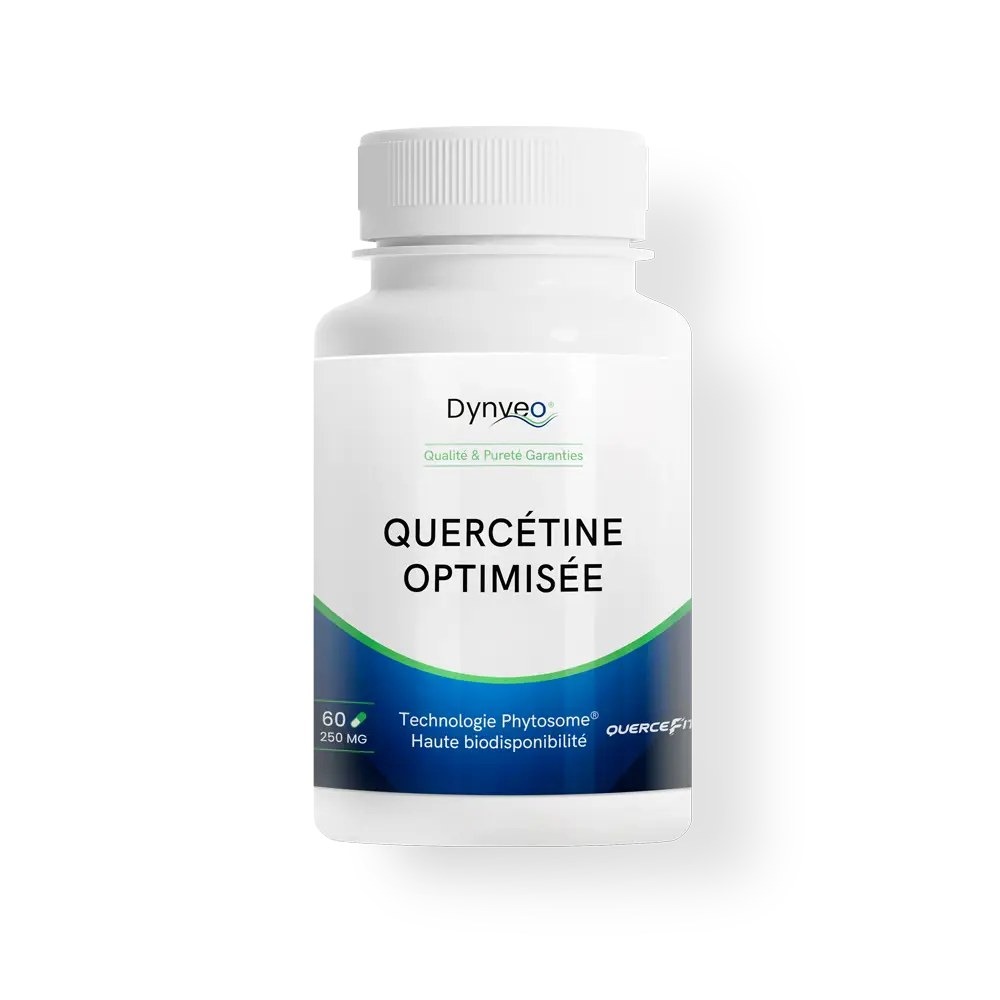
If you want to try quercetin, Dynveo’s Quercétine phospholipide Quercefit stands out because it uses the same form (Indena’s Quercefit® phytosome) and the same quercetin dose as the Yamada pollen allergy trial. The product page lists:
- per 2 capsules: 500 mg of phytosome, providing 200 mg of quercetin from Sophora japonica flowers and 300 mg of sunflower lecithin phospholipids;
- a short formula with no excipients or additives, in plant-based pullulan capsules;
- 1 to 2 capsules a day with meals, for 4 to 8 weeks; 60 capsules, a 30 to 60-day supply;
- batch certificates online (microbiology, heavy metals, PAHs, pesticides, pyrrolizidine alkaloids); the brand highlights French manufacturing;
- €24.90 per bottle (price checked on 22/11/2026), about €0.83 a day at 2 capsules or €0.42 at 1.
How does the dose compare? Two capsules match the 200 mg of phytosome quercetin used for 4 weeks in the Yamada trial. That is much less than the 500 to 1,000 mg of standard quercetin used for blood pressure and exercise; better absorption may make up part of the gap, but those effects were not measured with this product, and the studies above did not test this exact product.
The page states no known interactions; given the pharmacology studies above, still check with your pharmacist if you take medication, and avoid it during pregnancy and breastfeeding for lack of data.
See Dynveo Quercefit Quercetin →
Partner link: we earn a commission if you order through this link, at no extra cost to you.
Frequently asked questions
What is quercetin used for?
Mostly hay fever, exercise recovery and blood pressure. Evidence shows small effects: a 3 mmHg drop from 500 mg a day, less post-exercise soreness, and better pollen allergy symptoms in one trial.
What foods are high in quercetin?
Capers, dill, red onions, kale, berries, broccoli and apples with the skin. Onions are the best everyday source because their quercetin is best absorbed.
What are the side effects of quercetin?
Rare and mild at studied doses: headache, digestive upset. The main concern is drug interactions, plus the lack of pregnancy data.
Does quercetin with bromelain work better?
We found no trial testing the combination against quercetin alone. Bromelain has its own properties and cautions.
Can I take quercetin with medication?
Not without asking your pharmacist: it affects CYP3A, CYP2C9 and CYP1A2, which clear many drugs. Pause it during a quinolone antibiotic course.
Sources
- Andres S. et al. Safety Aspects of the Use of Quercetin as a Dietary Supplement. Mol Nutr Food Res, 2018; 62(1). PubMed 29127724
- Dabeek W.M., Marra M.V. Dietary Quercetin and Kaempferol: Bioavailability and Potential Cardiovascular-Related Bioactivity in Humans. Nutrients, 2019; 11(10): 2288. PubMed 31557798
- Riva A. et al. Improved Oral Absorption of Quercetin from Quercetin Phytosome®. Eur J Drug Metab Pharmacokinet, 2019; 44(2): 169-177. PubMed 30328058
- Yamada S. et al. Effects of repeated oral intake of a quercetin-containing supplement on allergic reaction: a randomized, placebo-controlled, double-blind study. Eur Rev Med Pharmacol Sci, 2022; 26(12): 4331-4345. PubMed 35776034
- Kressler J. et al. Quercetin and endurance exercise capacity: a systematic review and meta-analysis. Med Sci Sports Exerc, 2011; 43(12): 2396-404. PubMed 21606866
- Rojano-Ortega D. et al. Quercetin supplementation promotes recovery after exercise-induced muscle damage. Biol Sport, 2023; 40(3): 813-825. PubMed 37398956
- Serban M.C. et al. Effects of Quercetin on Blood Pressure: A Systematic Review and Meta-Analysis. J Am Heart Assoc, 2016; 5(7): e002713. PubMed 27405810
- Duan K.M. et al. Effect of quercetin on CYP3A activity in Chinese healthy participants. J Clin Pharmacol, 2012; 52(6): 940-6. PubMed 21680781
- Bedada S.K., Neerati P. Effect of quercetin on CYP2C9 activity of diclofenac in healthy volunteers. Phytother Res, 2018; 32(2): 305-311. PubMed 29168292
- Phenol-Explorer database: quercetin. phenol-explorer.eu