Group · Pulses
Black beans
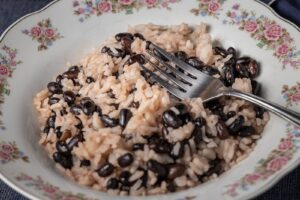
Black beans are a staple pulse of Latin American cooking, from Mexico to Brazil and the Caribbean. Recognisable by their shiny, deep black skin and creamy flesh, they come dried, tinned or ready-cooked. Nutritionally very complete, they combine plant protein, complex carbohydrate and fibre while staying low in fat. With around 132 kcal per 100 g once cooked, they provide fullness and lasting energy. Their slightly sweet flavour and melt-in-the-mouth texture make them an ideal base for balanced vegetarian dishes. Rich in minerals, they fit perfectly into a varied diet, for both pleasure and fitness.

Macronutrient breakdown
Nutrition table per 100 g
| Calories | 132 kcal |
| Kilojoules | 552 kJ |
| Protein | 8,9 g |
| Carbohydrate | 23,8 g |
| Fat | 0,6 g |
| Fibre | 8,7 g |
Micronutrients per 100 g
All measured nutrients, ranked by share of the daily reference intake.
- Manganese0,44 mg22 %
- Vitamin B10,24 mg22 %
- Copper0,21 mg21 %
- Phosphorus140 mg20 %
- Magnesium70 mg19 %
- Potassium355 mg18 %
- Iron2,1 mg15 %
- Zinc1,12 mg11 %
See the other 8 nutrients
- Vitamin E0,87 mg7 %
- Vitamin B60,07 mg5 %
- Vitamin K13,3 µg4 %
- Vitamin B20,06 mg4 %
- Vitamin B50,24 mg4 %
- Calcium27 mg3 %
- Vitamin B30,51 mg3 %
- Selenium1,2 µg2 %
USDA FoodData Central (SR Legacy)
Tips
Versatile and inexpensive, black beans suit many preparations. Allow 60 to 80 g dried (about 150 to 180 g cooked) per meal. If they are dried, soak them overnight, then cook them in gently simmering water for 60 to 90 minutes. The tinned version, which you should rinse to reduce the sodium, saves precious time, especially if you do batch cooking.
Nutrition facts and benefits. With 8.86 g of protein and 8.7 g of fibre per 100 g, black beans support fullness and digestive comfort. Their complex carbohydrate (23.71 g) gives a moderate glycaemic index, which is useful for steady energy. They also provide iron, magnesium, potassium, folate and antioxidants linked to their dark pigment. To improve absorption of plant-based iron, pair them with a source of vitamin C such as pepper, tomato or a squeeze of lime.
- Culinary uses: chilli sin carne, feijoada, burritos, cold salads, creamy soups, veggie patties or black bean hummus.
- Smart pairings: with rice or sweetcorn, you get a more complete amino acid profile, ideal in a diet based on cereals and pulses.
- Storage: dried, they keep for months in a dry place; cooked, 3 to 4 days in the fridge or several months in the freezer.
For active people. Black beans are an excellent source of carbohydrate and plant protein for fuelling up before exercise or aiding muscle recovery after training. Include them in a post-workout meal with a cereal and some vegetables to replenish glycogen stores. If you want to diversify your protein sources, they go well with other options such as lentils or tofu, and fit into nutrition for fitness.
Weight control. Their energy density remains reasonable and their fibre content has a filling effect that is useful in a balanced diet. Beware of fatty preparations (bacon pieces, cheese, cream) or sweetened ready-made tins, which push the tally up. Favour simple cooking, spices (cumin, paprika, coriander) and herbs to lift the flavour without unnecessary calories. Introduced gradually, black beans slot easily into tasty, varied and balanced menus.