Group · Herbs & spices
Caraway
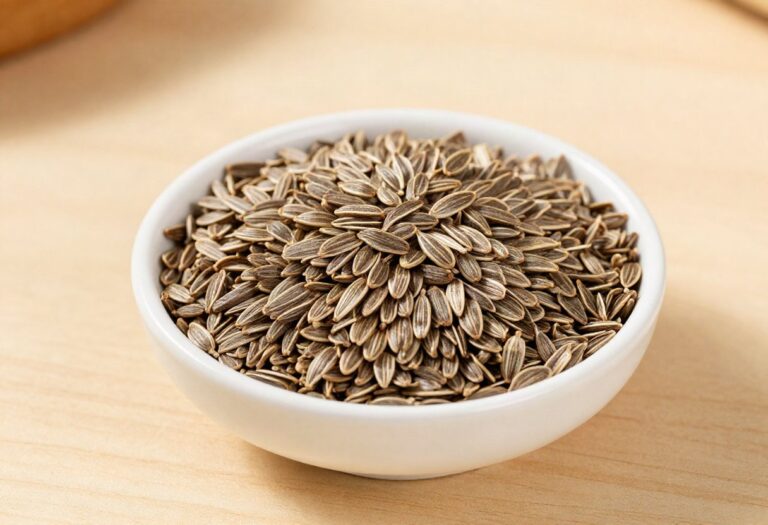
Caraway, sometimes called meadow cumin, is a spice from a plant in the Apiaceae family, mainly used for its small, ridged seeds with a warm, aniseed and slightly lemony aroma. You will find it as whole or ground seeds in central European, Scandinavian and North African cooking. It flavours rye breads made with rye, cabbage, cheeses, cured meats and some liqueurs. Nutritionally, caraway is very rich in fibre (38 g per 100 g) and plant protein (nearly 19.8 g), and also provides minerals and aromatic compounds. Used in small amounts, it lifts a dish without adding to the calorie count, which makes it a valuable flavour ally in a balanced diet.
Macronutrient breakdown
Nutrition table per 100 g
| Calories | 334 kcal |
| Kilojoules | 1380 kJ |
| Protein | 19,8 g |
| Carbohydrate | 11,9 g |
| Fat | 14,6 g |
| Fibre | 38 g |
Micronutrients per 100 g
All measured nutrients, ranked by share of the daily reference intake.
- Iron16,2 mg116 %
- Copper0,91 mg91 %
- Calcium689 mg86 %
- Phosphorus568 mg81 %
- Magnesium258 mg69 %
- Potassium1350 mg68 %
- Manganese1,3 mg65 %
- Zinc5,5 mg55 %
- Vitamin B9dietary folate equivalents10 µg
See the other 7 nutrients
- Vitamin B10,38 mg35 %
- Vitamin B20,38 mg27 %
- Vitamin C21 mg26 %
- Vitamin B60,36 mg26 %
- Vitamin B33,61 mg23 %
- Vitamin E2,5 mg21 %
- Vitamin A17,2 µg2 %
Anses Ciqual 2025. Source: Anses, 2025, Ciqual food composition table
Tips
Caraway is used in small pinches, which puts its high nutrition facts into perspective: at 334 kcal per 100 g, the calories in a teaspoon (2 to 3 g) are negligible. It is therefore an excellent way to flavour your recipes without guilt, ideal if you are watching your weight or rebalancing your diet.
How to eat caraway
- Dry-toast it lightly in a frying pan to release its essential oils before crushing it with a pestle and mortar.
- Add it to cabbage dishes (sauerkraut, braised cabbage) and root vegetables, where it helps digestion.
- Sprinkle it on rye bread, into homemade bread dough, onto fresh cheeses or roasted potatoes.
- It also goes well with lentil soups, stews and some meat marinades.
In terms of nutrients, caraway stands out for its exceptional fibre content (38 g/100 g), which helps you feel full, as well as its plant protein and carbohydrates, partly bound up with the fibre. It also supplies iron, calcium, magnesium and potassium. As with most spices, its value lies mainly in the richness of its aromatic profile rather than in the amounts eaten.
You can ring the changes by pairing it with other spices from the herbs and spices family. Cumin, its close cousin, has a more earthy note, while coriander seeds add a fresh, citrusy touch. For slow-cooked dishes, a little bay leaf rounds off the aromatic bouquet nicely.
Tips for active people: caraway is not a source of energy in itself given the small amounts used, but it lets you season protein-rich, complex-carbohydrate dishes, perfect for recovery, without excess salt or fat. Add it, for example, to your batch-cooked meals or to pulses after training. To go further with meal planning, read our advice on gentle cooking that preserves nutrients.
Storage: keep the whole seeds in an airtight jar, away from light and damp. Whole, they keep their aroma much longer than ground, so grind them just before use. There is nothing in particular to watch for with weight: eaten as a seasoning, caraway adds flavour with no noticeable effect on your daily calorie intake.