Group · Starchy foods
Cornflour (Maizena)
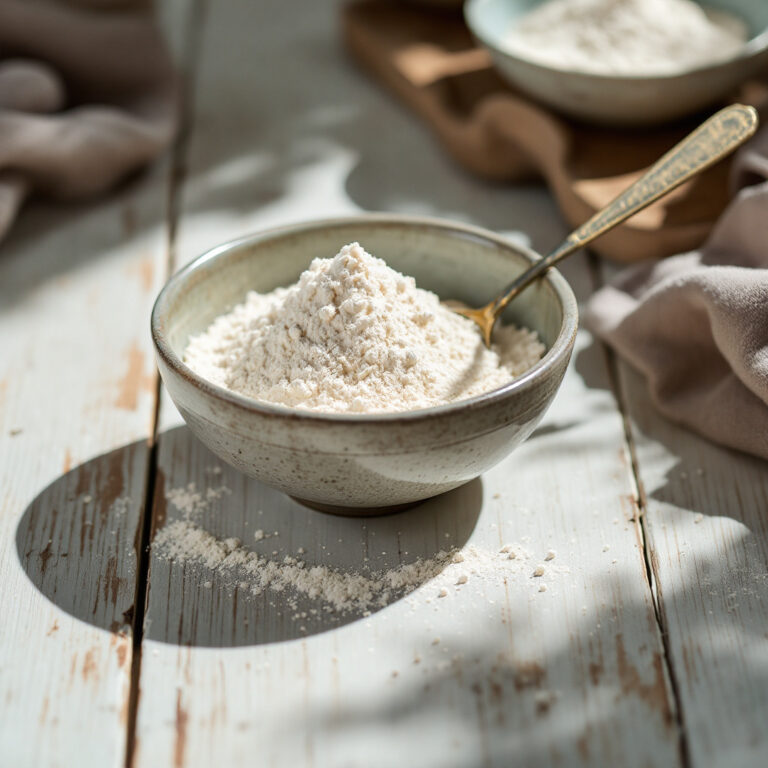
Maizena is a brand name that has become a common noun: it is cornflour (cornstarch), the starch extracted from the grain and then dried to a very fine powder. It no longer contains protein or fat: the whole grain has some, but the starch keeps almost none.
On nutrition facts, the entry shows 365 kcal per 100 g, with 90.4 g of carbohydrate of which 87 g starch, 0.9 g of fibre, 0.26 g of protein and 0.05 g of fat. It is one of the purest carbohydrate foods in the database, on a par with sugar, with the difference that you do not eat it by the spoonful.
Macronutrient breakdown
Nutrition table per 100 g
| Calories | 365 kcal |
| Kilojoules | 1550 kJ |
| Protein | 0,3 g |
| Carbohydrate | 90,4 g |
| Fat | 0,1 g |
| Fibre | 0,9 g |
Micronutrients per 100 g
All measured nutrients, ranked by share of the daily reference intake.
- Selenium2,8 µg5 %
- Copper0,05 mg5 %
- Iron0,47 mg3 %
- Manganese0,05 mg3 %
- Phosphorus13 mg2 %
- Magnesium3 mg1 %
- Zinc0,06 mg1 %
- Iodine0,6 µg0 %
- Vitamin B9dietary folate equivalents1 µg
See the other 2 nutrients
- Calcium2 mg0 %
- Potassium3 mg0 %
Anses Ciqual 2025. Source: Anses, 2025, Ciqual food composition table
Tips
It thickens twice as much as flour. One level tablespoon of cornflour replaces two tablespoons of flour in a sauce, for a cleaner texture and a neutral taste. Weight for weight the calories are similar, but you use half as much: the dish benefits.
Always mix it with cold liquid. Poured into a hot liquid, it forms lumps you cannot rescue. First blend it with two tablespoons of cold water or milk, then pour into the pan while stirring. Thickening happens at around 90 °C.
A real way to lighten dishes. A béchamel or a velouté thickened with cornflour does without the butter and flour roux, which is a good twenty grams of butter less. It is the only use in which it genuinely lowers the calories of a dish.
Gluten-free, and that is its other asset. It replaces some of the flour in cakes to make them lighter, and it can be used on a gluten-free diet: just check the label on the packet, as cross-contamination exists.
It does not nourish, it gives texture. No notable micronutrient: 2 mg of calcium and 3 mg of potassium per 100 g. It is a technical ingredient, to be filed mentally next to gelatine rather than next to nourishing starchy foods.
Sources
Average nutrition values per 100 g, given for guidance (spices and condiments are eaten in small amounts; values vary by brand and preparation).