Group · Herbs & spices
Dried chilli
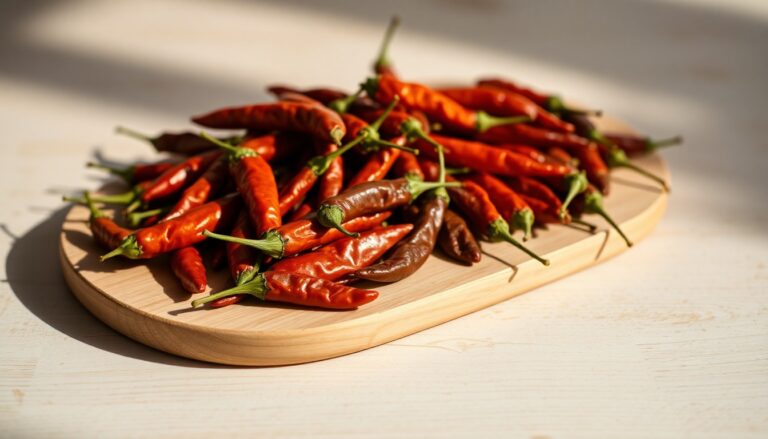
Dried chilli is a spice made by dehydrating fresh chillies, which concentrates their flavour and their famous heat, caused by capsaicin. Depending on the variety (chilli, ancho, chipotle, espelette, bird’s eye), it offers a range from mild and fruity to fiery. It is sold whole, as flakes or ground to a powder, ready to lift sauces, marinades and slow-cooked dishes. Nutritionally, dried chilli has 324 kcal per 100 g, but because it is used in very small amounts, its real calorie contribution is minimal. It stands out above all for its fibre content (28.7 g) and its aromatic compounds, which transform a dish without adding to the calorie bill.
Macronutrient breakdown
Nutrition table per 100 g
| Calories | 324 kcal |
| Kilojoules | 1356 kJ |
| Protein | 10,6 g |
| Carbohydrate | 69,9 g |
| Fat | 5,9 g |
| Fibre | 28,7 g |
Micronutrients per 100 g
All measured nutrients, ranked by share of the daily reference intake.
- Vitamin A1324 µg166 %
- Vitamin K1108,2 µg144 %
- Potassium1870 mg94 %
- Vitamin B21,21 mg86 %
- Vitamin B60,81 mg58 %
- Vitamin B38,67 mg54 %
- Iron6,04 mg43 %
- Manganese0,82 mg41 %
See the other 10 nutrients
- Vitamin C31,4 mg39 %
- Vitamin E3,14 mg26 %
- Magnesium88 mg23 %
- Copper0,23 mg23 %
- Phosphorus159 mg23 %
- Vitamin B50,96 mg16 %
- Zinc1,02 mg10 %
- Vitamin B10,08 mg7 %
- Selenium3,5 µg6 %
- Calcium45 mg6 %
USDA FoodData Central (SR Legacy)
Tips
Dried chilli is used in touches: a pinch of flakes or half a rehydrated chilli is enough to flavour a whole dish. To bring out its aroma, dry-toast it for a few seconds in a hot pan before grinding it or rehydrating it in warm water. It goes wonderfully with slow-cooked dishes, chilli con carne, curries, tomato sauces, pulses and marinades for meat or fish.
Nutrition facts and benefits. Per 100 g, dried chilli provides 324 kcal, 10.58 g of protein, 69.86 g of carbohydrate and just 5.81 g of fat, with an impressive 28.7 g of fibre. It is also a source of vitamins (notably C and provitamin A) and antioxidant compounds linked to its pigments. Capsaicin, which is responsible for the heat, is being studied for its effect on the sensation of warmth and on appetite. To find out more on this subject, read our guide to antioxidant foods.
- Smart dosing: start with a small amount, as you can always add more. Remove the seeds and the white membranes to tone down the heat.
- Storage: keep it in an airtight jar away from light and damp to preserve colour and aroma for several months.
- Pairings: it goes with cumin, paprika and garlic powder to make homemade spice blends.
For active people. Dried chilli is an ally for tasty plates without unnecessary calories: it makes meals rich in lean protein and vegetables appetising, useful when cutting as well as bulking. Be careful before intense exercise or a competition, though, as a large amount can irritate the stomach in some people. Favour it at recovery meals rather than in a pre-workout snack.
Weight control. Good news for slimming: since you only eat a few grams, the calorie impact of dried chilli is negligible. It even helps give flavour and limits the need for added fat or salt. Make it part of a balanced diet approach to spice up your dishes healthily. Finally, explore the other spices in the Herbs & Spices family to vary flavours day to day.