Group · Meat
Hare
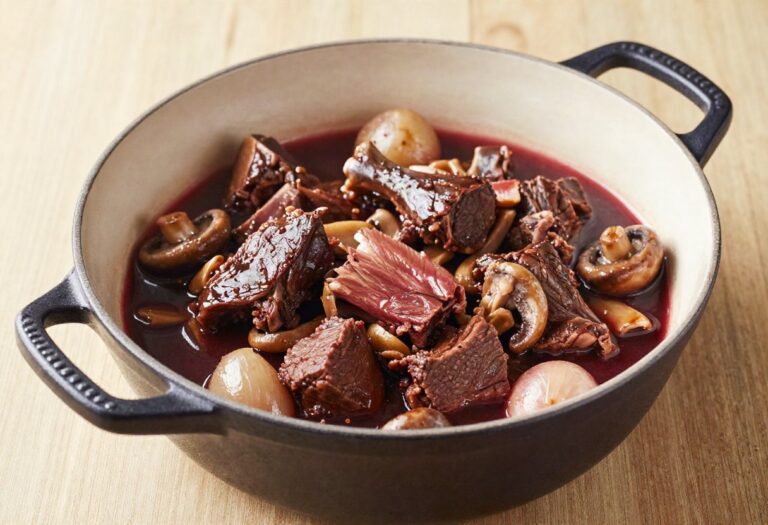
Hare is a game meat appreciated for its strong taste and dark flesh, more robust than that of domestic rabbit. A wild animal hunted in autumn and winter, it is traditionally prepared as a civet (a rich stew), as saddle or slow-cooked to tenderise its fibres. Nutritionally, hare stands out for its richness in protein (about 21.6 g per 100 g) and its low carbohydrate content, for only 111 kcal. It also provides iron, zinc and B vitamins. Lean and dense in nutrients, it has a place in a balanced and varied diet, as long as you take care over the cooking method and the accompaniments.
Macronutrient breakdown
Nutrition table per 100 g
| Calories | 111 kcal |
| Kilojoules | 466 kJ |
| Protein | 21,6 g |
| Fat | 2,7 g |
Micronutrients per 100 g
All measured nutrients, ranked by share of the daily reference intake.
- Vitamin B38,07 mg50 %
- Vitamin B121 µg40 %
- Phosphorus210 mg30 %
- Omega-3 ALA0,49 g25 %
- Copper0,24 mg24 %
- Vitamin B60,3 mg21 %
- Selenium10 µg18 %
- Zinc1,7 mg17 %
See the other 13 nutrients
- Potassium318 mg16 %
- Vitamin B50,8 mg13 %
- Iron1,8 mg13 %
- Vitamin B10,09 mg8 %
- Magnesium26 mg7 %
- Omega-6 LA0,65 g7 %
- Vitamin K14,8 µg6 %
- Vitamin B910 µg5 %
- Vitamin B20,06 mg4 %
- Manganese0,04 mg2 %
- Calcium11,6 mg1 %
- Vitamin E0,1 mg1 %
- Iodine0,58 µg0 %
Anses Ciqual 2025. Source: Anses, 2025, Ciqual food composition table
Tips
Hare is a meat with character whose flesh benefits from being tenderised. Before cooking, it is often marinated in red wine with onions, juniper berries, thyme and bay leaf: this step flavours the meat and softens the fibres. Choose slow, gentle cooking (civet, stew, covered simmering) that turns this firm game into a melting dish. The saddle, the finest part, lends itself to roasting or pan-frying.
In terms of nutrition facts, hare is a protein champion with nearly 22 g per 100 g, zero carbohydrate and only 2.67 g of fat. Its 111 calories make it a lean, filling meat. It provides well-absorbed haem iron, zinc, phosphorus and vitamins B12 and B6, which are good for energy. You can compare its content with that of other game such as venison or wild boar, which are also naturally low in fat.
Practical tips:
- Allow a portion of 120 to 150 g of trimmed meat per person.
- Serve with root vegetables, mushrooms or a purée to balance the plate.
- Hare freezes well raw; once cooked as a civet, eat it within 2 to 3 days if kept in the fridge.
- Avoid sauces that are too rich in cream or butter if you are watching your weight.
For active people: with its very high protein density and low fat content, hare is an ally for lean muscle building and muscle recovery. Serve it with wholegrain starchy foods after training to replenish glycogen, since the meat alone provides no carbohydrate. To round out your daily intake, you can take inspiration from nutrition for fitness.
Weight control: hare remains an interesting meat when you are trying to lose weight, thanks to its filling effect and its low natural calorie density. It is mainly the preparation that pushes up the total: limit added fat, bacon pieces and the bread used to mop up the sauce. Well-controlled cooking preserves the qualities of this game; discover the principles of gentle cooking to keep the best of your food. To explore other options in the meat family, vary between game, poultry and lean meats through the season.