Group · Fish
Lumpfish
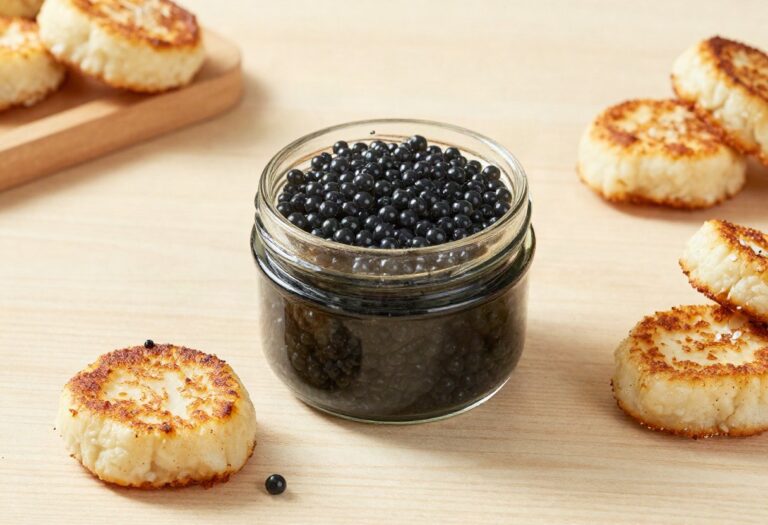
The lumpfish (known in French as lompe, or cycloptère) is a northern fish known mainly for its roe, sold as « lumpfish caviar » after dyeing. Its gelatinous flesh, less sought after, is eaten in Iceland and Scandinavia.
In terms of nutrition facts, raw: 168 kcal per 100 g, with 14.2 g of fat including 2.04 g of omega-3, and 10 g of protein. It provides 485 mg of potassium, 203 mg of phosphorus, 50 µg of iodine and 3.9 µg of vitamin D per 100 g, with 0.17 g of salt.
Macronutrient breakdown
Nutrition table per 100 g
| Calories | 168 kcal |
| Kilojoules | 695 kJ |
| Protein | 10 g |
| Fat | 14,2 g |
Micronutrients per 100 g
All measured nutrients, ranked by share of the daily reference intake.
- EPA1,1 g440 %
- DHA0,94 g376 %
- Total omega-32,04 g82 %
- Vitamin D3,9 µg78 %
- Iodine50 µg33 %
- Selenium16,5 µg30 %
- Phosphorus203 mg29 %
- Potassium485 mg24 %
See the other 6 nutrients
- Vitamin B32 mg13 %
- Vitamin B10,07 mg6 %
- Vitamin B20,08 mg6 %
- Iron0,5 mg4 %
- Calcium20 mg3 %
- Omega-6 LA0,22 g2 %
Anses Ciqual 2025. Source: Anses, 2025, Ciqual food composition table
Tips
2.04 g of omega-3, including 1.1 g of EPA. Lumpfish is particularly rich in EPA, the fatty acid involved in regulating inflammation. This is a fairly rare profile, as most oily fish are dominated by DHA.
But only 10 g of protein. That is little for a fish: its flesh is very watery and gelatinous. It is not a good source of protein, unlike sprat.
Lumpfish caviar is a different product. The roe dyed black or red is heavily salted for preservation: it has nothing to do with the flesh, in either composition or use.
50 µg of iodine per 100 g. A third of the reference intake. Like all sea fish, it is a source of iodine that few land-based foods can replace.
It is hard to find fresh in France. Its flesh is mostly eaten locally in the Nordic countries. This is a reference page more than an everyday product.