Group · Meat
Minced veal
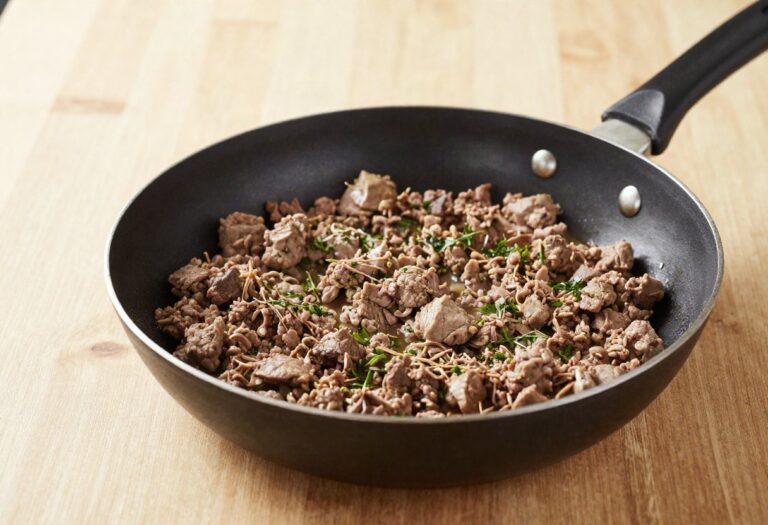
Minced veal is a tender, delicate meat from a young calf, often found in trays or freshly minced at the butcher’s. Paler and milder than minced beef, it appeals with its fine texture and subtle taste, ideal for meatballs, stuffings, bolognese sauces or homemade burgers. In terms of nutrition facts, minced veal provides around 243 kcal per 100 g, with plenty of protein (16.7 g), a moderate amount of fat (19.5 g) and no carbohydrate. It is a useful source of haem iron, zinc and B vitamins. Lean and versatile, it has its place in a balanced diet for anyone watching their figure.
Macronutrient breakdown
Nutrition table per 100 g
| Calories | 243 kcal |
| Kilojoules | 1010 kJ |
| Protein | 16,7 g |
| Carbohydrate | 0,4 g |
| Fat | 19,5 g |
Micronutrients per 100 g
All measured nutrients, ranked by share of the daily reference intake.
- Iron0,84 mg6 %
- Calcium11 mg1 %
Anses Ciqual 2025. Source: Anses, 2025, Ciqual food composition table
Tips
Minced veal is a handy ingredient in the kitchen thanks to its quick cooking time and mild flavour, which suits many recipes. A reasonable portion is around 100 to 150 g per meal, enough to cover a good share of your needs for quality protein.
- Cooking methods: cook over a medium heat, in a frying pan with a drizzle of olive oil, or in the oven for meatballs and terrines. Avoid overcooking this lean meat: cooking it until it is just slightly pink in the middle keeps it tender.
- Pairings: combine minced veal with vegetables (courgettes, tomatoes, onions), fresh herbs (basil, parsley, thyme) and wholegrain starchy foods for a complete, filling meal.
- Storage: like any minced meat, eat it very quickly, ideally on the day you buy it, or freeze it straight away.
Nutritionally, minced veal provides well-absorbed haem iron, zinc and vitamins B12 and B6, which help with energy metabolism. Its glycaemic index is zero as it contains no carbohydrate, which makes it a good protein choice when slimming or following a balanced diet. To compare its calories with other meats, you can use our food calorie table or explore the whole meat family.
For active people: with nearly 16.7 g of protein per 100 g, minced veal effectively supports muscle recovery and the building of lean mass. Include it in a post-workout meal with complex carbohydrates to replenish your energy stores. If you are looking for convenient extras, discover our ideas for protein snacks or the advice on nutrition for fitness to optimise your daily intake.
Points to watch for your weight: minced veal is relatively lean, but its fat content depends on the cut used. Choose a mince with a low fat content and limit additions (cream, cheese, fatty sauces) that raise the calorie density. If you want some variety, minced beef or poultry such as turkey breast offer other interesting profiles. Cooked simply and paired with vegetables, minced veal fits perfectly into a balanced, tasty diet.