Group · Pulses
Mung bean sprouts
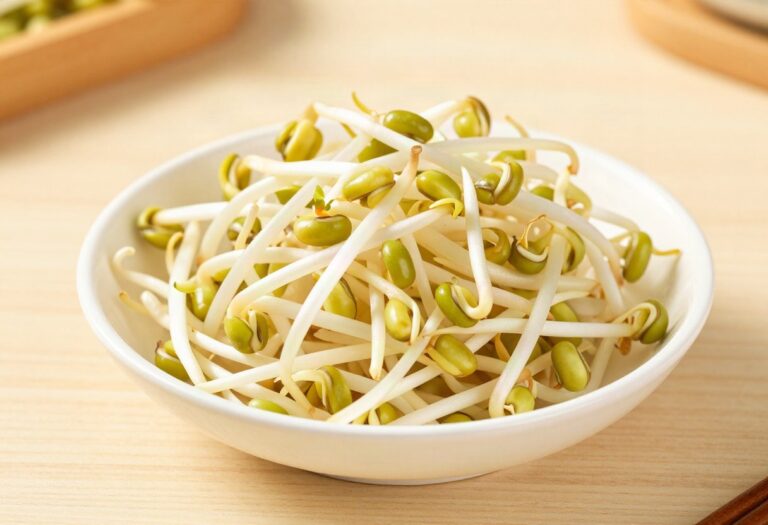
Mung bean sprouts, often wrongly sold as « soya sprouts » on market stalls, are in fact the young shoots of the mung bean, a small green pulse originally from Asia. Crunchy and translucent, they turn up in stir-fries, salads and spring rolls. Their great strength is a very low calorie density, with just 28.3 kcal per 100 g, while still providing a little plant protein, fibre and a lovely freshness. Sprouting boosts their water content and micronutrients, making them a light and versatile ingredient. Perfect for adding volume and texture to a balanced meal without piling on the calories, they appeal as much to food lovers watching their waistline as to curious cooks.
Macronutrient breakdown
Nutrition table per 100 g
| Calories | 28 kcal |
| Kilojoules | 119 kJ |
| Protein | 2,9 g |
| Carbohydrate | 3,4 g |
| Fat | 0,2 g |
| Fibre | 1,7 g |
Micronutrients per 100 g
All measured nutrients, ranked by share of the daily reference intake.
- Copper0,1 mg10 %
- Phosphorus43 mg6 %
- Potassium120 mg6 %
- Manganese0,12 mg6 %
- Vitamin B10,07 mg6 %
- Vitamin C4,13 mg5 %
- Vitamin B30,71 mg4 %
- Vitamin B20,06 mg4 %
- Vitamin B9dietary folate equivalents61,3 µg
See the other 10 nutrients
- Vitamin B60,06 mg4 %
- Magnesium16 mg4 %
- Zinc0,32 mg3 %
- Iron0,44 mg3 %
- Vitamin B50,17 mg3 %
- Vitamin K12,1 µg3 %
- Calcium16 mg2 %
- Vitamin E0,1 mg1 %
- Vitamin A0,42 µg0 %
- Total omega-30 g0 %
Anses Ciqual 2025. Source: Anses, 2025, Ciqual food composition table
Tips
In terms of nutrition facts, mung bean sprouts have an ideal profile for anyone watching their weight: 28.3 kcal, 2.81 g of protein, 3.4 g of carbohydrate and barely 0.18 g of fat per 100 g. Their moderate glycaemic index and high water content make them a filling, light food, to include generously in a varied diet.
How to eat them? You can eat them raw, simply rinsed, to preserve their crunch and vitamins (notably vitamin C, which is sensitive to heat). In Asian cooking, they are added at the end of cooking in a wok so they stay firm. A few ideas:
- as a crunchy topping for a mixed salad or a healthy bowl;
- in spring rolls, nems and sandwiches;
- stir-fried for a minute or two with vegetables, ginger and a drizzle of soy sauce;
- as a topping for a soup or a lentil curry just before serving.
Storage: very perishable, they keep for 2 to 3 days in the fridge in an airtight box. Rinse them well and use them quickly. For the keenest, sprouting at home is easy from dried seeds, taking a few days with simple daily rinsing.
For active people, these sprouts are not a major source of energy, but they bring freshness, fibre and a little extra plant protein to a recovery plate. Combine them with a real carbohydrate source such as chickpeas or with tofu to put together a more complete dish. To better understand how to build meals suited to exercise, this guide to fitness nutrition gives useful pointers.
Benefits and points to watch: low in calories and rich in water, mung bean sprouts are perfect for adding volume without guilt, an asset if you are trying to lose weight. Their fibre contributes to digestive comfort and the feeling of fullness. Do watch food safety, though: raw sprouts should always be eaten very fresh and well rinsed. To explore other options in this category, browse the pulses family, rich in plant protein and fibre, which deserve a regular place in a balanced diet.