Group · Vegetables
Spring rolls
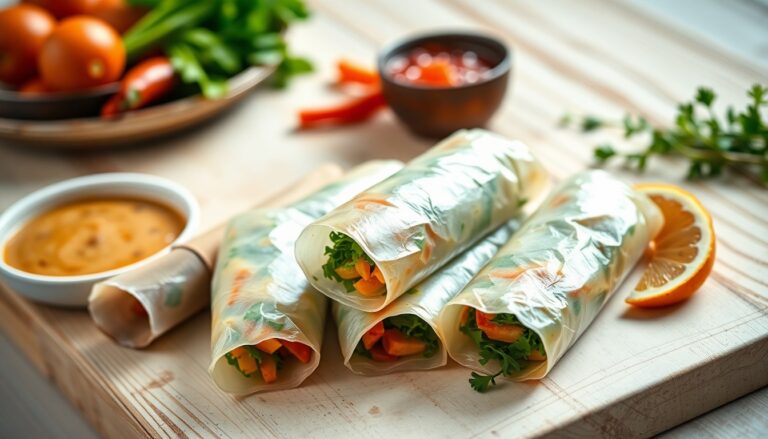
The spring roll is a classic of Asian cuisine, often filed under fast food even though it is a fairly light option. There is the fresh roll, wrapped in a translucent rice paper and filled with vermicelli, prawns, chicken, lettuce and fresh herbs such as mint or coriander, and the fried roll (or nem) with its crisp pastry. With around 103 kcal per 100 g, the fresh version provides 16.6 g of carbohydrate, 4.57 g of protein and only 1.82 g of fat. It is a colourful, refreshing bite that works well in a balanced diet when you choose the non-fried version and light sauces.
Macronutrient breakdown
Nutrition table per 100 g
| Calories | 103 kcal |
| Kilojoules | 437 kJ |
| Protein | 4,6 g |
| Carbohydrate | 16,6 g |
| Fat | 1,9 g |
| Fibre | 1,2 g |
Micronutrients per 100 g
All measured nutrients, ranked by share of the daily reference intake.
- Iodine25 µg17 %
- Copper0,1 mg10 %
- Selenium5 µg9 %
- Vitamin B60,11 mg8 %
- Manganese0,15 mg8 %
- Vitamin B120,16 µg6 %
- Zinc0,45 mg5 %
- Potassium87 mg4 %
See the other 13 nutrients
- Vitamin B30,64 mg4 %
- EPA0,01 g4 %
- Omega-6 LA0,35 g4 %
- DHA0,01 g3 %
- Magnesium12,6 mg3 %
- Total omega-30,08 g3 %
- Iron0,4 mg3 %
- Omega-3 ALA0,06 g3 %
- Calcium22,5 mg3 %
- Phosphorus14,9 mg2 %
- Vitamin C1,5 mg2 %
- Vitamin E0,18 mg2 %
- Vitamin A7,17 µg1 %
Anses Ciqual 2025. Source: Anses, 2025, Ciqual food composition table
Tips
The whole appeal of the spring roll lies in which version you choose. The fresh rice-paper roll, filled with raw vegetables, vermicelli and lean protein, stays light and easy to digest. The fried version, golden from the oil, raises the calorie density and the fat: keep it for special occasions if you are watching your weight.
- Recommended portion: 2 to 3 fresh rolls as a starter, or 4 as a main course with a green salad. Count these as a light meal rather than a nibble.
- Smart pairings: serve them with a lightened nuoc mam sauce rather than a thick sweet sauce. Avoid drowning the roll in mayonnaise or too much sweet sauce such as ketchup.
- Cooking: prefer the raw roll that you assemble yourself. If you like it crisp, bake it or use an air fryer rather than deep-frying.
In terms of nutritional value, the fresh spring roll offers a good balance: little fat, carbohydrate from the rice paper and protein from the prawns or chicken. Its glycaemic index depends mostly on the rice and the vermicelli. To boost the fibre, fill it generously with grated carrot, cucumber, beansprouts and fresh herbs: these vegetables add crunch and micronutrients without piling on calories.
For active people, the fresh roll is a good snack after exercise: the carbohydrate in the rice helps restock energy reserves, while the prawns or chicken provide protein that supports muscle recovery. If you are aiming to build muscle, increase the share of lean protein or top up with a dedicated source such as protein powder. When cutting, the fresh roll remains compatible thanks to its low fat content.
As for storage, fresh rolls are best eaten quickly, ideally within a few hours of making them, because the rice paper tends to dry out. You can cover them with a damp cloth in the fridge. Fried nems can be reheated in the oven to bring back the crispness.
To add variety within the street food category, compare its calories with other options in our Vegetables family, or take a look at the food calorie table to make informed choices every day.