Group · Condiments & sauces
Chicken broth
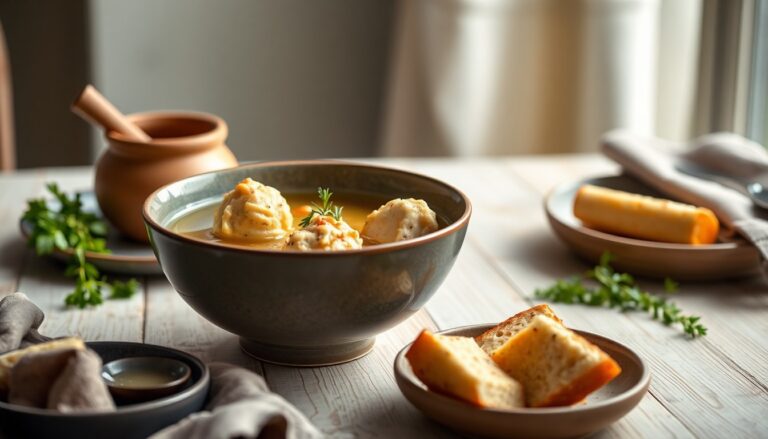
Chicken broth is a classic of the kitchen, made by simmering a carcass, bones, meat and aromatics (onion, carrot, celery, thyme, bay leaf) in gently simmering water. It comes in several forms: homemade, stock cubes, dehydrated powder or ready-to-use liquid cartons. Very light, it provides only 7.19 kcal per 100 g, which makes it a great ally when you are watching your weight. With its comforting aromas, it is the base for many soups, risottos, sauces and stews. Beyond its flavour, it provides a little hydration and a touch of taste without weighing down the plate, as long as you manage the salt.
Macronutrient breakdown
Nutrition table per 100 g
| Calories | 7 kcal |
| Kilojoules | 30 kJ |
| Protein | 1,3 g |
| Carbohydrate | 0,3 g |
| Fat | 0,2 g |
Micronutrients per 100 g
All measured nutrients, ranked by share of the daily reference intake.
- Vitamin B20,01 mg1 %
- Calcium5 mg1 %
- Vitamin B30,1 mg1 %
- Potassium10 mg1 %
- Manganese0,01 mg1 %
- Vitamin B91 µg1 %
- Vitamin B10,01 mg0 %
- Vitamin B120,01 µg0 %
See the other 5 nutrients
- Iron0,05 mg0 %
- Vitamin B50,02 mg0 %
- Magnesium1 mg0 %
- Vitamin A1 µg0 %
- Zinc0,01 mg0 %
Anses Ciqual 2025. Source: Anses, 2025, Ciqual food composition table
Tips
Chicken broth has a thousand uses: it moistens a risotto, deglazes a pan, flavours a velouté or hydrates the cooking of quinoa and bulgur. To make the most of its appealing nutrition facts (very few calories, almost no fat or carbohydrate), choose a homemade or fat-skimmed version, and have a hot bowl at the start of a meal to bring on fullness before the main course.
Choosing and preparing it well:
- If homemade, let it simmer gently for several hours, then strain it and skim it once cold by removing the layer of set fat.
- With stock cubes or powder, check the salt content on the label: it is the main thing to watch, especially if you are keeping an eye on your blood pressure. Reduced-sodium versions are best.
- Keep homemade broth for 3 to 4 days in the fridge, or freeze it in portions, for example in ice cube trays, to make ready-to-use cubes.
Pairings and flavours: it goes well with seasonal vegetables, starchy foods and fresh herbs. A dash of soy sauce or tamari boosts the umami, while a squeeze of lemon and some ginger bring freshness. You will find other bases and condiments in the Condiments & Sauces family.
Tips for active people: thanks to its water, sodium and mineral content, chicken broth is an excellent way to rehydrate after intense exercise or a big sweaty session. Lukewarm or hot, it helps replace lost electrolytes while remaining very easy to digest. When you are cutting or in a calorie deficit, it is a salty, comforting drink with almost no calories. For recovery, add a source of protein (sliced chicken breast, a poached egg, pulses) to support muscle repair. If you want to refine your meal strategy, take a look at our guide to fitness nutrition.
Weight control: its very low calorie density makes it a plus when slimming, ideal for bulking out a meal without excess. The only thing to watch is the added salt in commercial versions. To compare its figures with other foods, see the calorie table. Eaten in moderation and properly skimmed, chicken broth naturally has its place in a balanced diet.