Group · Drinks
Peach nectar
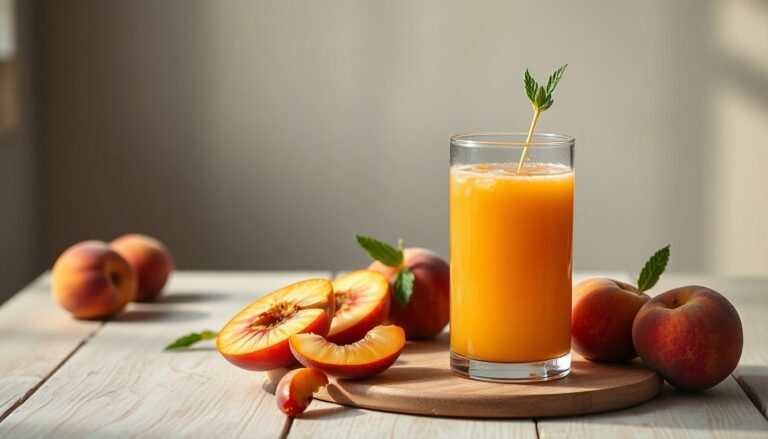
Peach nectar is a fruit drink made from peach purée or juice, usually with added water and sugar. Unlike pure juice, nectar contains a share of reconstituted fruit and some added sweetness, which gives it its velvety texture and much-loved smooth taste. It is sold in cartons, bottles or single-serve formats, sometimes enriched with vitamin C. With about 50.3 kcal per 100 g and nearly 12.1 g of carbohydrate, it remains a fairly energy-rich drink. More of a treat than a thirst-quencher, it has an occasional place in a balanced diet, as long as you watch portions and how often you drink it.
Macronutrient breakdown
Nutrition table per 100 ml
| Calories | 50 kcal |
| Kilojoules | 213 kJ |
| Protein | 0,3 g |
| Carbohydrate | 12,1 g |
| Fat | 0,1 g |
| Fibre | 0,4 g |
Micronutrients per 100 ml
All measured nutrients, ranked by share of the daily reference intake.
- Copper0,07 mg7 %
- Vitamin C5,3 mg7 %
- Vitamin E0,29 mg2 %
- Potassium40 mg2 %
- Vitamin B30,29 mg2 %
- Iron0,19 mg1 %
- Vitamin A10,7 µg1 %
- Vitamin K11 µg1 %
See the other 10 nutrients
- Vitamin B50,07 mg1 %
- Magnesium4 mg1 %
- Vitamin B20,01 mg1 %
- Manganese0,02 mg1 %
- Phosphorus6 mg1 %
- Zinc0,08 mg1 %
- Calcium5 mg1 %
- Vitamin B60,01 mg1 %
- Vitamin B91 µg1 %
- Vitamin B10 mg0 %
Anses Ciqual 2025. Source: Anses, 2025, Ciqual food composition table
Tips
Peach nectar is appealing for its sweetness, but its nutrition facts call for moderation. With 12.1 g of carbohydrate per 100 g, mainly sugars (natural from the fruit and added), a 200 ml glass quickly provides around thirty grams of sugar. For weight control, it is better to see it as an occasional sweet treat rather than an everyday hydrating drink.
- Recommended serving: a small glass (150 to 200 ml), preferably with a meal rather than on its own between meals.
- Lighter tip: dilute it with still or sparkling water for a drink that is lighter in calories and just as refreshing.
- Storage: once opened, keep it in the fridge and drink it within 3 to 4 days.
- Smart choice: go for nectars with a high percentage of fruit and no added sugar, by reading the label.
As for benefits, the peach provides a little vitamin C and provitamin A, but the nectar-making process reduces the fibre content (0.33 g per 100 g) compared with the whole fruit. Biting into a fresh peach is more filling and nutritionally better. To vary your fruit drinks, you can also try pear nectar or pineapple juice, and compare their profiles in the food calorie table.
For active people: peach nectar can serve as a source of fast-acting carbohydrate after intense exercise, to help refill glycogen stores. Combined with a source of protein, for example a post-training shaker, it rounds off a recovery snack well. Before a session, a small glass gives an easily absorbed energy boost, but take care not to overdo it if your goal is fat loss: its sugars quickly add to the day’s calorie total.
In short, this nectar belongs to the large family of drinks to be enjoyed with discernment. For everyday hydration, water, tea or a herbal tea remain the best options. Keep peach nectar for pleasure, in small amounts, as part of a varied, balanced diet.