Group · Drinks
Pineapple juice
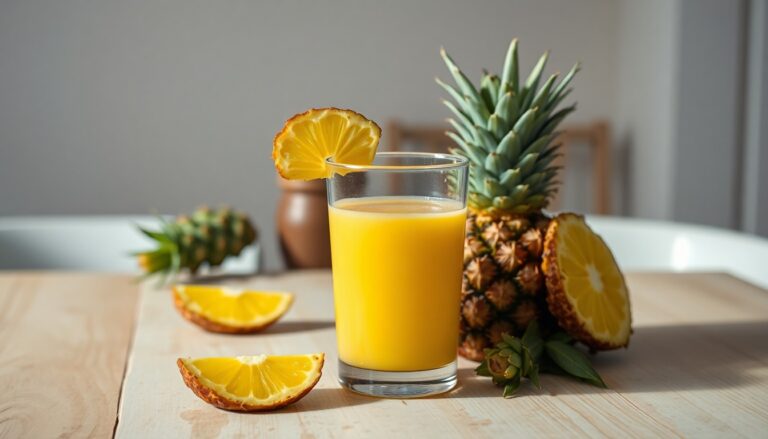
Pineapple juice is a sweet, fruity drink made by pressing the juicy flesh of the pineapple, a tropical fruit with a tangy, exotic flavour. It comes in several forms: pure juice, juice from concentrate, or nectar with added water and sugar. Its golden colour and mouth-watering aroma make it a classic at breakfast and in cocktails. Nutritionally, pineapple juice provides natural carbohydrates, vitamin C and a little potassium. At around 52.9 kcal per 100 g in its most concentrated form, it is an energy-giving drink to be consumed with care as part of a balanced diet.
Macronutrient breakdown
Nutrition table per 100 ml
| Calories | 53 kcal |
| Kilojoules | 225 kJ |
| Protein | 0,5 g |
| Carbohydrate | 12,1 g |
| Fat | 0,1 g |
| Fibre | 0,3 g |
Micronutrients per 100 ml
All measured nutrients, ranked by share of the daily reference intake.
- Manganese1,2 mg60 %
- Vitamin C14 mg18 %
- Vitamin B923 µg12 %
- Vitamin B60,1 mg7 %
- Potassium134 mg7 %
- Vitamin B10,06 mg5 %
- Copper0,04 mg4 %
- Magnesium13,6 mg4 %
See the other 9 nutrients
- Vitamin B50,15 mg3 %
- Selenium1,1 µg2 %
- Vitamin B30,3 mg2 %
- Vitamin B20,02 mg1 %
- Phosphorus9,8 mg1 %
- Iron0,18 mg1 %
- Calcium8,08 mg1 %
- Zinc0,07 mg1 %
- Iodine1 µg1 %
Anses Ciqual 2025. Source: Anses, 2025, Ciqual food composition table
Tips
Pineapple juice appeals with its tropical freshness, but its nutrition facts deserve attention. With about 12.1 g of carbohydrate per 100 g, it is a sugary drink with a fairly high glycaemic index, especially when reconstituted from concentrate. To limit calories and sugar, choose a 100% fruit pure juice with no added sugars, and stick to a portion of about 150 ml. Ideally, dilute it with a little water or sparkling water such as Perrier for a lighter, more thirst-quenching drink.
When and how should you drink it?
- At breakfast, in a small amount, for a dose of vitamin C and a touch of energy.
- As the base of a homemade smoothie, blended with fresh fruit and a yoghurt, rather than as juice on its own.
- In marinades: its acidity and enzymes tenderise white meats and chicken.
- In a festive cocktail, as in some preparations made with rum, but in moderation because of the combined alcohol and sugar.
Nutritional profile. Pineapple juice mainly provides simple carbohydrates (fructose, glucose, sucrose), a little potassium and vitamin C, but very little fibre (0.22 g) since pressing removes the pulp. It contains almost no fat and is low in protein. To benefit more from fibre and a filling effect, it is often better to bite into the whole fruit rather than drink its juice, or to compare with other juices in the food calorie table.
Tip for active people. Thanks to its high content of fast carbohydrates, pineapple juice can serve as a drink during exercise or as an immediate recovery snack after intense training, to help replenish glycogen stores. Combine it with a source of protein, for example in a post-training shaker, to optimise muscle recovery. Outside these moments, it is better to limit your consumption.
Weight control. In its concentrated form, pineapple juice has a significant energy density and its sugar is absorbed quickly. If you are watching your waistline, treat it as an occasional pleasure rather than a daily drink, and choose water day to day. You can also explore other options in the family of drinks, such as unsweetened tea, to stay hydrated without adding to your calorie intake. The key is moderation and listening to your real needs.
If you have diabetes: two slices of pineapple make one portion of fruit; the juice provides far more carbohydrate. The figures are in our guide to pineapple and diabetes.