Group · Pulses
Peas and carrots
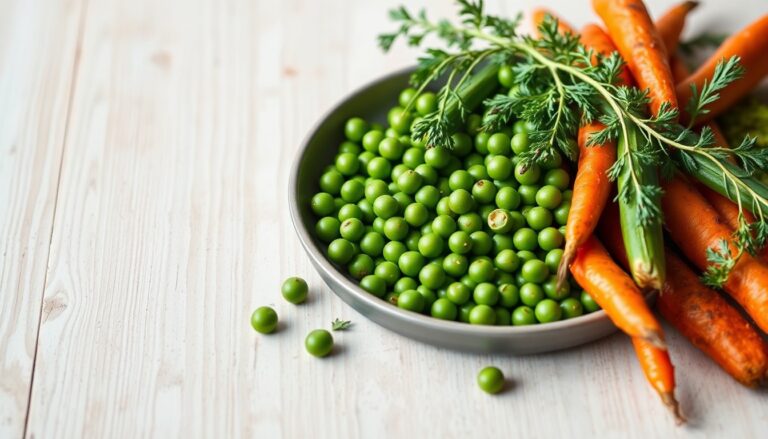
The peas and carrots mix is a great classic of family meals, combining the sweetness of garden peas with the lightly fragrant flavour of carrot. Sold mainly tinned or frozen, it is ready in minutes and goes as well with meat as with fish or vegetarian dishes. With just 53.8 kcal per 100 g, about 2.52 g of protein, 8.58 g of carbohydrate and 3.08 g of fibre, this duo has appealing nutrition facts and a moderate calorie density. Practical and colourful, it adds fibre, vitamins and minerals to your meals. It is a good habit for adding variety to vegetables and pulses day to day.
Macronutrient breakdown
Nutrition table per 100 g
| Calories | 54 kcal |
| Kilojoules | 227 kJ |
| Protein | 2,6 g |
| Carbohydrate | 8,6 g |
| Fat | 0,4 g |
| Fibre | 3,1 g |
Micronutrients per 100 g
All measured nutrients, ranked by share of the daily reference intake.
- Vitamin A250 µg31 %
- Manganese0,36 mg18 %
- Copper0,1 mg10 %
- Vitamin C6,6 mg8 %
- Vitamin B10,07 mg7 %
- Phosphorus46 mg7 %
- Vitamin B60,09 mg6 %
- Zinc0,58 mg6 %
- Vitamin B9dietary folate equivalents18 µg
See the other 9 nutrients
- Iron0,75 mg5 %
- Potassium100 mg5 %
- Vitamin B20,05 mg4 %
- Magnesium14 mg4 %
- Vitamin B30,58 mg4 %
- Calcium23 mg3 %
- Vitamin B50,12 mg2 %
- Iodine2 µg1 %
- Total omega-30,03 g1 %
Anses Ciqual 2025. Source: Anses, 2025, Ciqual food composition table
Tips
The peas and carrots mix suits a thousand uses. As a hot side, gently reheat it with a knob of fat, a little onion and herbs (parsley, chives, mint). You can also add it to a rice stir-fry, an omelette, a curry or a warm mixed salad. To preserve nutrients, favour short, gentle cooking, especially with frozen versions, which keep their colour and texture well. Discover the principles of gentle cooking to limit vitamin loss.
In nutritional terms, this mix combines the richness of peas in plant protein and fibre with the carotenoids and vitamin A of carrot. It also contains vitamin C, B vitamins, potassium, magnesium and a little iron. Its glycaemic index remains moderate, which makes it a good choice for fullness and managing energy during a meal. The fibre supports healthy digestion and contributes to the filling effect.
- Recommended portion: about 150 to 200 g as a side, to be combined with a protein source and a wholegrain cereal.
- Tinned: rinse tinned peas and carrots well to reduce the added salt, often found in the liquid they are packed in.
- Frozen: handy for batch cooking and quick weekday meals.
For active people, this duo provides slow-release carbohydrate and a little plant protein, useful in a recovery meal. Combine it with lentils or chickpeas to increase the overall protein intake, or add it to a complete dish after training. Potassium helps to replace losses through sweating, and the fibre supports digestive comfort day to day.
For weight control, the peas and carrots mix works in your favour thanks to its low calorie density. Simply watch out for fatty sauces and the salt in ready-made preparations. You can explore other options in the pulses family or compare intakes using the food calorie table. By varying your vegetables and pulses, you enjoy their benefits while keeping your meals tasty and balanced.