Group · Dairy
Processed cheese
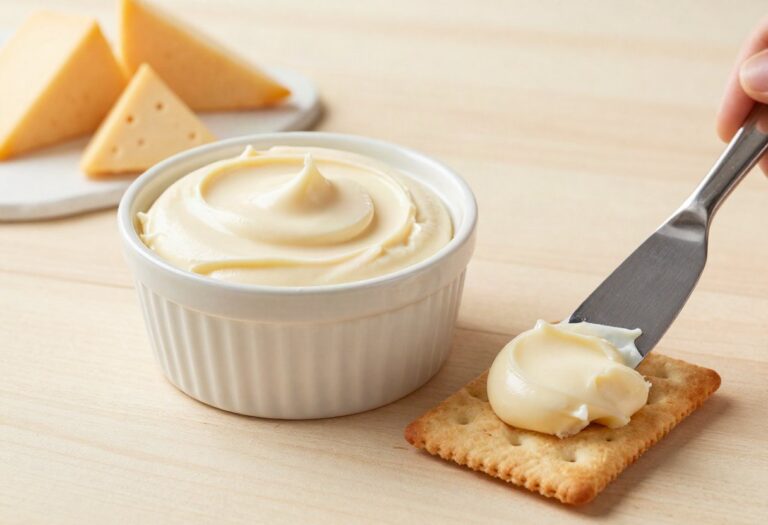
Processed cheese is a processed dairy product made by melting one or more cheeses with milk, butter and sometimes emulsifying salts. It comes in many forms: individual portions, burger slices, spreadable tubs or cubes for snacking. Its creamy texture and mild taste make it very popular with children and adults alike. In terms of nutrition facts, it provides 238 kcal per 100 g, with a good amount of protein (11 g) and fat (17.6 g), and few carbohydrates (8.52 g). A source of calcium and phosphorus, it has its place in a balanced diet, as long as you eat it in moderation given its calorie density.
Macronutrient breakdown
Nutrition table per 100 g
| Calories | 238 kcal |
| Kilojoules | 991 kJ |
| Protein | 11 g |
| Carbohydrate | 8,6 g |
| Fat | 17,6 g |
| Fibre | 0,2 g |
Micronutrients per 100 g
All measured nutrients, ranked by share of the daily reference intake.
- Phosphorus874 mg125 %
- Calcium543 mg68 %
- Vitamin A187 µg23 %
- Vitamin B20,31 mg22 %
- Zinc1,6 mg16 %
- Iodine23,5 µg16 %
- Vitamin B120,38 µg15 %
- Potassium265 mg13 %
- Vitamin B9dietary folate equivalents12,6 µg
See the other 12 nutrients
- Selenium6,1 µg11 %
- Vitamin B50,57 mg10 %
- Magnesium30,9 mg8 %
- Total omega-30,18 g7 %
- Omega-3 ALA0,11 g6 %
- Copper0,05 mg5 %
- Vitamin E0,6 mg5 %
- Vitamin B10,05 mg5 %
- EPA0,01 g4 %
- Vitamin B60,05 mg4 %
- Omega-6 LA0,27 g3 %
- Vitamin K12 µg3 %
Anses Ciqual 2025. Source: Anses, 2025, Ciqual food composition table
Tips
Processed cheese has a thousand uses: spread on bread, melted over vegetables or starchy foods, slipped into a croque-monsieur or used in a creamy sauce. A reasonable portion is around 20 to 30 g, or one to two individual portions. Beyond that, fat and salt intake climb quickly, as this is a processed product that can be saltier than traditional cheeses.
How to eat it sensibly?
- Have it at breakfast or lunch rather than as an evening snack.
- Pair it with raw vegetables, wholemeal bread or cereals for a more filling meal that is rich in fibre.
- Check the label: choose reduced-fat versions if you are watching your waistline.
- Keep it in the fridge, well resealed, and respect the use-by date.
Nutritionally, processed cheese provides good-quality protein (nearly 11 g per 100 g), calcium and phosphorus, which are useful for bone structure. Its glycaemic index is very low thanks to its low carbohydrate content. However, its fat is mostly saturated, hence the value of moderation. If you are looking for a lighter option, 0% fromage blanc or plain yoghurt make good alternatives. To compare other options in the dairy products family, do explore the dedicated pages.
And for active people? Processed cheese can appeal to those who want a practical, portable source of protein. As a snack, spread on wholemeal bread after exercise, it contributes to muscle recovery. For athletes trying to gain mass, its calorie density is an advantage; for those cutting, it is better to measure it out and prefer lower-fat sources. You can also vary things with a petit-suisse or check our protein snack ideas to diversify your snacks.
Weight control: with 238 kcal per 100 g, processed cheese remains high in calories. Calories can add up quickly if you multiply the portions or combine it with dishes that are already rich. If you are slimming, stick to small amounts, include it in a structured meal and favour lighter versions. Used well, it brings pleasure and nutritional benefits without unbalancing your diet.