Group · Dairy
Petit-suisse
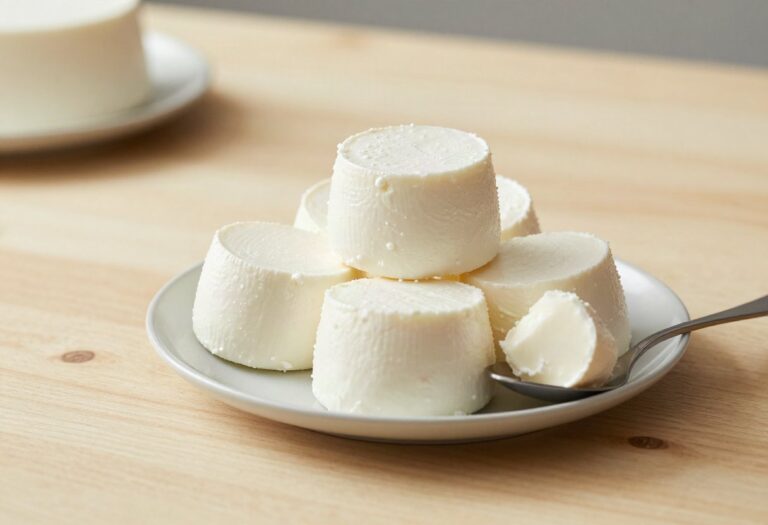
Petit-suisse is an unsalted fresh cheese with a soft, smooth texture, traditionally sold in small cylindrical portions wrapped in paper. Made from cow’s milk enriched with cream, it stands out for its creamy texture and its mild, slightly milky taste. It comes plain, but also flavoured with fruit or sweetened in the chilled aisle. A childhood dessert staple, it also has a place in a balanced diet thanks to its richness in protein and calcium. With around 137 kcal per 100 g, 9.01 g of protein and 9.89 g of fat, petit-suisse has an interesting profile, as long as you watch out for very sweet versions and the portion you eat.
Macronutrient breakdown
Nutrition table per 100 g
| Calories | 137 kcal |
| Kilojoules | 572 kJ |
| Protein | 9,1 g |
| Carbohydrate | 2,7 g |
| Fat | 9,9 g |
| Fibre | 0,8 g |
Micronutrients per 100 g
All measured nutrients, ranked by share of the daily reference intake.
- Vitamin B20,3 mg21 %
- Phosphorus130 mg19 %
- Iodine24,8 µg17 %
- Calcium105 mg13 %
- Vitamin B120,28 µg11 %
- Selenium4,12 µg7 %
- Potassium139 mg7 %
- Vitamin B50,34 mg6 %
- Vitamin B9dietary folate equivalents14,5 µg
See the other 6 nutrients
- Zinc0,51 mg5 %
- Vitamin B10,03 mg3 %
- Magnesium9,97 mg3 %
- Total omega-30,05 g2 %
- Omega-3 ALA0,03 g2 %
- Omega-6 LA0,14 g1 %
Anses Ciqual 2025. Source: Anses, 2025, Ciqual food composition table
Tips
Petit-suisse is mainly enjoyed as a snack or dessert, but it has many more uses than you might think. Plain, it goes wonderfully with a fresh fruit coulis, a little honey or some wholegrain cereal for a filling snack. In a savoury version, it works in dips and cold sauces with herbs and garlic, or replaces some of the cream in certain recipes. In terms of nutrition facts, its 9.01 g of protein per 100 g make it a good source to support fullness, while its carbohydrate content stays moderate (2.61 g) in the plain version.
For storage, always keep it in the fridge at between 4 and 6 °C and respect the use-by date, as it is a delicate fresh product. Choose plain versions, which you can sweeten lightly yourself, rather than commercial fruit petits-suisses, which are often higher in added sugar. If you want to lighten things up, compare it with 0% fat fromage blanc or a low-fat plain yoghurt, which provide less fat for the same quantity.
Tips for active people: thanks to its good-quality protein (casein and whey), petit-suisse is a handy snack for recovery. Combined with a piece of fruit or a little honey, it provides protein and carbohydrate after exercise. When bulking up, you can eat several portions, enriched with oat flakes. To go further, discover our protein snack ideas, which go perfectly with fresh dairy products.
- Glycaemic index: low in the plain version, higher as soon as sugar or syrupy fruit is added.
- Key minerals: calcium and phosphorus, useful for bone health, as well as a little B vitamins.
- Portion guide: 1 to 2 petits-suisses (60 g) are enough for a balanced snack.
For weight control, bear in mind that petit-suisse contains nearly 9.89 g of fat per 100 g, which gives it a higher calorie density than some low-fat dairy products. Eat it in moderation and without too much added sugar. You can explore other options in the dairy products family, such as semi-skimmed milk ricotta, and check the food calorie table to easily compare the benefits and calories of your favourite dairy products.