How much cheese a day? 30 g, and which to choose
The short answer
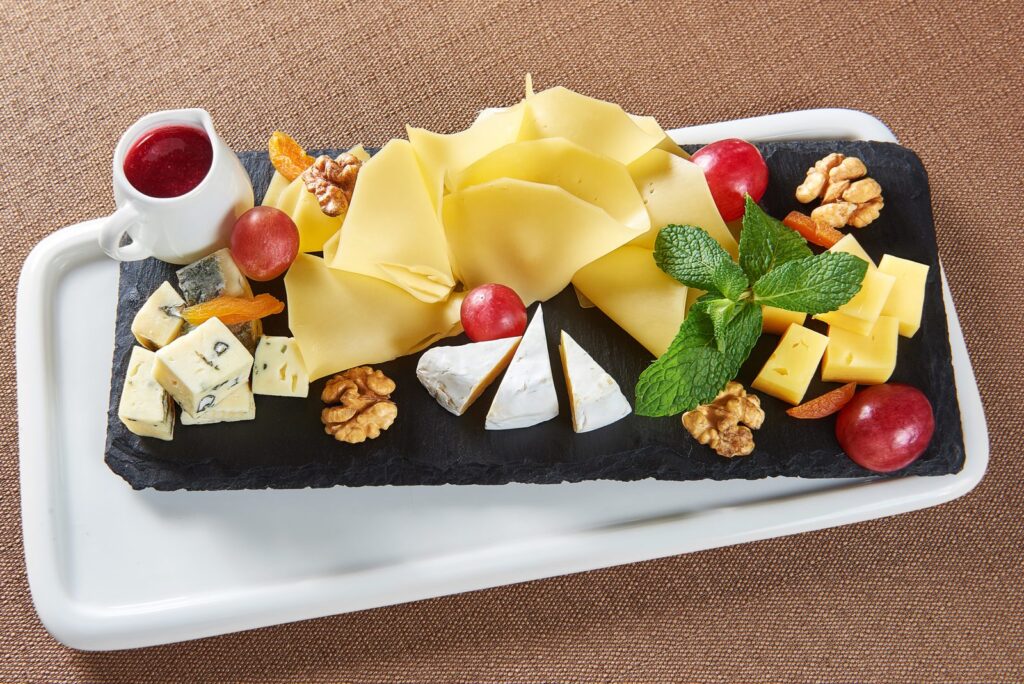
One 30 g piece, which counts as one of the two dairy products a day recommended for an adult. The other can be a yoghurt or a glass of milk. Depending on the cheese, these 30 g provide 68 to 124 kcal and 66 to 294 mg of calcium: hard cheeses such as emmental and comté are the richest in calcium, while roquefort and feta are the saltiest.
The official guideline
The French national nutrition and health programme (PNNS) recommends 2 dairy products a day for adults and 3 for children. One dairy product is a plain yoghurt, a medium 150 ml glass of milk or a 30 g piece of cheese. So there is no amount of cheese to aim for: cheese is one of the ways of making up these two portions, which are best varied.
What 30 g of each cheese provides
| 30 g of | Calories | Calcium | Salt | Saturated fat |
|---|---|---|---|---|
| Parmesan | 123 kcal | 294 mg | 0.47 g | 6.2 g |
| Emmental | 112 kcal | 293 mg | 0.18 g | 5.9 g |
| Comté | 124 kcal | 272 mg | 0.25 g | 6.5 g |
| Cantal | 113 kcal | 245 mg | 0.65 g | 7.3 g |
| Roquefort | 115 kcal | 198 mg | 0.97 g | 7.5 g |
| Raclette | 103 kcal | 197 mg | 0.51 g | 5.6 g |
| Tomme de Savoie | 108 kcal | 180 mg | 0.39 g | 6.2 g |
| Mozzarella | 68 kcal | 179 mg | 0.18 g | 3.5 g |
| Processed cheese portion | 71 kcal | 163 mg | 0.55 g | 3.7 g |
| Reblochon | 97 kcal | 141 mg | 0.41 g | 5.7 g |
| Camembert | 84 kcal | 132 mg | 0.44 g | 4.7 g |
| Brie | 104 kcal | 126 mg | 0.43 g | 6.5 g |
| Feta | 85 kcal | 66 mg | 0.68 g | 5 g |
Hard cheeses, the calcium champions
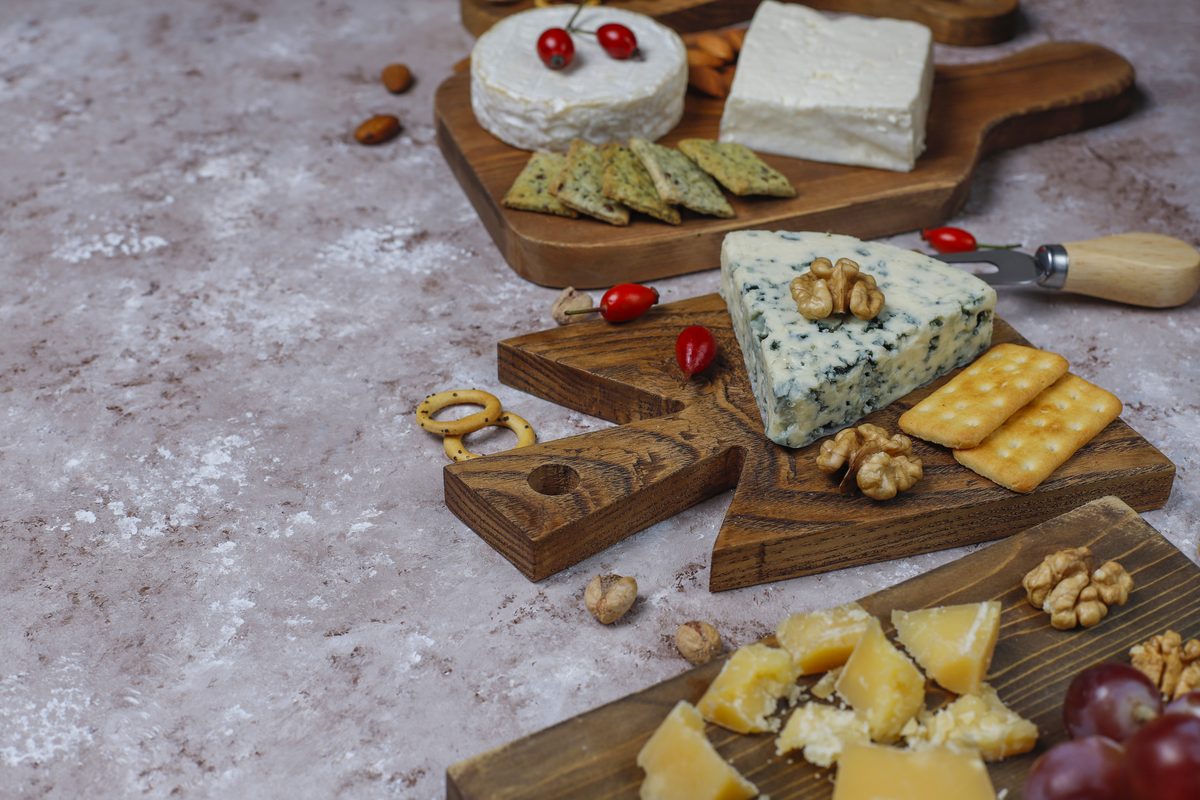
Parmesan, emmental and comté provide close to 300 mg of calcium per 30 g, almost a third of the daily reference. Camembert and brie provide half as much, feta four times less. To cover your calcium, a slice of emmental is better than a piece of feta. The full ranking is in our guide to foods high in calcium.
Salt, the other variable
30 g of roquefort contains almost 1 g of salt, a fifth of the 5 g a day limit set by the WHO. Feta and cantal exceed 0.6 g. By contrast, emmental and mozzarella contain less than 0.2 g. If you are watching your salt, this is the criterion that separates cheeses the most.
The lightest cheeses
Mozzarella (68 kcal) and the processed cheese portion (71 kcal) are the lowest in calories in the table. But Manger Bouger (the French public health guidance) points out that processed and spreadable cheeses are often high in fat and salt for little calcium. The ranking by calories is in our guide to the lowest-calorie cheeses.
When it is too much
Cheese has no limit of its own, but it counts towards the two dairy products of the day. Three or four 30 g portions a day come to 300 to 500 kcal, 18 to 30 g of saturated fat and sometimes more than 2 g of salt.
Children and pregnancy
Before the age of 5, no raw milk or raw-milk cheese, except emmental and comté, because of the risk of infection. During pregnancy, raw-milk cheeses should also be avoided: the detail is in our guide to eating during pregnancy. Children and teenagers need 3 dairy products a day.
Diabetic? Cheese hardly raises blood glucose: see our guide to cheese and diabetes.
Frequently asked questions
How many grams of cheese a day?
One 30 g portion, which counts as one of the two dairy products recommended per day for an adult.
Which cheese is the least salty?
Emmental and mozzarella, 0.18 g of salt per 30 g. Roquefort contains five times more.
Can you eat cheese every day?
Yes, as part of the two daily dairy products. It is by adding up several portions that you exceed the guidelines.
Is processed cheese a good dairy product?
It counts, but it provides less calcium than hard cheeses, 163 mg per 30 g against 293 mg for emmental, and 0.55 g of salt.
Other guides on how much to eat
how many seeds a day, how many almonds a day, how much coffee a day, how much sugar a day, how much red meat a week, how much fish a week, how many walnuts a day, how many eggs a day, how many bananas a day, how much water to drink a day, how much dark chocolate a day, how much rice per person, how much pasta per person.
Our sources
- Manger Bouger (Santé publique France), recommendation on dairy products.
- Table Ciqual 2025 (Anses).
- Anses, reference values for vitamins and minerals, 2021; WHO, guideline on salt.