Group · Cereals & grains
Crispy rice
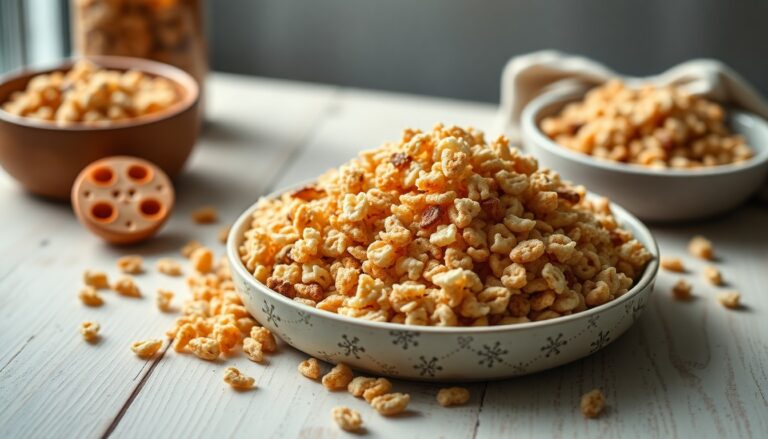
Crispy rice refers to those small puffed cereals made from rice, golden and light, found in many breakfast bowls and sweet treats. Crunchy to the bite, it usually comes as flakes or puffed grains, sometimes coated in sugar, sometimes plain. Nutritionally, it is a very carbohydrate-rich, energy-dense food (about 86.3 g per 100 g), with nearly 388 kcal per 100 g, little fat and a low fibre content. Practical and quick to eat, crispy rice has a place at breakfast or as a snack, as long as you watch the portions and pair it with more filling foods.
Macronutrient breakdown
Nutrition table per 100 g
| Calories | 388 kcal |
| Kilojoules | 1650 kJ |
| Protein | 7 g |
| Carbohydrate | 86,3 g |
| Fat | 1,2 g |
| Fibre | 2 g |
Micronutrients per 100 g
All measured nutrients, ranked by share of the daily reference intake.
- Vitamin D8,4 µg168 %
- Vitamin B21,2 mg86 %
- Vitamin B61,2 mg86 %
- Vitamin B122,1 µg84 %
- Vitamin B313,3 mg83 %
- Vitamin B9166 µg83 %
- Vitamin B10,91 mg83 %
- Zinc7 mg70 %
See the other 9 nutrients
- Iron8 mg57 %
- Manganese0,7 mg35 %
- Phosphorus150 mg21 %
- Selenium7,33 µg13 %
- Vitamin B50,64 mg11 %
- Potassium170 mg9 %
- Magnesium25,3 mg7 %
- Iodine2 µg1 %
- Calcium9,5 mg1 %
Anses Ciqual 2025. Source: Anses, 2025, Ciqual food composition table
Tips
Crispy rice shines for its convenience: a reasonable portion of 30 to 40 g is enough for a balanced bowl. Pour it over a plain yoghurt, some fromage blanc or a plant-based drink, and add fresh fruit for fibre and vitamins. This combination limits the blood sugar spike linked to its high glycaemic index and improves fullness, a key point when you are watching your weight.
Nutritional values and composition. With about 86.3 g of carbohydrate, 7 g of protein and only 1.2 g of fat per 100 g, crispy rice is above all a source of quick energy. Its fibre content is modest (2 g), which makes it less filling than wholegrain cereals. For more fibre and minerals, alternate with cooked oat bran or oats, which are richer and have a lower glycaemic index.
Practical tips for eating it.
- Choose plain or lightly sweetened versions: sugary coatings raise the calories and added sugars.
- Keep the packet tightly closed, away from moisture, to preserve the crunch.
- Use it as a crunchy topping on stewed fruit, a fruit salad or a smoothie bowl.
- Avoid making it your only breakfast: add a source of protein and healthy fats.
For active people. Rich in fast-absorbed carbohydrate, crispy rice can serve as an energy top-up before exercise or in the recovery phase, when you want to replenish your glycogen stores. Pair it with a source of protein (milk, yoghurt or a recovery drink) to optimise muscle recovery. To go further on balancing your intake during training, see our guide to fitness nutrition. As a snack, it can also round off a protein snack for a bite that is both crunchy and energising.
Weight control. Its calorie density and glycaemic index call for moderation: it is easy to pour a large amount without realising. Weigh your portion, limit the sweetened versions and aim for a balanced diet in which these cereals remain an occasional pleasure rather than a habit. You can compare its calories with other options in the cereal family, for example corn flakes, to choose the product that best suits your goals.