Group · Cereals & grains
Corn Flakes
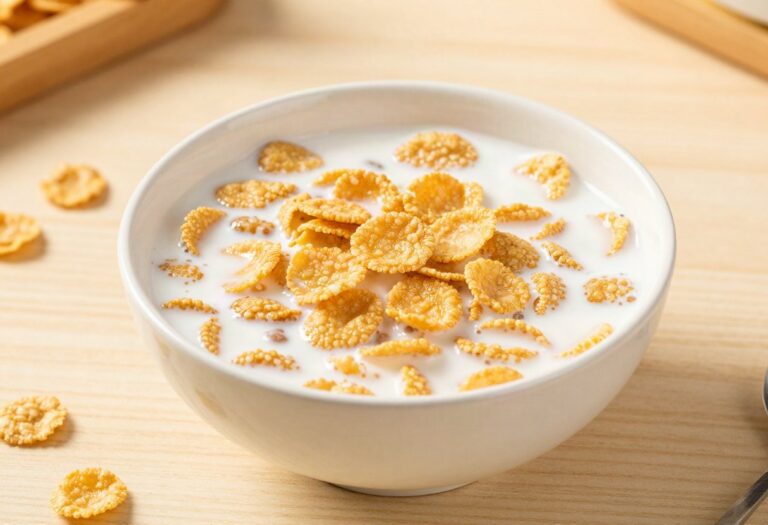
Corn Flakes are among the most common breakfast cereals in our cupboards. Made from cooked corn kernels, flattened and toasted into thin, golden, crunchy flakes, they now come in plain, reduced-sugar or vitamin and mineral fortified versions. In terms of nutritional values, expect about 372 kcal per 100 g, with 82.4 g of carbohydrate, 6.88 g of protein and only 0.7 g of fat. Very low in fat, they are nevertheless rich in fast sugars. Included in moderation in a balanced diet, they make a practical, quick breakfast, to be paired with a source of dairy products and fruit for more fullness.
Macronutrient breakdown
Nutrition table per 100 g
| Calories | 372 kcal |
| Kilojoules | 1580 kJ |
| Protein | 6,9 g |
| Carbohydrate | 82,4 g |
| Fat | 0,7 g |
| Fibre | 4,6 g |
Micronutrients per 100 g
All measured nutrients, ranked by share of the daily reference intake.
- Vitamin E5,21 mg43 %
- Selenium6 µg11 %
- Phosphorus48,4 mg7 %
- Potassium99,6 mg5 %
- Copper0,04 mg4 %
- Vitamin B60,05 mg4 %
- Magnesium11,7 mg3 %
- Omega-6 LA0,28 g3 %
- Vitamin B9dietary folate equivalents6,95 µg
See the other 7 nutrients
- Vitamin B30,41 mg3 %
- Manganese0,05 mg2 %
- Vitamin B20,03 mg2 %
- Vitamin B50,1 mg2 %
- Vitamin A9,25 µg1 %
- Total omega-30,02 g1 %
- Omega-3 ALA0,01 g1 %
Anses Ciqual 2025. Source: Anses, 2025, Ciqual food composition table
Tips
To get the most from Corn Flakes without unbalancing your bowl, go for a reasonable portion of 30 to 40 g, the equivalent of a generous small handful. Pour them over milk, a plain yoghurt or a plant-based drink, then add fresh fruit (banana, red berries, kiwi fruit) and a few nuts and seeds for fibre, healthy fats and a little more protein. This combination slows digestion and improves the feeling of fullness.
A point to watch if you are losing weight: Corn Flakes have a high glycaemic index and are dense in carbohydrate. Eaten on their own, they can cause a spike and then a drop in blood sugar, paving the way for snacking. For weight control, measure your portions, avoid adding sugar and choose versions with no added sugar. Keep them in an airtight pack, away from moisture, to preserve their characteristic crunch.
Varieties and culinary uses: beyond the morning bowl, corn flakes also work as a crunchy coating for chicken or fish, as a topping on frozen yoghurt, or as an ingredient in homemade bars. If you are looking for higher-fibre alternatives, turn to oat bran or wholegrain flakes.
- For more fullness: oats and oat flakes are an excellent option, richer in fibre and with a more moderate glycaemic index.
- Fancy a light crunch: compare with plain corn flakes.
- To explore the whole range, see the cereals family.
Tips for active people: thanks to their quickly absorbed carbohydrate, Corn Flakes can help out before or after exercise. As a post-workout snack, pair them with a source of protein (milk, fromage blanc, or a little protein powder) to support muscle recovery and glycogen replenishment. Before a session, a small portion about an hour beforehand provides easy-to-digest energy. When building muscle, they top up the day’s carbohydrate intake; when losing weight, it is better to limit them in favour of more filling foods.
In short, Corn Flakes are practical and tasty, but their nutritional value depends mostly on how you put your bowl together. Well accompanied, they have their place in a sustainable routine for a balanced diet.