Group · Drinks
Rosé wine
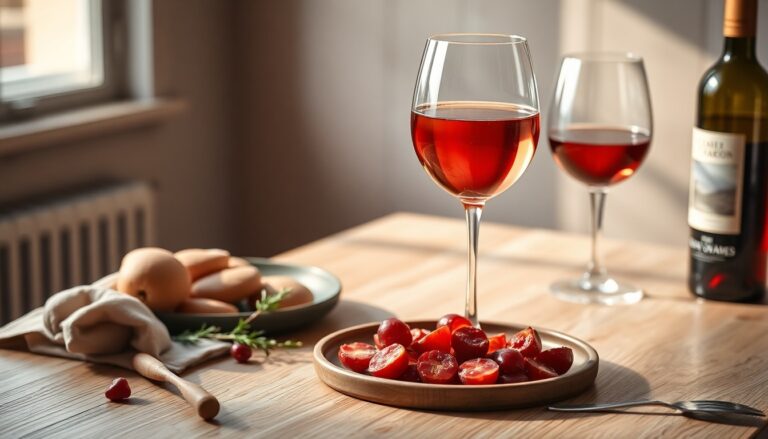
Rosé wine is an alcoholic drink made from black grapes, whose skins are left in contact with the juice for only a short time, giving it its characteristic pale pink to salmon colour. A star of summer terraces, it comes in dry, fruity or rounder styles depending on the grape varieties (grenache, cinsault, syrah) and the regions (Provence, Languedoc, Tavel). With about 69.2 kcal per 100 g, little carbohydrate (1.4 g) and no fat, its calories come mainly from the alcohol. Enjoyed chilled as an aperitif or with a meal, it has no particular nutritional value and, like any alcoholic drink, should be drunk in moderation as part of a balanced diet.
Macronutrient breakdown
Nutrition table per 100 ml
| Calories | 69 kcal |
| Kilojoules | 287 kJ |
| Protein | 0,2 g |
| Carbohydrate | 1,4 g |
Micronutrients per 100 ml
All measured nutrients, ranked by share of the daily reference intake.
- Iron0,95 mg7 %
- Manganese0,1 mg5 %
- Potassium75 mg4 %
- Vitamin B20,04 mg3 %
- Copper0,03 mg3 %
- Magnesium7 mg2 %
- Vitamin B60,02 mg2 %
- Calcium12 mg2 %
See the other 8 nutrients
- Phosphorus6 mg1 %
- Iodine1 µg1 %
- Vitamin B50,04 mg1 %
- Vitamin B30,09 mg1 %
- Vitamin B10,01 mg0 %
- Zinc0,03 mg0 %
- Selenium0,1 µg0 %
- Vitamin B90,1 µg0 %
Anses Ciqual 2025. Source: Anses, 2025, Ciqual food composition table
Tips
Rosé wine is best served well chilled, between 8 and 12 °C, to bring out its aromas of red fruit, citrus or flowers. A standard glass is about 100 to 125 ml. To stay within drinking guidelines, it is better to limit how much you drink and plan alcohol-free days during the week. It goes well with summer salads, grilled food, fish, tapas and Mediterranean dishes.
Varieties and seasonality: there are the pale, dry rosés of Provence, the deeper-coloured and more structured rosés such as Tavel, and also direct-press rosés, which are paler, and saignée rosés, which are more intense. Consumption peaks in summer, but it also lends itself to pairings all year round.
Nutrition facts: with 69.2 kcal per 100 g, rosé wine provides mainly calories from alcohol, little carbohydrate, no fibre or fat, and traces of minerals. Its calories are sometimes described as nutritionally poor: to understand this idea, you can read the article on empty calories and their effects.
- Choose smaller glasses to keep better control of quantities.
- Alternate each glass with a large glass of water to stay hydrated.
- Avoid serving it too sweet or in very high-calorie cocktails.
- Never drink alcohol before or during physical exercise.
Advice for active people: alcohol has no place in a performance or recovery strategy. It encourages dehydration, disrupts sleep quality and slows muscle protein synthesis. After a session, go instead for good hydration and a proper snack: you will find ideas in our protein snack recipes. To explore other alcohol-free drinks, pineapple juice or a herbal tea are good thirst-quenching alternatives.
Weight control: even though rosé wine seems light, alcohol is still calorie-dense (7 kcal per gram) and stimulates the appetite, often alongside fatty, salty aperitif snacks. If you are trying to slim, it is better to keep it for occasions and count your glasses. You can compare its values with other drinks in our drinks family or check the food calorie table to adjust your daily balance.