Group · Fish
Salt cod
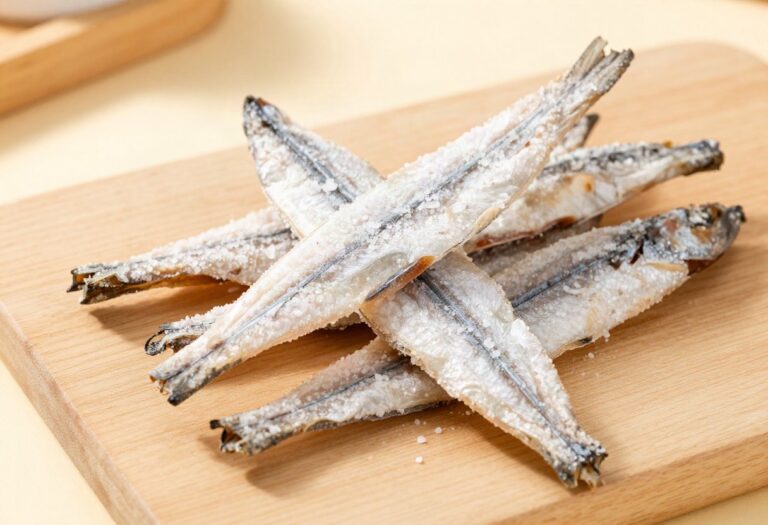
Salt cod is a lean fish preserved by salting, an age-old method that extends its shelf life while concentrating its nutrients. Made from cod, it comes as dried, stiffened fillets or pieces that need to be desalted before cooking. Very common in Mediterranean and Portuguese cooking (brandade, fritters, bacalhau), it is an exceptional source of protein. Per 100 g, salt cod provides about 210 kcal, nearly 47.6 g of protein, 1.1 g of carbohydrates and only 1.67 g of fat. It is a fish rich in protein and low in fat, ideal in a balanced diet for anyone watching their intake.
Macronutrient breakdown
Nutrition table per 100 g
| Calories | 210 kcal |
| Kilojoules | 890 kJ |
| Protein | 47,6 g |
| Carbohydrate | 1,1 g |
| Fat | 1,7 g |
Micronutrients per 100 g
All measured nutrients, ranked by share of the daily reference intake.
- Vitamin B125,43 µg217 %
- Iodine230 µg153 %
- DHA0,24 g96 %
- Vitamin D4 µg80 %
- Phosphorus551 mg79 %
- Potassium1300 mg65 %
- Vitamin B60,58 mg41 %
- Vitamin B35,26 mg33 %
See the other 15 nutrients
- Magnesium80,7 mg22 %
- Vitamin B51,01 mg17 %
- Calcium124 mg16 %
- Iron2,09 mg15 %
- Vitamin B20,2 mg14 %
- Vitamin E1,67 mg14 %
- EPA0,03 g13 %
- Vitamin B10,13 mg12 %
- Vitamin B922,3 µg11 %
- Total omega-30,27 g11 %
- Zinc1,07 mg11 %
- Copper0,1 mg10 %
- Vitamin A24,5 µg3 %
- Manganese0,05 mg3 %
- Vitamin K10,4 µg1 %
Anses Ciqual 2025. Source: Anses, 2025, Ciqual food composition table
Tips
The first thing to do with salt cod is to desalt it: soak the pieces in cold water for 24 to 48 hours in the fridge, changing the water several times. This step is essential to greatly reduce the salt content before cooking. Once desalted, it can be poached, steamed, simmered in tomato sauce or flaked into a mash. Choose gentle cooking to preserve the texture and nutrients of the fish.
Nutritional values and benefits: with about 47.6 g of protein per 100 g, salt cod is among the most protein-dense foods in the fish family. Its protein is complete and rich in essential amino acids, while its fat content stays very low (1.67 g) and it has virtually no carbohydrates, hence a zero glycaemic index. It also provides minerals such as phosphorus and potassium. Be aware, however: despite these strengths, its sodium content remains high even after desalting, which is worth watching for blood pressure. If you are sensitive to this, take a look at the DASH diet.
- Recommended portion: 100 to 150 g of desalted cod per meal is enough to cover a good share of your protein needs.
- Pairings: potatoes, peppers, garlic, olive oil and fresh herbs for a Mediterranean-style plate.
- Storage: salt cod that has not been desalted keeps for a long time in a cool, dry place; once desalted and cooked, eat it within 48 hours.
For active people: its richness in protein and low fat make it an ally for muscle recovery and for cutting phases. Include it in a post-workout meal with a source of carbohydrates (rice, sweet potato) to replenish your stores. To go further on protein intake, read our guide to fitness nutrition. If you are looking for fattier alternatives rich in omega-3, mackerel or salmon complete the picture well.
Weight control: the 210 kcal per 100 g are explained by the concentration of protein that comes with drying, but the profile stays very favourable for weight loss thanks to the lack of carbohydrates and low fat content. Just avoid preparations that are too rich in cream or oil (such as some brandades) if you are watching your calories. Well desalted and cooked simply, salt cod fits perfectly into a balanced diet.