Group · Fish
Sockeye salmon
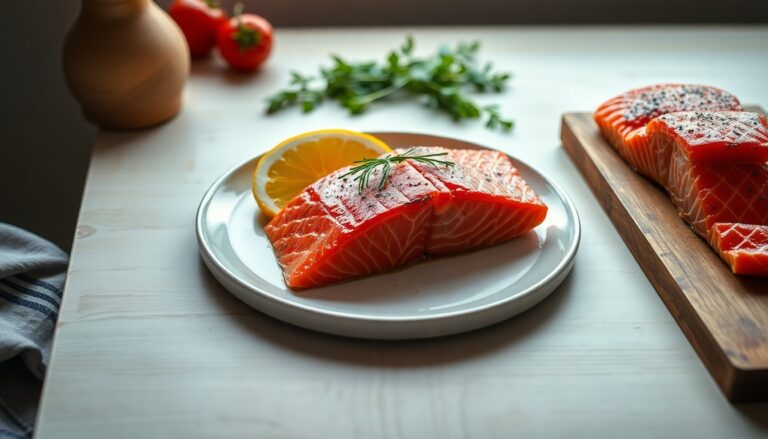
Sockeye salmon, also known as red salmon, is a wild Pacific fish recognisable by its intense orange-red flesh and pronounced flavour. Firmer and leaner than some farmed varieties, it gets its natural colour from a diet rich in small crustaceans. You can find it fresh, frozen, smoked or tinned. With 21 g of protein and around 166 kcal per 100 g, it fits perfectly into a balanced diet. Most of its fat is made up of omega-3 fatty acids, making it an oily fish valued for its nutritional qualities. It is a great ally for adding variety to the sources of marine protein in your everyday diet.
Macronutrient breakdown
Nutrition table per 100 g
| Calories | 166 kcal |
| Kilojoules | 695 kJ |
| Protein | 21 g |
| Fat | 9,2 g |
Micronutrients per 100 g
All measured nutrients, ranked by share of the daily reference intake.
- DHA1,12 g448 %
- Vitamin B124,84 µg194 %
- EPA0,32 g128 %
- Total omega-31,44 g58 %
- Vitamin B38,83 mg55 %
- Selenium27 µg49 %
- Vitamin B60,49 mg35 %
- Phosphorus225 mg32 %
See the other 14 nutrients
- Vitamin B51,48 mg25 %
- Potassium436 mg22 %
- Vitamin B10,21 mg19 %
- Vitamin B20,24 mg17 %
- Copper0,16 mg16 %
- Vitamin E1,11 mg9 %
- Iodine12,2 µg8 %
- Magnesium29,2 mg8 %
- Vitamin B913,1 µg7 %
- Zinc0,58 mg6 %
- Iron0,66 mg5 %
- Calcium13,5 mg2 %
- Manganese0,02 mg1 %
- Vitamin K10,3 µg0 %
Anses Ciqual 2025. Source: Anses, 2025, Ciqual food composition table
Tips
Sockeye salmon can be cooked in a thousand ways. A portion of 100 to 130 g suits a main meal, served with green vegetables and a wholegrain cereal. To preserve its omega-3, choose gentle cooking: steamed, baked in a parcel or pan-fried over a moderate heat for a few minutes on each side. You can find other techniques in this article on gentle cooking to preserve nutrients. Its flesh also suits gravlax, tartare or lightly cooked preparations for fans of melting textures.
In terms of nutritional values, sockeye salmon shines for its density of high-quality protein and its content of vitamin D, vitamin B12 and selenium. Its fat, although present (nearly 9.17 g per 100 g), is mostly unsaturated fatty acids of the omega-3 type. The absence of carbohydrates and fibre means a glycaemic index of zero, which is useful for weight loss or a balanced diet. To compare its calories with those of other foods, you can consult the food calorie table.
Tips for active people: with its 21 g of protein per 100 g, sockeye salmon supports muscle building and recovery. Eat it in the meal after training, paired with a source of complex carbohydrates (rice, sweet potato) to replenish energy stores. Its omega-3 contributes to joint comfort for regular exercisers. For both bulking and cutting phases, it offers an excellent protein-to-calorie ratio. If you are looking for other ways to structure your plate, the article on fitness nutrition complements these guidelines well.
Varieties and alternatives: you can alternate with other oily fish such as mackerel or classic, fattier salmon. To explore all the species and their profiles, head to the Fish family page.
Points to watch for weight control: sockeye salmon is still higher in calories than lean white fish. Go easy on fatty sauces, butter and fried preparations that push up the energy count. If you choose the smoked version, keep an eye on salt. For storage, keep fresh fish for 24 to 48 hours at most in the fridge, or freeze it quickly. One to two portions of oily fish a week are enough to enjoy its qualities without overdoing it.