Group · Pulses
Split peas
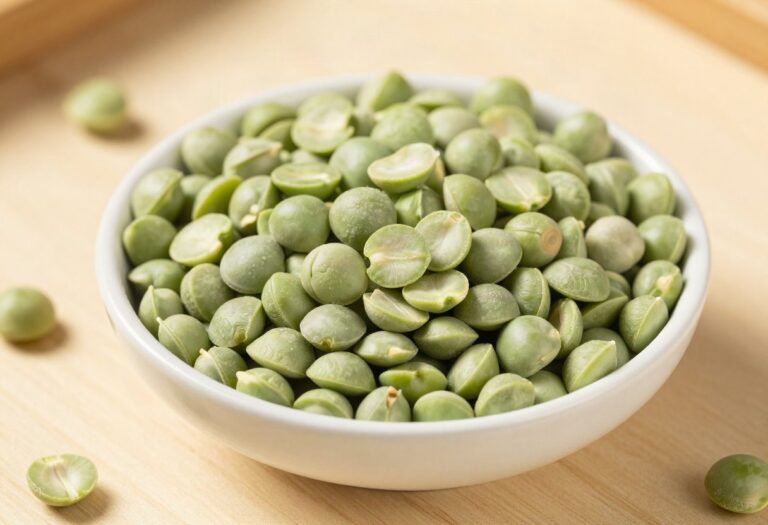
Split peas are pea seeds that have been dried and then split in two, which is where they get their name. Part of the large pulse family, they come as green or yellow split peas, with a soft texture once cooked. Cheap and easy to store, they are the basis of the famous split pea soup and of many slow-cooked dishes.
Nutritionally, split peas provide around 129 kcal per 100 g once cooked, with a good amount of plant protein (8.6 g), complex carbohydrate (16.3 g), fibre and very little fat. Filling and versatile, they naturally have their place in a balanced diet, whether you are vegetarian, sporty or simply careful about what is on your plate.
Macronutrient breakdown
Nutrition table per 100 g
| Calories | 129 kcal |
| Kilojoules | 542 kJ |
| Protein | 8,6 g |
| Carbohydrate | 16,3 g |
| Fat | 1,5 g |
| Fibre | 8 g |
Micronutrients per 100 g
All measured nutrients, ranked by share of the daily reference intake.
- Phosphorus134 mg19 %
- Copper0,19 mg19 %
- Potassium327 mg16 %
- Iron2,09 mg15 %
- Manganese0,28 mg14 %
- Vitamin B10,15 mg14 %
- Vitamin B50,44 mg7 %
- Vitamin B60,09 mg7 %
- Vitamin B9dietary folate equivalents119 µg
See the other 10 nutrients
- Zinc0,65 mg7 %
- Vitamin K14,5 µg6 %
- Magnesium20,9 mg6 %
- Vitamin B30,71 mg4 %
- Vitamin B20,06 mg4 %
- Calcium24,7 mg3 %
- Vitamin E0,19 mg2 %
- Iodine2 µg1 %
- Vitamin C0,85 mg1 %
- Vitamin A0,83 µg0 %
Anses Ciqual 2025. Source: Anses, 2025, Ciqual food composition table
Tips
To make the most of split peas, allow a portion of about 60 to 80 g dry per person, which makes a generous cooked plateful. Unlike many pulses, they do not need long soaking: a rinse is enough. Then allow 30 to 45 minutes of cooking in simmering water, or about twenty minutes in a pressure cooker, until you get a creamy texture that is ideal for purées and soups.
How to eat them? Split peas star in a comforting soup with carrot, onion and a little smoked bacon, in a spiced dal, as a smooth purée or alongside meat and fish. To improve the absorption of the plant-based iron they contain, pair them with a source of vitamin C (lemon juice, pepper, fresh parsley). You can also vary things with other members of the family such as lentils or chickpeas, equally rich in fibre and protein.
- Nutrition facts: rich in complex carbohydrate with a moderate glycaemic index, they release their energy gradually.
- Protein: about 8.6 g per 100 g cooked, a good plant-based foundation to complement with cereals (rice, bread, semolina) for a complete amino acid profile.
- Fibre and minerals: they provide fibre, potassium, magnesium, iron and B vitamins.
- Fat: practically none, which makes them very appealing if you are watching your waistline.
For active people: split peas are an excellent ally for refilling glycogen stores after exercise, while providing protein that helps muscle recovery. Include them in a post-workout meal with a cereal and a green vegetable. For people building mass or vegetarians, they complement other sources such as tofu. Also take a look at our advice on fitness nutrition to adjust your intake.
Weight control: with their low calorie density once cooked, their fibre content and their filling effect, split peas fit perfectly into a weight-loss approach or a balanced diet. Just watch out for fatty additions (cream, bacon pieces, butter), which can quickly weigh down the dish. To explore other equally nourishing pulses, browse the pulses family.