Group · Vegetables
Swede
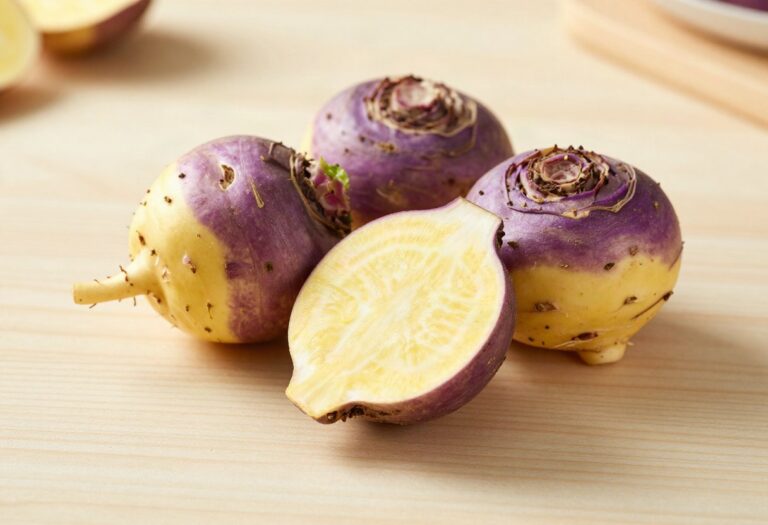
The swede (also known as rutabaga) is a root vegetable from the cabbage family, often confused with the turnip, from which it differs by its orange-yellow flesh and milder, slightly sweet flavour. A cross between cabbage and turnip, it was long a popular winter vegetable and is now being rediscovered in seasonal cooking. With only 26 kcal per 100 g, little fat and a good amount of fibre, the swede naturally has a place in a balanced diet. Rich in water, inexpensive and filling, it suits many preparations, from comforting mash to fragrant gratins. It is a useful ally for adding variety to your vegetables while watching your calorie intake.
Macronutrient breakdown
Nutrition table per 100 g
| Calories | 26 kcal |
| Kilojoules | 109 kJ |
| Protein | 1 g |
| Carbohydrate | 4,3 g |
| Fat | 0,2 g |
| Fibre | 1,8 g |
Micronutrients per 100 g
All measured nutrients, ranked by share of the daily reference intake.
- Vitamin C18,8 mg24 %
- Potassium216 mg11 %
- Vitamin B10,08 mg7 %
- Vitamin B60,1 mg7 %
- Phosphorus41 mg6 %
- Manganese0,1 mg5 %
- Vitamin B30,72 mg5 %
- Vitamin B20,04 mg3 %
- Vitamin B9dietary folate equivalents15 µg
See the other 9 nutrients
- Copper0,03 mg3 %
- Magnesium10 mg3 %
- Vitamin B50,16 mg3 %
- Calcium18 mg2 %
- Vitamin E0,24 mg2 %
- Iron0,18 mg1 %
- Zinc0,12 mg1 %
- Vitamin K10,2 µg0 %
- Vitamin A0,08 µg0 %
Anses Ciqual 2025. Source: Anses, 2025, Ciqual food composition table
Tips
The swede is almost always eaten cooked. Its firm texture softens with cooking and reveals a subtle taste somewhere between hazelnut and cabbage. You can prepare it as mash (on its own or with potato to soften the bitterness), in a gratin, roasted in the oven with a drizzle of olive oil, or simmered in stews and winter soups. Steaming or sweating it preserves its vitamins and minerals better than prolonged cooking in water. To discover other gentle methods, take a look at the article on gentle cooking that preserves nutrients and flavour.
Nutritional values and benefits: with 26 kcal, 4.26 g of carbohydrate, 0.93 g of protein and 1.8 g of fibre per 100 g, the swede has a low calorie density. It provides vitamin C, potassium and fibre, which contribute to fullness and digestive comfort. Its moderate glycaemic index and richness in water make it a filling vegetable, useful if you are trying to lose weight or move to a balanced diet.
- Seasonality: an autumn and winter vegetable, from September to March; choose one that is firm, heavy and free of blemishes.
- Storage: several weeks in a cool, dark place, or in the fridge salad drawer. It freezes well once blanched.
- Pairings: it goes with carrot, parsnip and turnip for colourful root vegetable sautés.
Tips for active people: the swede provides complex carbohydrate and potassium, useful for replenishing reserves after exercise. Served with a protein source (poultry, fish, pulses), it completes a balanced recovery meal without adding to the calorie intake. Its richness in fibre does call for moderation before an intense session, to avoid digestive discomfort. Save it for the evening meal or rest days.
Weight control: low in calories and filling, the swede remains an excellent choice, as long as you do not pile on fat or cream in gratins. Use spices, herbs and stock to lift its flavour. You can compare its content with other vegetables in the food calorie table or explore the whole vegetables family to vary your plate through the seasons.