Group · Condiments & sauces
Tartare sauce
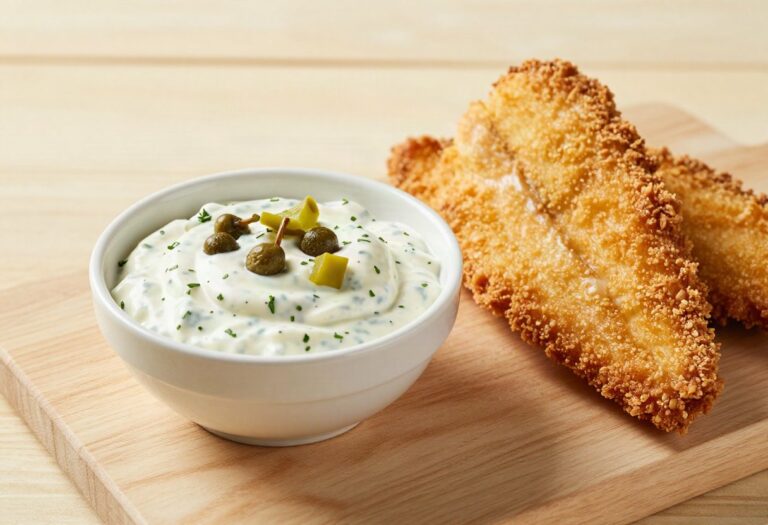
Tartare sauce is an iconic cold condiment of French cooking, traditionally served with fish, seafood and breaded meats. Its base is close to mayonnaise (egg yolk, oil, mustard), enhanced with capers, chopped gherkins, shallot, fresh herbs (parsley, chives, tarragon) and sometimes a squeeze of lemon juice. This composition gives it a creamy texture and a zesty, slightly tangy taste. In terms of nutrition facts, it is a very rich sauce: around 500 kcal per 100 g, mainly from fat. It adds indulgence to a dish, but remains a condiment to portion carefully. Used well, it has its place in a varied, balanced diet.
Macronutrient breakdown
Nutrition table per 100 g
| Calories | 500 kcal |
| Kilojoules | 2060 kJ |
| Protein | 1 g |
| Carbohydrate | 5,2 g |
| Fat | 52,7 g |
| Fibre | 0,4 g |
Micronutrients per 100 g
All measured nutrients, ranked by share of the daily reference intake.
- Omega-3 ALA4,52 g226 %
- Vitamin K1154 µg205 %
- Total omega-34,54 g182 %
- Omega-6 LA11,3 g113 %
- Vitamin E13,3 mg111 %
- Vitamin B120,31 µg12 %
- Vitamin B50,22 mg4 %
- Phosphorus25 mg4 %
See the other 11 nutrients
- Potassium54 mg3 %
- Vitamin B95,23 µg3 %
- Iron0,32 mg2 %
- Copper0,02 mg2 %
- Manganese0,04 mg2 %
- Calcium15 mg2 %
- Vitamin B10,02 mg2 %
- Zinc0,16 mg2 %
- Vitamin B60,02 mg2 %
- Vitamin B20,02 mg1 %
- Magnesium3,9 mg1 %
Anses Ciqual 2025. Source: Anses, 2025, Ciqual food composition table
Tips
Tartare sauce is enjoyed cold, simply seasoned, to go with grilled fish, squid fritters, a breaded cod fillet or crunchy vegetables for dipping. Given its high energy density, it is best to think in small quantities: one tablespoon (about 15 g) is enough to liven up a plate without weighing down the meal. For storage, keep it in the fridge in an airtight container and use it quickly, especially if it is homemade and contains raw egg.
Nutritionally, its calories come almost entirely from fat (over 52.7 g per 100 g), with very little protein, carbohydrate or fibre. Its glycaemic index is negligible, but its richness in fats makes it a condiment to include in moderation as part of a weight-loss approach. The capers and gherkins it contains add character, but also salt, which you should take into account if you are watching your sodium intake.
A few ideas to lighten it and vary the pleasure:
- Make it at home, replacing part of the oil with plain yoghurt or fromage blanc, to cut the calories while keeping it creamy.
- Use plenty of fresh herbs and acidity (lemon, vinegar) to intensify the taste without adding fat.
- Compare it with other options from the condiments family, such as light mayonnaise or yellow mustard, which are lighter for everyday use.
For active people, tartare sauce is not a performance food: it provides neither useful carbohydrates before exercise nor significant protein for recovery. Keep it for the taste enjoyment of a meal, pairing it with a source of lean protein (white fish, seafood) and vegetables, rather than using it as an energy source. If you are looking to plan your meals around your training, it is better to rely on the solid foundations explained in fitness nutrition.
You can explore other alternatives in the condiments and sauces family, and check where each sauce stands using the food calorie table. What matters is balance: a small amount of tartare sauce makes a dish tastier, as long as you keep an eye on the overall amount of fat in the meal.