Group · Drinks
Carrot juice
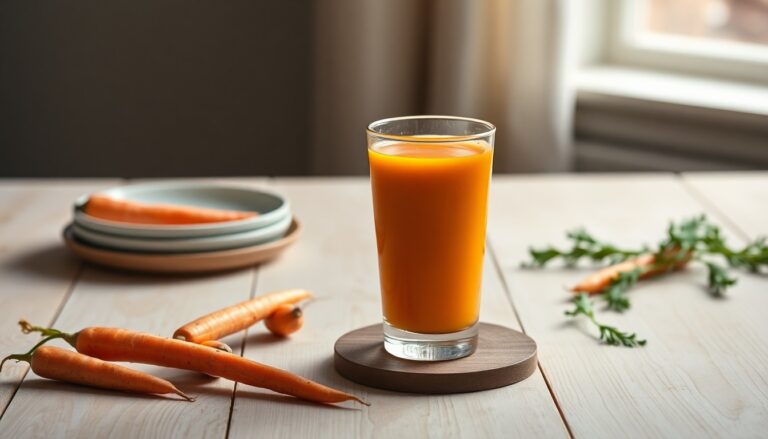
Carrot juice is a plant-based drink made by juicing or centrifuging fresh carrots. With its characteristic orange colour, it appeals with its naturally mild, slightly sweet flavour. You can find it in different forms: pressed at home with a juicer, bottled in the chilled aisle, or as a pasteurised long-life version. Very low in calories, it contains about 29.4 kcal per 100 g, with little fat and protein, and carbohydrates that come mainly from the natural sugars of the carrot. It also provides beta-carotene, fibre and various minerals. Light and thirst-quenching, carrot juice easily finds a place in a balanced diet, at breakfast or as an alcohol-free aperitif.
Macronutrient breakdown
Nutrition table per 100 ml
| Calories | 29 kcal |
| Kilojoules | 124 kJ |
| Protein | 0,4 g |
| Carbohydrate | 6,6 g |
| Fat | 0,1 g |
| Fibre | 0,4 g |
Micronutrients per 100 ml
All measured nutrients, ranked by share of the daily reference intake.
- Vitamin A775 µg97 %
- Vitamin K115,5 µg21 %
- Vitamin B60,22 mg16 %
- Vitamin C8,5 mg11 %
- Potassium210 mg11 %
- Vitamin E1,16 mg10 %
- Vitamin B10,09 mg8 %
- Copper0,05 mg5 %
See the other 13 nutrients
- Vitamin B20,06 mg4 %
- Vitamin B50,23 mg4 %
- Phosphorus25,6 mg4 %
- Manganese0,07 mg4 %
- Iron0,46 mg3 %
- Vitamin B30,39 mg2 %
- Magnesium8,75 mg2 %
- Vitamin B94 µg2 %
- Calcium13,6 mg2 %
- Iodine2 µg1 %
- Zinc0,09 mg1 %
- Omega-6 LA0,05 g1 %
- Omega-3 ALA0,01 g0 %
Anses Ciqual 2025. Source: Anses, 2025, Ciqual food composition table
Tips
To get the most from carrot juice, choose a freshly pressed version and drink it quickly to preserve its vitamins and its beta-carotene, a pigment that is a precursor of vitamin A. A portion of about 150 to 200 ml is plenty to hydrate you and go with a meal. Like all juices, it is lower in fibre than a whole carrot: if you are watching your weight, keep an eye on quantities and prefer the vegetable raw or cooked as a side.
In terms of nutrition facts, carrot juice is interesting: low energy density, moderate carbohydrates and a source of potassium. Its glycaemic index stays reasonable when drunk plain, with no added sugar. A few ideas to vary things:
- Combine it with a squeeze of lemon juice to lift its sweetness and add freshness.
- Blend it with orange juice or pineapple juice for a vitamin-packed cocktail.
- Add a little freshly grated ginger for a spicy, fragrant note.
Carrot juice keeps in the fridge and is best enjoyed chilled. You can also use it in smoothies, cold soups or original vinaigrettes. Its vivid colour makes it a lovely base for colourful, light recipes.
For active people, carrot juice is a gentle hydrating drink, useful after a session to top up water and minerals. Its natural carbohydrates help replenish energy stores, but they do not replace a proper recovery snack: combine it, for example, with a source of protein or a protein snack after exercise. To structure your intake around training, the guidelines on fitness nutrition remain a good foundation.
If you are looking to lighten your diet, carrot juice is a sensible alternative to commercial sugary drinks. You can explore other thirst-quenching options in the family of drinks. Drink it plain, with no added sugar, and fit it into a varied day: it brings flavour and hydration without weighing on your calorie count, as long as you stick to sensible portions.