Group · Starchy foods
Wild rice
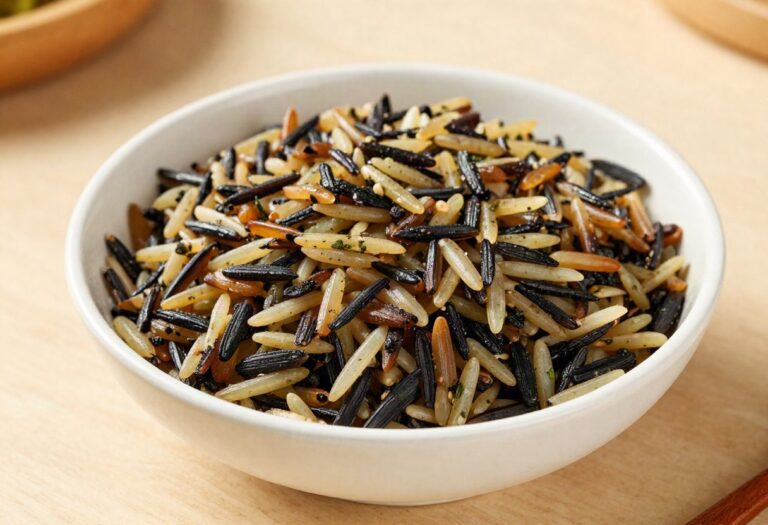
Despite its name, wild rice is not strictly a rice: it is the seed of an aquatic plant of the genus Zizania, native to North America. Recognisable by its long, shiny black grains, it develops a slightly woody, hazelnut-like flavour once cooked. In terms of nutrition facts, it provides around 102 kcal per 100 g (cooked weight), with nearly 3.99 g of protein, 19.7 g of carbohydrate and only 0.34 g of fat. Its fibre and mineral content make it an interesting starchy food in a balanced diet. Often sold mixed with long-grain or brown rice, it adds colour, crunch and originality to many recipes.
Macronutrient breakdown
Nutrition table per 100 g
| Calories | 102 kcal |
| Kilojoules | 430 kJ |
| Protein | 4 g |
| Carbohydrate | 19,7 g |
| Fat | 0,4 g |
| Fibre | 1,8 g |
Micronutrients per 100 g
All measured nutrients, ranked by share of the daily reference intake.
- Manganese0,28 mg14 %
- Zinc1,34 mg13 %
- Copper0,12 mg12 %
- Phosphorus82 mg12 %
- Vitamin B60,14 mg10 %
- Magnesium32 mg9 %
- Vitamin B31,29 mg8 %
- Vitamin B20,09 mg6 %
- Vitamin B9dietary folate equivalents26 µg
See the other 8 nutrients
- Potassium101 mg5 %
- Vitamin B10,05 mg5 %
- Iron0,6 mg4 %
- Vitamin B50,15 mg3 %
- Vitamin E0,24 mg2 %
- Vitamin K10,5 µg1 %
- Calcium3 mg0 %
- Vitamin A0,17 µg0 %
Anses Ciqual 2025. Source: Anses, 2025, Ciqual food composition table
Tips
Wild rice needs longer cooking than ordinary rice: allow 40 to 50 minutes in plenty of boiling salted water, until the grains split open slightly. A sensible portion is around 50 to 60 g raw (about 150 g cooked) as a side. You can serve it lukewarm in a salad with herbs, diced crunchy vegetables and a drizzle of olive oil, or hot alongside fish or white meat.
Nutritionally, this starchy food stands out for its relatively high plant protein content for its family, and its richness in fibre and in minerals such as magnesium, phosphorus, zinc and manganese. Its moderate glycaemic index and the fibre it contains promote a gradual release of energy and good fullness. It is a good ally in a balanced diet, provided you watch your portions and the fat you add (butter, creamy sauces).
To vary your cereals and pseudo-cereals, you can alternate it with other options from the starchy foods family, such as quinoa, brown rice or bulgur. These wholegrain alternatives also offer good nutritional values and a useful amount of fibre.
Tips for active people: thanks to its complex carbohydrates and protein, wild rice suits the meal before an endurance session, eaten 2 to 3 hours before exercise to top up glycogen stores without weighing down digestion. During recovery, pair it with a source of protein (fish, egg, pulses) to support muscle repair. To go further, see our guidelines on nutrition for fitness.
Benefits and points to watch: wild rice is naturally gluten-free, which is handy if you are adapting your diet. For storage, keep it dry in an airtight jar away from light; once cooked, it keeps for 2 to 3 days in the fridge, ideal for batch cooking. Its calorie density stays reasonable, but as with any starchy food, seasoning and portion size make the difference for weight management. Choose simple cooking methods and sides rich in vegetables.