Group · Vegetables
Yellow pepper
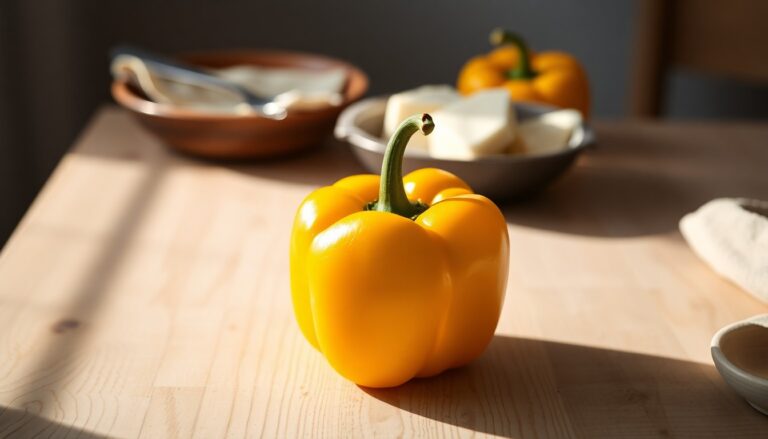
The yellow pepper is a colourful variety of the Capsicum genus, harvested at an advanced stage of ripeness, which gives it its sweetness and crunchy flesh. Riper than the green pepper, it develops fruity aromas prized in cooking. A low-calorie vegetable, it has only 29.4 kcal per 100 g, with around 4.73 g of carbohydrate, 0.94 g of protein and very little fat. Its richness in water, fibre and vitamin C makes it an ally of a balanced, light diet. Raw or cooked, it adds colour and zing to your plates. The yellow pepper suits many recipes, from summer salads to slow-cooked dishes, and naturally finds its place in a weight-loss plan.
Macronutrient breakdown
Nutrition table per 100 g
| Calories | 29 kcal |
| Kilojoules | 124 kJ |
| Protein | 1 g |
| Carbohydrate | 4,8 g |
| Fat | 0,3 g |
| Fibre | 1,2 g |
Micronutrients per 100 g
All measured nutrients, ranked by share of the daily reference intake.
- Vitamin C121 mg151 %
- Vitamin E1,76 mg15 %
- Potassium220 mg11 %
- Copper0,07 mg7 %
- Vitamin A53,5 µg7 %
- Vitamin B60,08 mg6 %
- Manganese0,11 mg6 %
- Phosphorus23 mg3 %
- Vitamin B9dietary folate equivalents43,3 µg
See the other 11 nutrients
- Magnesium12 mg3 %
- Vitamin B10,03 mg3 %
- Vitamin B50,14 mg2 %
- Zinc0,23 mg2 %
- Vitamin B30,28 mg2 %
- Total omega-30,04 g2 %
- Vitamin K11,18 µg2 %
- Iron0,21 mg2 %
- Calcium8,6 mg1 %
- Omega-3 ALA0,02 g1 %
- Omega-6 LA0,05 g1 %
Anses Ciqual 2025. Source: Anses, 2025, Ciqual food composition table
Tips
The yellow pepper can be enjoyed in countless ways. Raw, cut into strips or dice, it adds crunch to a mixed salad or can be dipped as sticks in a yoghurt sauce. Cooked, it works wonderfully in a ratatouille, vegetable stir-fries, stuffed dishes or kebabs. To preserve as much of its vitamin C and antioxidants (the carotenoids responsible for its golden colour) as possible, choose gentle cooking by steaming or a quick turn in the pan rather than long cooking.
In terms of nutrition facts, the yellow pepper is a lightweight: its low calorie density and low glycaemic index make it a vegetable of choice for weight loss and a balanced diet. Its fibre promotes fullness, while its water content helps hydration. You can pair it with other colourful vegetables such as tomato or courgette to make varied, tasty dishes. To compare its nutritional content with other foods, see the food calorie table.
Practical tips:
- Choose a yellow pepper that is firm and shiny, with taut skin and no blemishes.
- Keep it for up to a week in the fridge salad drawer.
- Remove the seeds and the white membranes, which are more bitter.
- For easier digestion, you can peel it after grilling it.
- Freeze it in blanched strips to have it all year round.
Active people will appreciate the yellow pepper as a source of micronutrients to include in recovery meals. Its vitamin C contributes to normal function after exercise, and its lightness makes it a fine accompaniment to protein dishes. Pair it with a source of protein and starchy foods for a complete meal, or include it in your healthy batch cooking routines to save time during the week.
When it comes to weight control, the yellow pepper is no problem: its carbohydrate stays modest and natural. Just watch how it is prepared, as cooking it swimming in oil or with rich sauces adds to the calorie bill. Also discover other seasonal vegetables to vary your plates and enjoy their full benefits.