Group · Vegetables
Green pepper
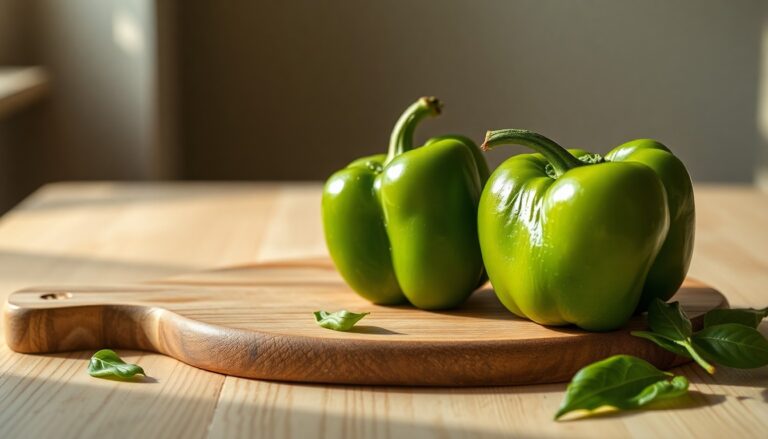
The green pepper is in fact a pepper picked before it is fully ripe, which gives it a slightly bitter, crunchy flavour that differs from its colourful cousins. From the large Solanaceae family, it also comes in red, yellow and orange versions, which are sweeter and milder. Very low in calories at just 22.5 kcal per 100 g, it has excellent nutrition facts: rich in water, fibre and vitamin C, it fits perfectly into a balanced diet. Raw in a salad, grilled, stuffed or pan-fried, the green pepper is a versatile ally in the kitchen. Its low carbohydrate and fat content make it a vegetable of choice for anyone watching their figure while still enjoying their food.
Macronutrient breakdown
Nutrition table per 100 g
| Calories | 23 kcal |
| Kilojoules | 94 kJ |
| Protein | 0,9 g |
| Carbohydrate | 3,5 g |
| Fat | 0,2 g |
| Fibre | 3,2 g |
Micronutrients per 100 g
All measured nutrients, ranked by share of the daily reference intake.
- Vitamin C26,9 mg34 %
- Vitamin B60,21 mg15 %
- Potassium160 mg8 %
- Copper0,04 mg4 %
- Manganese0,07 mg4 %
- Phosphorus17 mg2 %
- Vitamin E0,28 mg2 %
- Magnesium7,7 mg2 %
- Vitamin B9dietary folate equivalents55,1 µg
See the other 7 nutrients
- Vitamin B30,3 mg2 %
- Vitamin B50,11 mg2 %
- Vitamin A12,8 µg2 %
- Iron0,22 mg2 %
- Total omega-30,03 g1 %
- Zinc0,11 mg1 %
- Calcium6,2 mg1 %
Anses Ciqual 2025. Source: Anses, 2025, Ciqual food composition table
Tips
The green pepper lends itself to countless preparations. Raw, cut into strips, it adds crunch to mixed salads and goes well with a light dip. Cooked, it reveals milder aromas: roasted in the oven, marinated, stuffed with cereals or meat, or added to a ratatouille with courgette, aubergine and tomato. To preserve as much vitamin C as possible, choose quick cooking or gentle cooking by steaming or braising.
Key nutrients: the green pepper is a good source of vitamin C, B vitamins and provitamin A, as well as antioxidant compounds. Its 3.2 g of fibre per 100 g support digestion and fullness, while its high water content makes it a very thirst-quenching vegetable. Its low glycaemic index and 3.43 g of carbohydrate make it a food that fits with a balanced diet.
Weight-loss tips: with its very low calorie density, the green pepper is a valuable asset if you are watching your weight. You can eat it generously to add volume to your plates without adding to the calorie bill. Pair it with other low-calorie vegetables such as cucumber or lettuce for filling, light meals. Just avoid too much oil when pan-frying.
For active people: the green pepper is ideal alongside a post-training meal, where it provides vitamins, minerals and antioxidants that help recovery, without extra calories. Combine it with a source of protein (chicken, fish, eggs) and a wholegrain starchy food to replenish your glycogen stores. Raw as sticks, it also makes a hydrating, crunchy snack before exercise.
- Seasonality: peak season runs from summer to early autumn.
- Storage: keep it for a few days in the fridge salad drawer; it also freezes easily in strips.
- Digestion tip: removing the thin skin after grilling makes it easier to digest for sensitive stomachs.
To vary colours and flavours, explore the rest of the vegetable family and compare the figures with the food calorie table. The green pepper deserves a regular place on your menus for its benefits and versatility.