Collagen: benefits, types, food sources and supplements
The short answer
Collagen is the most abundant protein in the body: it gives structure to skin, bones, tendons and cartilage. Your body makes it from the protein you eat, with the help of vitamin C. As a supplement (hydrolysed marine or bovine collagen, 2.5 to 10 g a day), industry-funded trials show slightly better skin hydration and elasticity, but independent and higher-quality trials find no effect. For joints, a meta-analysis found a small reduction in osteoarthritis stiffness and overall pain scores. Side effects are rare; avoid marine collagen if you are allergic to fish.
This article is for information and does not replace medical advice. If you have kidney disease, are pregnant or breastfeeding, or take medication, talk to your doctor.
What is collagen?
Collagen is a family of proteins shaped like a triple helix, a three-strand rope. It forms the framework of tissues: strength for skin, solidity for bone, resilience for tendons. Collagens are the most abundant proteins in mammals, and the family has 28 types (Ricard-Blum, 2011).
To make it, your body needs amino acids (glycine, proline, lysine) from any dietary protein, and vitamin C, which EU rules recognise as contributing to normal collagen formation. There is no “collagen deficiency” in well-fed people: scurvy, from severe vitamin C deficiency, is the extreme example, with bleeding gums and slow wound healing.
Types of collagen
| Type | Where it is found | On labels |
|---|---|---|
| Type 1 | Skin, bone, tendons: the most widespread | Marine and bovine collagen |
| Type 2 | Joint cartilage | Chicken cartilage collagen, sold for joints |
| Type 3 | Skin, blood vessels, organs, often alongside type 1 | Bovine collagen (types 1 and 3) |
| Types 4, 5 and others | Membranes and specific tissues | Rarely highlighted |
Does the type matter in a supplement? Less than marketing suggests. Hydrolysed collagen (collagen peptides) is broken into small fragments and digested like any protein; your body does not reassemble them as-is in your skin. Marine versus bovine is mostly about origin, taste and price.
Collagen benefits: what the studies show
Skin: results depend on who pays
A 2021 meta-analysis (de Miranda et al.) of 19 trials and 1,125 people, 95% women, concluded that 90 days of hydrolysed collagen improved hydration, elasticity and wrinkles. In a widely cited trial (Proksch et al., 2014), 2.5 or 5 g a day for 8 weeks improved skin elasticity in 69 women aged 35 to 55, with no side effects.
| Analysis | Method | Conclusion |
|---|---|---|
| Myung and Park, 2025 | 23 trials, 1,474 people, split by funding and quality | Effect in industry-funded trials; no effect in non-funded or high-quality trials |
| Grimes and Mahto, 2026 | Re-analysis of existing meta-analyses, accounting for dose | Data reporting errors and inappropriate pooling; no evidence of benefit once corrected |
So collagen’s skin benefits are not proven. Sunscreen and not smoking remain the strongest anti-ageing measures.
Joints: a small effect in osteoarthritis
A meta-analysis of placebo-controlled trials (García-Coronado et al., 2019) found collagen lowered the total WOMAC score and visual pain scores in osteoarthritis. In detail, only stiffness dropped clearly; WOMAC pain and function subscores did not change significantly. A 2025 network meta-analysis (Zhang et al., 39 trials) found benefits for collagen on some outcomes, behind boswellia, with no more side effects than placebo. See our best joint supplement comparison.
Bones: one encouraging trial
In 131 postmenopausal women with reduced bone density (König et al., 2018), 5 g a day of collagen peptides for 12 months slightly increased spine and hip bone density versus placebo. One trial with a specific branded ingredient: it does not replace calcium, vitamin D, exercise or osteoporosis treatment. For hair and nails, we found no solid independent trial.
Foods high in collagen
- gelatine, which is simply cooked, purified collagen;
- cuts rich in skin and cartilage: pig’s trotters, shank, oxtail, poultry skin;
- fish eaten with skin and bones, such as tinned sardines;
- bone broth, whose content varies widely: see bone broth benefits.
Gelatine is by far the richest source. But your body builds collagen from all proteins: enough high-protein foods and vitamin C (red pepper, kiwi, citrus: see foods high in vitamin C) matter more than eating collagen itself.
Collagen side effects and safety
- fish allergy: marine collagen comes from fish skin or scales; avoid it if you are allergic;
- digestive discomfort: heaviness or bloating in some people, especially at 10 g;
- kidney disease: it adds to your protein intake; ask your doctor if protein must be limited;
- pregnancy and breastfeeding: no specific data, ask a health professional first;
- not a complete protein: it lacks tryptophan, an essential amino acid, so it does not replace meat, fish, eggs or legumes.
Does collagen cause weight gain? Not by itself: 10 g provides about 40 kcal, like any protein (4 kcal per gram). Sweetened, flavoured powders add more.
How to take collagen
- Dose: 2.5 to 5 g a day in skin trials, 5 g for bone, often 10 g for joints.
- Form: hydrolysed collagen peptides, as powder or capsules; reaching 5 g takes many capsules, so powder is more practical.
- When: no study shows a best time. Mix it into a drink, yoghurt or soup whenever suits you.
- Every day? Yes, as studied, over 8 weeks to 12 months. Reassess after three months.
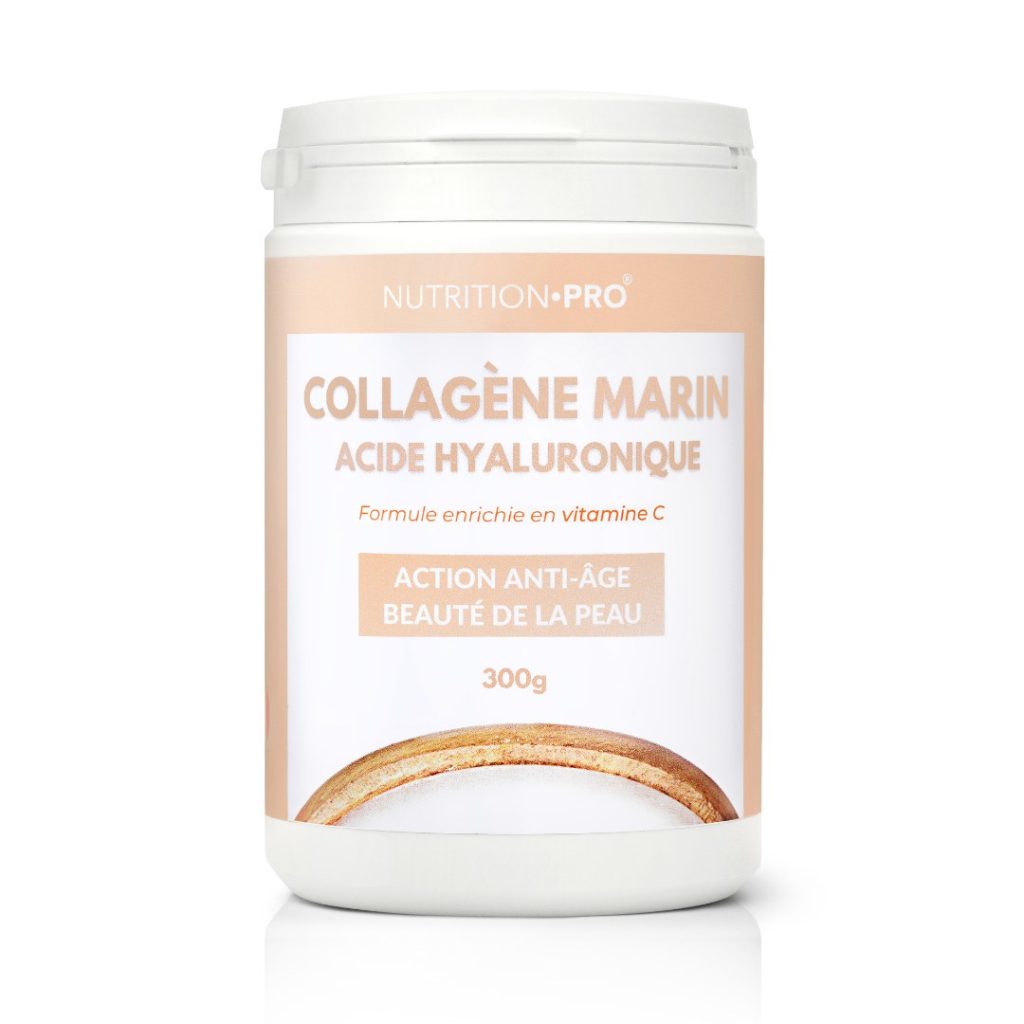
Nutrition•pro: Naticol marine collagen powder
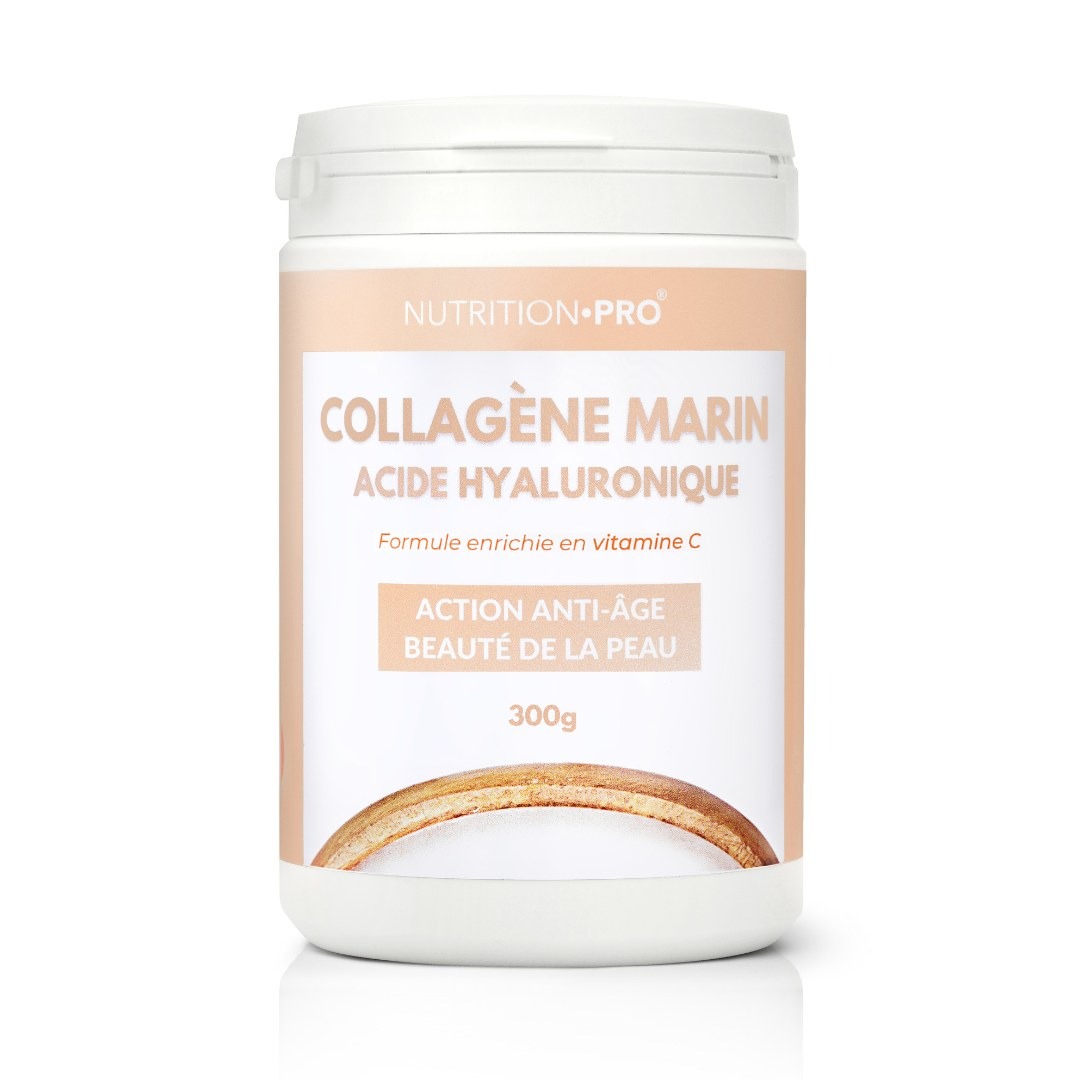
Nutrition•pro is a French brand based in Paris, which says it designs and makes its formulas in France. Its Marine Collagen powder combines a branded collagen with a very short ingredient list:
- 10 g of Naticol type 1 marine collagen, hydrolysed into peptides of about 2,000 daltons;
- with 210 mg of hyaluronic acid and 80 mg of vitamin C (100% of the reference intake) per 10.5 g serving;
- no flavouring, sweetener or additive, neutral taste, mixes into hot or cold drinks, yoghurt or compote;
- fish caught in the EU, Friend of the Sea certified;
- 1 scoop a day; 300 g tub, about 28 servings, one month;
- €39.99 per tub (price checked on 22/11/2026), about €1.40 a day.
How does the dose compare? 10 g is the top of the studied range: two to four times the skin-trial dose and the usual dose in joint trials. The 210 mg of hyaluronic acid is close to the 200 mg of the skin trial described in our hyaluronic acid guide. The studies above were not done on this product and, for skin, their results are disputed. The label advises pregnant or breastfeeding women to seek professional advice first; avoid it if you are allergic to fish.
Promo code: SEOCONSULTINGSL for 10% off your order, €35.99 per tub, about €1.26 a day (as of 22/11/2026).
See Nutrition•pro Marine Collagen →
Partner link: we earn a commission if you order through this link, at no extra cost to you.
To compare marine collagens by price per kilo, see our best marine collagen comparison.
Frequently asked questions
What does collagen do for your body?
Your own collagen structures skin, bone, tendons and cartilage. As a supplement, independent trials find no skin effect, and a meta-analysis shows a small effect on osteoarthritis stiffness.
What foods are high in collagen?
Gelatine, then cuts rich in skin and cartilage and fish eaten with skin. A diet with enough protein and vitamin C lets your body make its own collagen.
What are the side effects of collagen?
Mostly mild digestive discomfort. Avoid marine collagen with a fish allergy, and ask your doctor if you have kidney disease.
Is it safe to take collagen every day?
Yes, at 2.5 to 10 g a day, as studied, with no notable side effects.
Marine or bovine collagen?
Both are hydrolysed collagen digested into amino acids and small peptides. Marine suits people who avoid beef, bovine suits people allergic to fish. Compare dose and price per kilo.
Sources
- Ricard-Blum S. The collagen family. Cold Spring Harb Perspect Biol, 2011; 3(1): a004978. PubMed 21421911
- de Miranda R.B. et al. Effects of hydrolyzed collagen supplementation on skin aging: a systematic review and meta-analysis. Int J Dermatol, 2021; 60(12): 1449-1461. PubMed 33742704
- Myung S.K., Park Y. Effects of Collagen Supplements on Skin Aging: A Systematic Review and Meta-Analysis of Randomized Controlled Trials. Am J Med, 2025; 138(9): 1264-1277. PubMed 40324552
- Grimes D.R., Mahto A. Hydrolyzed Collagen for Skin Aging Meta-Analyses Are Unreliable. J Cosmet Dermatol, 2026; 25(10): e71208. PubMed 43047302
- Proksch E. et al. Oral supplementation of specific collagen peptides has beneficial effects on human skin physiology: a double-blind, placebo-controlled study. Skin Pharmacol Physiol, 2014; 27(1): 47-55. PubMed 23949208
- García-Coronado J.M. et al. Effect of collagen supplementation on osteoarthritis symptoms: a meta-analysis of randomized placebo-controlled trials. Int Orthop, 2019; 43(3): 531-538. PubMed 30368550
- Zhang Y. et al. Comparative Effectiveness of Nutritional Supplements in the Treatment of Knee Osteoarthritis: A Network Meta-Analysis. Nutrients, 2025; 17(15): 2547. PubMed 40806131
- König D. et al. Specific Collagen Peptides Improve Bone Mineral Density and Bone Markers in Postmenopausal Women: A Randomized Controlled Study. Nutrients, 2018; 10(1): 97. PubMed 29337906