Flax seeds: benefits, omega-3, fiber, how to eat them and side effects
The short answer
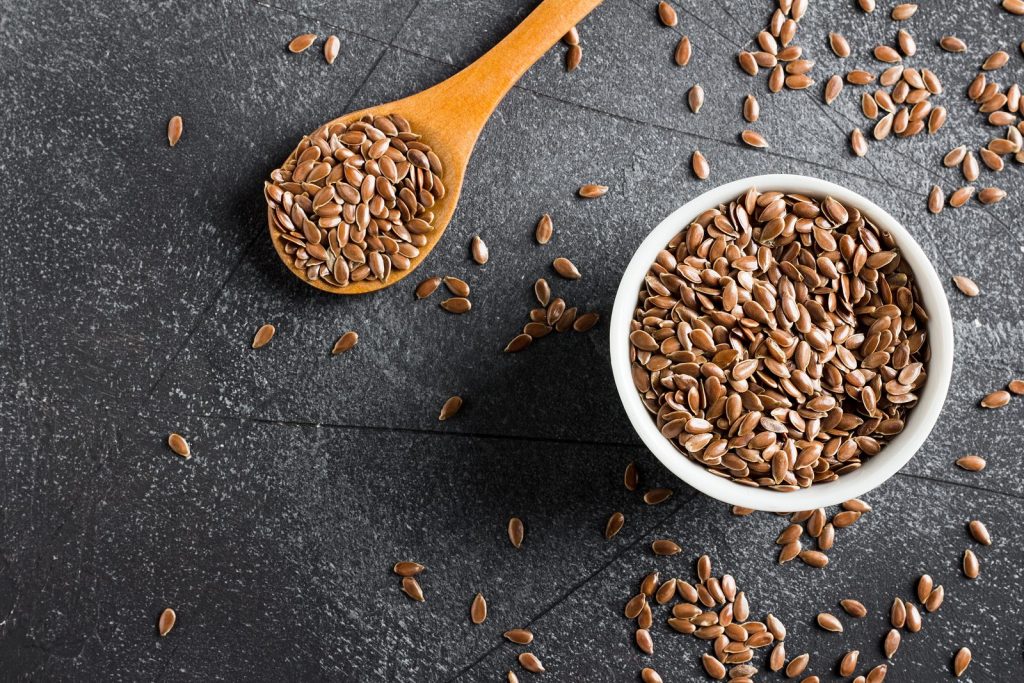
Flax seeds are the richest plant source of omega-3 ALA and a great source of fiber: one tablespoon of ground flaxseed (about 10 g) provides roughly 2 g of ALA and 2.4 g of fiber. In trials, flaxseed slightly lowers blood pressure (about 3 mmHg), lowers LDL in some people and helps with constipation. To get the omega-3s, eat it ground: whole seeds pass through without releasing them. Flaxseed contains cyanogenic glycosides that release a little cyanide; at usual servings (1 to 2 tablespoons a day) this is not a concern, but avoid large amounts at once, especially for young children. Drink enough water and take it apart from medication.
This article is for information and does not replace medical advice.
Flaxseed nutrition
| Nutrient | Per 100 g | Per tablespoon (10 g) |
|---|---|---|
| Energy | 528 kcal | 53 kcal |
| Fat | 40.3 g | 4 g |
| of which omega-3 ALA | 19.6 g | 2 g |
| of which omega-6 | 6.5 g | 0.65 g |
| Fiber | 24.4 g | 2.4 g |
| Protein | 22.4 g | 2.2 g |
| Magnesium | 336 mg | 34 mg |
Flaxseed has three times more omega-3 than omega-6, plus soluble fiber that forms a gel (mucilage) and lignans, 95% of which are SDG. Gut bacteria turn them into enterolactone and enterodiol, compounds that resemble estrogen (Calado et al., 2018). For daily targets, see our guide to fiber benefits and sources.
Flaxseed omega-3: what to expect
ALA is an essential fat your body cannot make. But it is not the same as the EPA and DHA in fish: ALA raises blood EPA, but barely raises DHA (Brenna et al., 2009). Flaxseed complements foods high in omega-3 such as oily fish; it does not replace them. If you avoid fish, see our best omega-3 supplement comparison.
Ground flaxseed vs whole: why grinding matters
A Canadian study (Austria et al., 2008) baked 30 g of whole flaxseed, 30 g of milled flaxseed or flaxseed oil into muffins for 3 months. Milled seed and oil clearly raised blood ALA within a month; whole seed did not. Early digestive discomfort faded with milled seed, while the whole-seed group struggled to stick with it.
Grind flax in a coffee or spice grinder, make a few days’ worth at a time, and keep it in a sealed jar in the fridge, or buy flaxseed meal in small packs. A rancid or bitter smell means it is time to toss it.
Flax seeds benefits: what studies show
| Outcome | Meta-analysis | Average effect |
|---|---|---|
| Blood pressure | Ursoniu et al., 2016 (15 trials); Li et al., 2023 (33 trials) | Systolic -2.9 to -3.2 mmHg, diastolic -2.4 to -2.6 mmHg; larger with 12+ weeks, 30 g/day or more, and in hypertension |
| Cholesterol | Pan et al., 2009 (28 trials) | LDL -0.08 mmol/L overall, -0.16 mmol/L (about 6 mg/dL) with whole or ground seed; stronger in postmenopausal women; no effect with oil |
| Blood sugar | Mohammadi-Sartang et al., 2018 (25 trials) | Fasting glucose -2.9 mg/dL, better insulin sensitivity; no effect on HbA1c; seed only, not oil or lignans |
| Weight | Mohammadi-Sartang et al., 2017 (45 trials) | About -1 kg, mainly with 30 g/day or more for 12+ weeks |
These effects are real but modest, the trials vary widely, and many use 30 g a day or more (three tablespoons). The seed beats the oil for cholesterol and blood sugar, likely thanks to its fiber and lignans.
Flaxseed for constipation
- In China, 90 adults with chronic constipation took 50 g of flaxseed flour a day or lactulose for 4 weeks; median bowel movements rose from 2 to 7 a week with flax vs 2 to 6 with lactulose (Sun et al., 2020).
- In Iran, 53 constipated people with type 2 diabetes improved with 10 g of flax in cookies twice a day for 12 weeks vs placebo cookies (Soltanian and Janghorbani, 2018).
- In irritable bowel syndrome, a small UK pilot trial found no clear difference vs no flax (Cockerell et al., 2012).
Start with one tablespoon a day, increase slowly and drink a full glass of water with it. For a more studied fiber, see our best fiber supplement comparison.
Flaxseed side effects and safety
Cyanogenic glycosides: EFSA’s figures
- EFSA set an acute reference dose of 20 µg of cyanide per kg of body weight per sitting;
- flaxseed samples averaged 192 mg of cyanide per kg;
- flax releases cyanide slowly and incompletely, so EFSA divides its levels by 3;
- even so, a highly contaminated ground flaxseed (407 mg/kg) could reach the reference dose with 1.3 to 14.7 g depending on body weight, the lowest amounts for young children;
- average dietary exposure does not exceed it in any age group, and no flaxseed poisoning has been reported in the literature cited by EFSA.
Bottom line: safe at usual servings, but not in large amounts at once; spread it over the day and keep portions small for young children. Our guide on how many seeds per day compares flax with other seeds.
Flaxseed and breast cancer
Because lignans resemble estrogen, some people worry. Human data are rather reassuring: a systematic review of 10 studies (Flower et al., 2014) links flax with a lower breast cancer risk in observational studies, but evidence remains limited. If you have had a hormone-sensitive cancer, talk to your oncologist first.
Who should be careful?
- people on medication: take flax at a different time, as fiber can reduce absorption;
- swallowing problems, bowel narrowing or obstruction;
- young children: small amounts only.
How to eat flax seeds
- Amount: 1 to 2 tablespoons of ground flaxseed a day (10 to 20 g).
- Where: yogurt, oatmeal, smoothies, soups, salads, bread or pancake batter. One tablespoon mixed with 3 tablespoons of water makes a “flax egg” for vegan baking.
- Flaxseed oil: more ALA but no fiber or lignans, and never heat it. See our flaxseed oil page. Chia seeds are another ALA and fiber source.
Dynveo: organic flaxseed oil capsules for ALA without the seeds
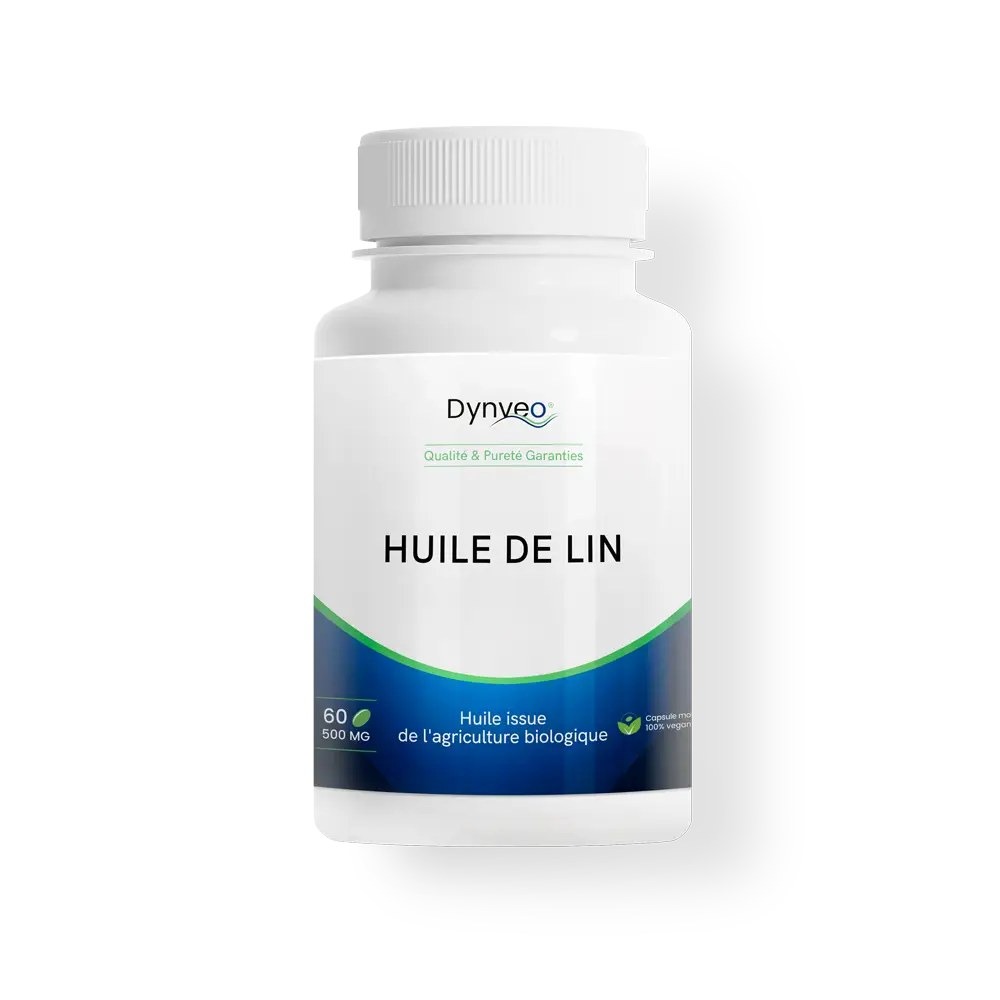
If you dislike the taste of flaxseed or do not want to grind it, Dynveo’s Huile de Lin is a simple way to add ALA. The product page lists:
- per 2 capsules: 1,000 mg of organic flaxseed oil, providing at least 500 mg of ALA, plus 110 mg of omega-6 and 110 mg of omega-9;
- cold-pressed, solvent-free oil in plant-based tapioca softgels, with no gelatin or carrageenan;
- batch certificates online: microbiology, heavy metals, PAHs, pesticides, pyrrolizidine alkaloids and oxidation markers (peroxide and anisidine), which matters for such a fragile oil;
- 2 capsules a day; 60 capsules, a 1-month supply;
- €14.90 per bottle (price checked on 22/11/2026), about €0.50 a day.
How does the dose compare? 500 mg of ALA equals about 2.5 g of flaxseed: a convenient, well-controlled top-up rather than a substitute for a spoonful of ground seed, which also brings fiber and lignans. The meta-analyses above did not test this product, and flaxseed oil showed no effect on cholesterol or blood sugar in them.
The page advises against use during pregnancy or breastfeeding, under age 12, and with a personal or family history of breast cancer, and recommends taking it apart from medication.
Partner link: we earn a commission if you order through this link, at no extra cost to you.
Frequently asked questions
What are the benefits of flaxseed?
It is the best plant source of omega-3 ALA and a good fiber source. Trials show small drops in blood pressure, LDL in some people and fasting glucose, plus better bowel regularity.
How should I eat flax seeds?
Ground, in yogurt, oatmeal, smoothies or baking. Whole seeds provide almost no omega-3 because the gut does not break the shell.
How much flaxseed per day?
1 to 2 tablespoons of ground flaxseed, with water. Avoid very large amounts in one sitting because of cyanogenic glycosides.
Are flax seeds good for women?
The cholesterol-lowering effect was strongest in postmenopausal women, and observational data link flax with lower breast cancer risk. With a history of hormone-sensitive cancer, ask your oncologist.
Flaxseed or flaxseed oil?
Oil gives more ALA per spoon, but ground seed adds fiber and lignans and is the form that improved cholesterol and blood sugar in studies.
Sources
- Pan A. et al. Meta-analysis of the effects of flaxseed interventions on blood lipids. Am J Clin Nutr, 2009; 90(2): 288-97. PubMed 19515737
- Ursoniu S. et al. Effects of flaxseed supplements on blood pressure: A systematic review and meta-analysis. Clin Nutr, 2016; 35(3): 615-25. PubMed 26071633
- Li L. et al. Effect of flaxseed supplementation on blood pressure: a dose-response meta-analysis. Food Funct, 2023; 14(2): 675-690. PubMed 36622248
- Mohammadi-Sartang M. et al. Flaxseed supplementation on glucose control and insulin sensitivity. Nutr Rev, 2018; 76(2): 125-139. PubMed 29228348
- Austria J.A. et al. Bioavailability of alpha-linolenic acid in subjects after ingestion of three different forms of flaxseed. J Am Coll Nutr, 2008; 27(2): 214-21. PubMed 18689552
- Brenna J.T. et al. alpha-Linolenic acid supplementation and conversion to n-3 long-chain PUFA in humans. Prostaglandins Leukot Essent Fatty Acids, 2009; 80(2-3): 85-91. PubMed 19269799
- Sun J. et al. Effects of flaxseed supplementation on functional constipation and quality of life. Asia Pac J Clin Nutr, 2020; 29(1): 61-67. PubMed 32229443
- Flower G. et al. Flax and Breast Cancer: A Systematic Review. Integr Cancer Ther, 2014; 13(3): 181-92. PubMed 24013641
- EFSA CONTAM Panel. Evaluation of the health risks related to the presence of cyanogenic glycosides in foods other than raw apricot kernels. EFSA J, 2019; 17(4): e05662. PubMed 32626287