Black seed oil (Nigella sativa): benefits, side effects and how to use it
The short answer
Black seed (Nigella sativa), also called black cumin, nigella seeds or kalonji, is a small black seed used both as a spice and as a supplement, mostly as black seed oil. As a spice, a pinch on bread or vegetables is perfectly safe. As a supplement, trials show modest effects: in people with type 2 diabetes, fasting glucose falls by about 21 mg/dL and HbA1c by about 0.4 points; blood pressure drops by about 3 mmHg. These trials are often small, short and inconsistent. On the safety side, black seed oil applied to the skin can cause allergic reactions, sometimes severe, and supplement doses call for caution with diabetes drugs, blood pressure drugs and blood thinners.
This article is for information and does not replace medical advice. If you take any medication, talk to your doctor before taking black seed supplements.
What is Nigella sativa?
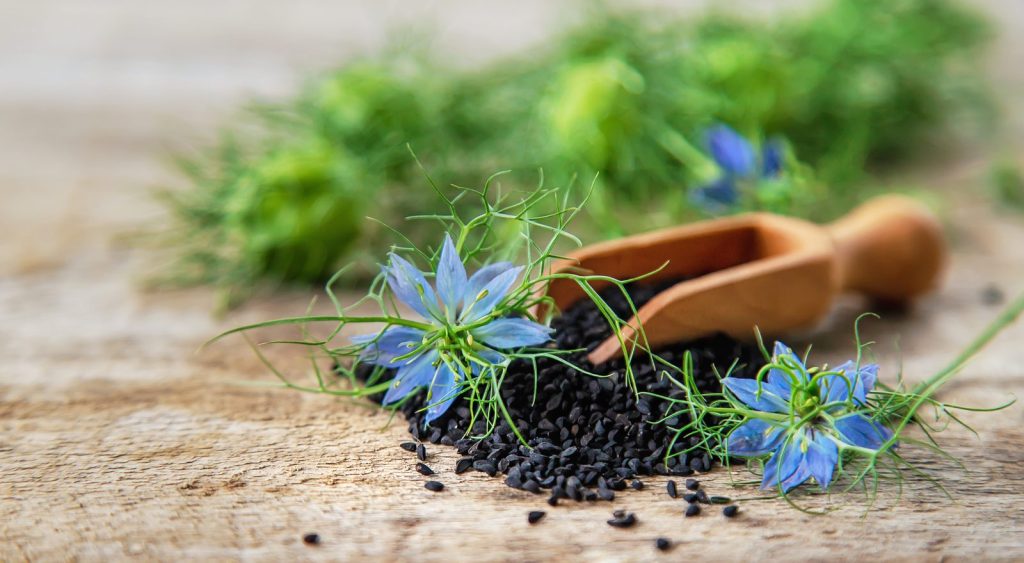
Nigella sativa is a pale blue flowering plant from the buttercup family. Its small, black, angular seeds taste slightly bitter and peppery, somewhere between onion and oregano. They have been used for about three thousand years in the Middle East and Asia, where they are known as habba sawda (“black seed”) or kalonji.
Watch the names: despite the nickname “black cumin”, nigella is not related to regular cumin, which belongs to a different plant family. And love-in-a-mist (Nigella damascena) is mainly a garden flower: the seeds used in cooking and in studies come from Nigella sativa.
It comes in three forms: whole seeds (the spice), ground seed powder and cold-pressed black seed oil. The most studied compound is thymoquinone, an antioxidant found mainly in the seed’s volatile fraction. Its content varies widely from batch to batch, depending on origin, variety, ripeness and extraction, which makes studies hard to compare (Burdock, 2022).
Black seed oil benefits: what the studies show
There are plenty of human trials: a large 2025 meta-analysis (Jafari et al.) counted 82 randomised trials with 5,026 participants, using 200 mg to 4.6 g a day for 1 to 48 weeks. Most look at metabolic health.
| Marker | Average effect of black seed | Population |
|---|---|---|
| Fasting glucose | -21.4 mg/dL | Type 2 diabetes, 16 trials |
| HbA1c | -0.44 points | Type 2 diabetes, 16 trials |
| Total cholesterol | -18.8 mg/dL | Type 2 diabetes, 16 trials |
| Systolic blood pressure | -3.3 mmHg | Metabolic diseases, 31 trials |
| Diastolic blood pressure | -2.8 mmHg | Metabolic diseases, 31 trials |
| Body weight | -1.6 kg (about 3.5 lb) | Metabolic diseases, 31 trials |
Blood sugar and type 2 diabetes
In people with diabetes, lower fasting glucose and HbA1c are the most consistent findings. The same analyses, however, found no effect on insulin, insulin resistance (HOMA), triglycerides or kidney function. Fasting glucose fell mainly in trials longer than 8 weeks; HbA1c and LDL fell more above 1 g a day and with the oil. No trial shows fewer diabetes complications. Diet comes first: see our type 2 diabetes diet guide and our blood sugar supplement comparison.
Blood pressure and cholesterol
Another meta-analysis (Kavyani et al., 2023) found drops of about 3 mmHg systolic and 2.7 mmHg diastolic. Real, but small. Total cholesterol falls a little. The bigger levers remain your plate (foods to lower cholesterol) and the DASH diet for blood pressure.
Black seed for weight loss?
Average weight loss is 1.6 kg (about 3.5 lb) more than the control group, with no change in waist size or waist-to-hip ratio. Measurable, but no fat burner.
Limits to keep in mind: many trials are small; results vary a lot between trials; products (oil, powder, extract) and their thymoquinone content are rarely comparable. The authors themselves urge caution. Claims about immunity or asthma rest on lab markers or animal studies, not on proven reductions in illness.
Black seed oil side effects and safety
As a spice: no concern
A 2022 assessment (Burdock, Regulatory Toxicology and Pharmacology) concludes that nigella seeds used as a food ingredient at traditional levels are safe and Generally Recognized As Safe (GRAS). A teaspoon on bread or in a dish is fine for a healthy person.
Black seed oil on the skin: the real allergy risk
Black seed oil is often applied neat to the face, hair or beard. That is where the most serious side effects show up: contact dermatitis, sometimes severe. Dermatologists at a Paris-area hospital described three women admitted with lesions spreading well beyond the application site, more than 15% skin detachment and fever, mimicking Stevens-Johnson syndrome (Gaudin et al., JAMA Dermatology, 2018). Thymoquinone is the likely culprit. In practice: do not apply it neat over large areas; patch-test a small spot first and stop at the first sign of redness.
As a supplement: watch your medications
Because black seed slightly lowers blood sugar and blood pressure, it can add up with drugs that do the same. A few case reports also call for caution:
- bleeding: a 51-year-old man on dual antiplatelet therapy and chemotherapy developed a large bruise after increasing to 2 g of oil a day; the link was rated “possible”, in an already high-risk setting (Arab et al., 2026);
- kidneys: a case of acute kidney failure was reported in a diabetic patient taking black seed (Arslan et al., 2013).
These are isolated cases, not proof of toxicity. But the rule is simple: if you take diabetes medication, blood pressure medication, a blood thinner or an antiplatelet drug, or have kidney or liver disease, ask your doctor first. Stop supplements before surgery and tell your care team.
Pregnancy, breastfeeding and children
Safety data at supplement doses are lacking. During pregnancy and breastfeeding, keep black seed to cooking amounts and avoid courses of oil or powder without medical advice. Our pregnancy diet guide covers the basics. No black seed supplements for children.
How to use nigella seeds and black seed oil
In the kitchen
Toast them dry in a pan for 30 seconds to bring out the aroma, then:
- sprinkle on flatbreads, like our cheese naan, or mixed with sesame seeds on bread dough;
- scatter over labneh or hummus with a drizzle of olive oil;
- add to roasted vegetables, curries and dals, or a cucumber salad.
As with all seeds, one to two teaspoons a day is plenty: see how many seeds per day.
As a supplement (powder or oil)
- Doses studied: 200 mg to 4.6 g a day; blood sugar effects mainly appear above 1 g a day.
- Timing: with a meal, to limit possible digestive discomfort.
- Duration: trials last 1 to 48 weeks, usually a few weeks to a few months. Beyond that, data are lacking: check in with your doctor.
- Drinking the oil: it is more concentrated than the powder. Start small and do not combine oil and powder.
Nutrition•pro: organic, single-ingredient nigella seed powder
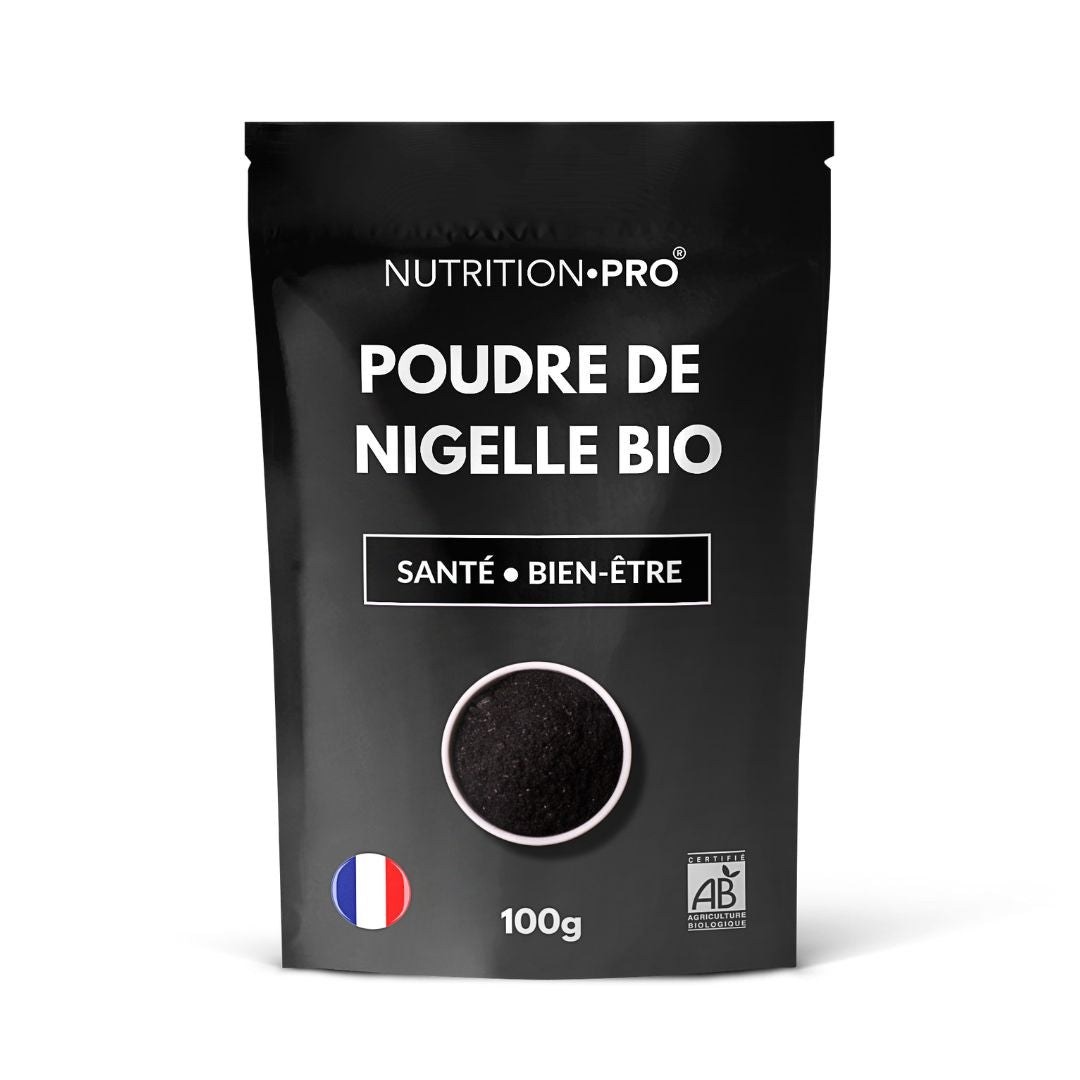
Nutrition•pro is a French brand based in Paris. Its Organic Nigella Powder keeps things simple, and that is its strength: it works in the kitchen as well as for a daily course.
- 100% ground nigella seeds from organic farming (EU organic label), no additives;
- 2 g a day recommended, with a measuring spoon included, to sprinkle on salads, soups, sauces or into a smoothie;
- 100 g pouch, 50 days at 2 g a day, or 500 g pouch, about 250 days;
- €24.99 for 100 g (about €0.50 a day) and €59.99 for 500 g (about €0.24 a day), prices checked on 22/11/2026.
How does this dose compare? 2 g a day sits within the trial range (200 mg to 4.6 g) and above the 1 g threshold where blood sugar effects looked clearer. Some trials used oil, which is more concentrated, or extract capsules, so their results do not automatically apply to the powder. The powder has a practical advantage: it fits into meals, like the spice it is.
The brand itself advises starting with small amounts and seeking medical advice if pregnant, breastfeeding, unwell or on medication, in line with the precautions above.
Promo code: SEOCONSULTINGSL for 10% off your order: €22.49 for 100 g (about €0.45 a day) or €53.99 for 500 g (about €0.22 a day), as of 22/11/2026.
See Nutrition•pro Organic Nigella →
Partner link: we earn a commission if you order through this link, at no extra cost to you.
Frequently asked questions
What are the benefits of black seed oil?
The best studied are modest drops in fasting glucose and HbA1c in type 2 diabetes, in total cholesterol and in blood pressure. Trials are numerous but often small and inconsistent.
What are the side effects of black seed oil?
On the skin, contact dermatitis, sometimes severe. Taken by mouth, possible digestive upset, and caution with diabetes drugs, blood pressure drugs and blood thinners. At cooking amounts, the seeds are considered safe.
Is black seed the same as cumin?
No. “Black cumin” is a nickname for nigella, but cumin (Cuminum cyminum) is a different plant with a different taste.
How much black seed per day?
Trials used 200 mg to 4.6 g a day, for 1 to 48 weeks. As a spice, one to two teaspoons a day.
What do nigella seeds taste like?
Slightly bitter and peppery, with notes of onion and oregano. A quick toast in a dry pan makes them milder and more fragrant.
Sources
- Karimi M. et al. Effects of black seed (Nigella sativa L.) on cardiometabolic indices in type 2 diabetic patients: A systematic review and meta-analysis of RCTs. Complement Ther Med, 2025; 90: 103174. PubMed 40210172
- Musazadeh V. et al. The Effect of Nigella sativa Supplementation on Cardiometabolic Health in Patients With Metabolic Diseases: A GRADE-Assessed Systematic Review and Meta-Analysis. Endocrinol Diabetes Metab, 2026; 9(2): e70207. PubMed 41858302
- Kavyani Z. et al. Antihypertensive effects of Nigella sativa supplementation: An updated systematic review and meta-analysis of randomized controlled trials. Phytother Res, 2023; 37(8): 3224-3238. PubMed 37341696
- Jafari A. et al. Does Nigella sativa supplementation improve cardiovascular disease risk factors? A comprehensive GRADE-assessed systematic review and dose-response meta-analysis of 82 randomized controlled trials. Pharmacol Res, 2025; 219: 107882. PubMed 40714301
- Burdock G.A. Assessment of black cumin (Nigella sativa L.) as a food ingredient and putative therapeutic agent. Regul Toxicol Pharmacol, 2022; 128: 105088. PubMed 34838871
- Gaudin O. et al. Association Between Severe Acute Contact Dermatitis Due to Nigella sativa Oil and Epidermal Apoptosis. JAMA Dermatol, 2018; 154(9): 1062-1065. PubMed 30073256
- Arab A. et al. Extensive Subcutaneous Hematoma in a Patient Receiving Nigella sativa Oil, Dual Antiplatelet Therapy, and Oxaliplatin-Based Chemotherapy: A Case Report. Hosp Pharm, 2026. PubMed 42682876
- Arslan E. et al. A case study report of acute renal failure associated with Nigella sativa in a diabetic patient. J Integr Med, 2013; 11(1): 64-6. PubMed 23464648