Ginseng and Korean red ginseng: benefits, side effects and dosage
The short answer
Ginseng (Panax ginseng, also called Korean ginseng) is a root used for centuries in Asia, mainly for fatigue. Red ginseng, including Korean red ginseng, is the same root, steamed and then dried. The European Medicines Agency (EMA) recognises a traditional use “for symptoms of asthenia such as fatigue and weakness”, based on long-standing use alone. Trials find at best a small effect on fatigue and no clear benefit for physical performance. Side effects and risks: it is usually well tolerated, but it can slightly lower blood sugar, disturb sleep, and in one trial American ginseng reduced the effect of the blood thinner warfarin. Not under 18, not in pregnancy or breastfeeding, and no more than 3 months in a row according to the EMA.
This article is for information and does not replace medical advice. If you take medication (blood thinners, diabetes drugs or others), or are pregnant or breastfeeding, talk to your doctor or pharmacist before taking ginseng.
What is ginseng?
True ginseng is the root of Panax ginseng C.A. Meyer, native to Korea and north-east China. Its best-studied compounds are ginsenosides, a family of dozens of molecules. It is sold as an “adaptogen”, a traditional idea rather than a medical category.
- White ginseng: the root, simply dried.
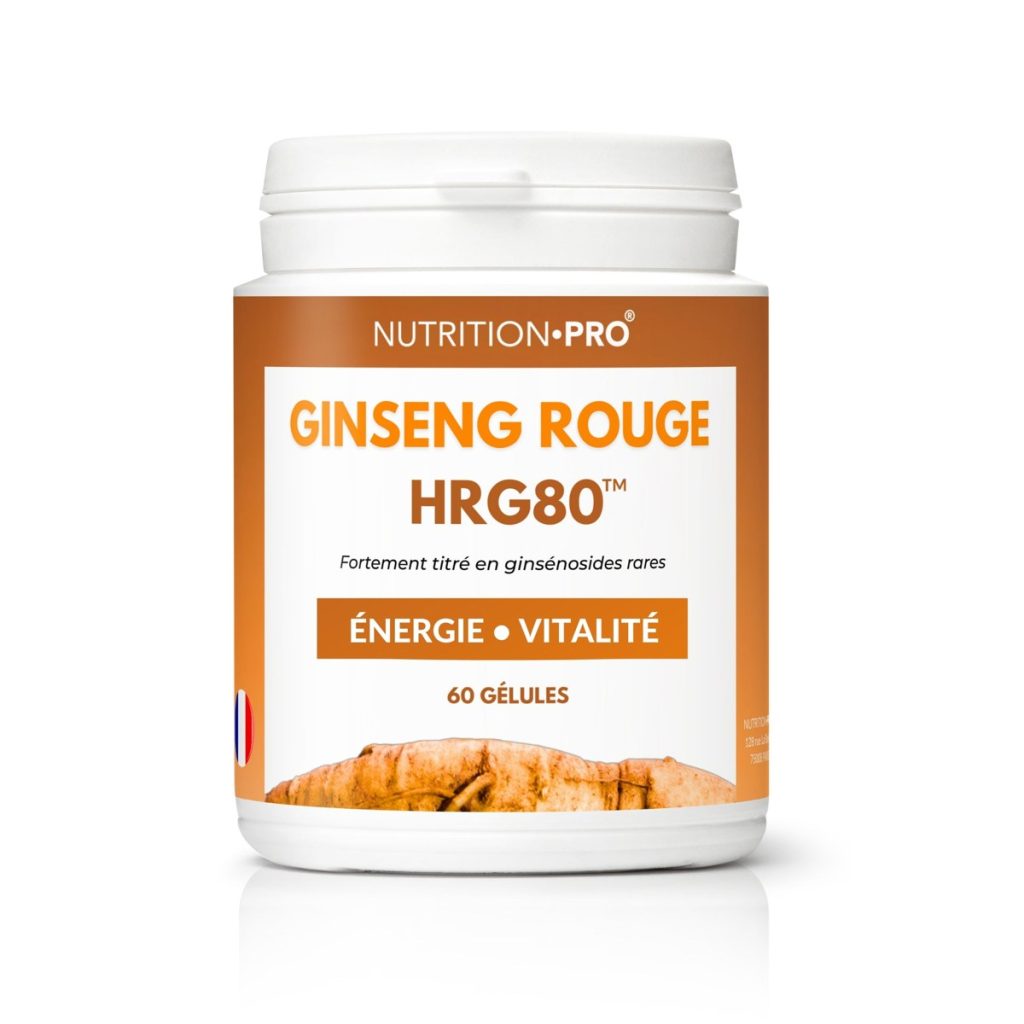
- Red ginseng: steamed before drying, which changes its ginsenoside profile and increases some “rare” ginsenosides (Rg3, Rk1…). Korean red ginseng is red ginseng grown in Korea.
- Not Panax ginseng: American ginseng (Panax quinquefolius), a close relative; Siberian ginseng (eleuthero), a different plant; and Indian ginseng, which is ashwagandha (see ashwagandha benefits and side effects). Ginger is another plant altogether.
Ginseng benefits: what the studies show
Fatigue: a small effect, fragile evidence
| Meta-analysis | Included | Result |
|---|---|---|
| Bach et al., 2016 | 12 trials, 630 people | Modest but significant effect on fatigue (4 trials); no effect on physical performance (8 trials). Authors call the evidence insufficient |
| Li et al., 2023 | 19 randomised trials | No significant reduction overall; a small reduction for general and chronic fatigue; no more side effects than controls |
The signal is real but small, and the trials used very different products and doses. Lasting fatigue deserves a check-up first (iron, vitamin D, thyroid, sleep). See our best supplement for fatigue comparison.
Red ginseng and focus: a small HRG80 trial
A pilot double-blind crossover trial (Mariage et al., 2020) gave 50 tired adults a hydroponically grown red ginseng (HRG80), a standard white ginseng or placebo for 14 days each. HRG80 improved attention, memory and perceived stress scores versus placebo, from the first dose according to the authors; the white ginseng was not significantly better than placebo. It is a small, short trial co-authored by the HRG80 manufacturer: a lead, not proof.
Blood sugar
Across 16 trials (Shishtar et al., 2014), ginseng lowered fasting blood glucose by a modest 0.31 mmol/L (about 5.6 mg/dL), with no significant effect on HbA1c overall. Not a diabetes treatment, but an added effect if you take glucose-lowering drugs. See type 2 diabetes diet.
Ginseng sexual health benefits for men
A Cochrane review of 9 trials (Lee et al., 2022) found a trivial effect on erectile function, with low-certainty evidence.
Ginseng side effects and interactions
The EU monograph (revised 2024) lists digestive upset (stomach discomfort, nausea, vomiting, diarrhoea, constipation), allergic reactions (hives, itching) and insomnia, frequency unknown. It reports no drug interactions, but two points call for caution:
- Warfarin: in a randomised trial in 20 healthy volunteers (Yuan et al., 2004), two weeks of American ginseng lowered warfarin’s effect (INR and blood levels). It was not Panax ginseng and not long-term patients, but on a blood thinner, do not take ginseng without your doctor’s approval.
- Diabetes medication: possible additive blood sugar lowering.
| Situation | Why |
|---|---|
| Pregnancy and breastfeeding | Safety not established: not recommended by the EMA |
| Under 18 | Not recommended, lack of data |
| Warfarin or other blood thinners | Reduced warfarin effect seen with American ginseng: ask your doctor |
| Diabetes medication | Additive effect on blood sugar: ask your doctor |
| Trouble sleeping | Insomnia reported: take it in the morning |
Ginseng dosage: how to take it
- White ginseng powder: 600 to 2,000 mg a day; red ginseng powder: 1,200 to 1,800 mg a day; red ginseng dry extract (2-4.5:1): 360 to 500 mg a day (EMA monograph).
- How long? Up to 3 months. See a doctor if fatigue lasts more than 2 weeks.
- When? Morning or early in the day, as insomnia is reported.
Ginseng or rhodiola? Both are studied for fatigue, with modest evidence: see rhodiola rosea benefits and side effects, and do not stack them without advice.
Nutrition•pro: HRG80 red ginseng made in France
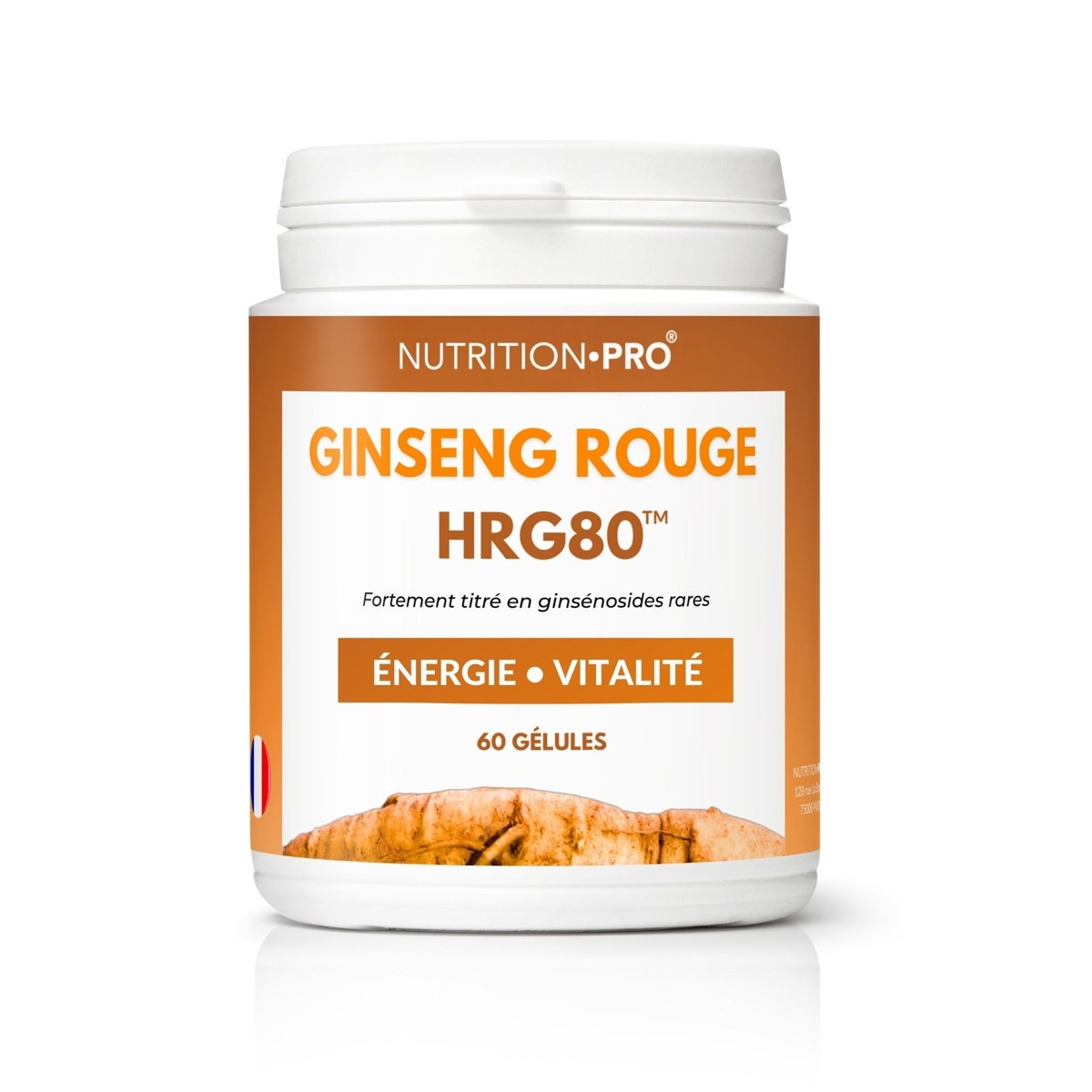
Nutrition•pro is a French brand which says it designs and makes its formulas in France. Its HRG80 red ginseng uses the same raw material as the attention and memory trial above:
- HRG80 red ginseng root powder (Panax ginseng), grown hydroponically without pesticides or chemical fertilisers according to the brand;
- standardised for rare ginsenosides (Rg3, Rg5, Rk1…), up to 7 times more than standard ginseng according to the label;
- 200 mg a day in 2 capsules of 100 mg; other ingredients: acacia gum and a vegetable capsule;
- 60 capsules, a one-month course;
- €29.99 per jar (price checked on 22/11/2026), about €1.00 a day.
How does the dose compare? The HRG80 trial used 2 capsules of about 209 mg of HRG80 powder, roughly 420 mg a day, for 14 days: this product provides about half of that. The label does not state the ginsenoside content. The one-month format suits a short course within the EMA’s 3-month limit. Trial results do not guarantee the effect of any single product. The label reserves it for adults and advises against it in pregnancy, breastfeeding and with diabetes medication, and asks people on medication to see a doctor first; add caution with blood thinners.
Promo code: SEOCONSULTINGSL for 10% off your order, €26.99 per jar, about €0.90 a day (as of 22/11/2026).
See Nutrition•pro HRG80 Red Ginseng →
Partner link: we earn a commission if you order through this link, at no extra cost to you.
To compare with other standardised red ginsengs, see our best supplement for fatigue comparison.
Frequently asked questions
What is ginseng good for?
The EMA recognises a traditional use for fatigue and weakness. Trials show a small effect on fatigue, a slight drop in fasting blood sugar and no gain in physical performance.
What are the benefits of Korean red ginseng?
The same as ginseng in general, as it is the same root, steamed. One small trial on the HRG80 red ginseng found better attention and memory scores over two weeks.
What are the side effects of ginseng?
Digestive upset, allergic reactions and insomnia. It may also reduce warfarin’s effect and add to diabetes drugs.
Can you take ginseng every day?
Yes during a course of up to 3 months, preferably in the morning, then take a break.
Is red ginseng different from Panax ginseng?
No, red ginseng is Panax ginseng root that has been steamed before drying. Doses differ between powders and extracts.
Sources
- EMA, Committee on Herbal Medicinal Products. European Union herbal monograph on Panax ginseng C.A.Mey., radix. Revision 1, EMA/HMPC/27744/2023, 29 May 2024. ema.europa.eu
- Bach H.V. et al. Efficacy of Ginseng Supplements on Fatigue and Physical Performance: a Meta-analysis. J Korean Med Sci, 2016; 31(12): 1879-1886. PubMed 27822924
- Li X. et al. Ginseng and Ginseng Herbal Formulas for Symptomatic Management of Fatigue: A Systematic Review and Meta-Analysis. J Integr Complement Med, 2023; 29(8): 468-482. PubMed 36730693
- Shishtar E. et al. The effect of ginseng (the genus panax) on glycemic control: a systematic review and meta-analysis of randomized controlled clinical trials. PLoS One, 2014; 9(9): e107391. PubMed 25265315
- Yuan C.S. et al. American ginseng reduces warfarin’s effect in healthy patients: a randomized, controlled trial. Ann Intern Med, 2004; 141(1): 23-7. PubMed 15238367
- Mariage P.A. et al. Efficacy of Panax ginseng Meyer Herbal Preparation HRG80 in Preventing and Mitigating Stress-Induced Failure of Cognitive Functions in Healthy Subjects. Pharmaceuticals (Basel), 2020; 13(4): 57. PubMed 32235339
- Lee H.W. et al. Ginseng for Erectile Dysfunction: A Cochrane Systematic Review. World J Mens Health, 2022; 40(2): 264-269. PubMed 34169686