Nutrition for muscle gain: the guide to building muscle
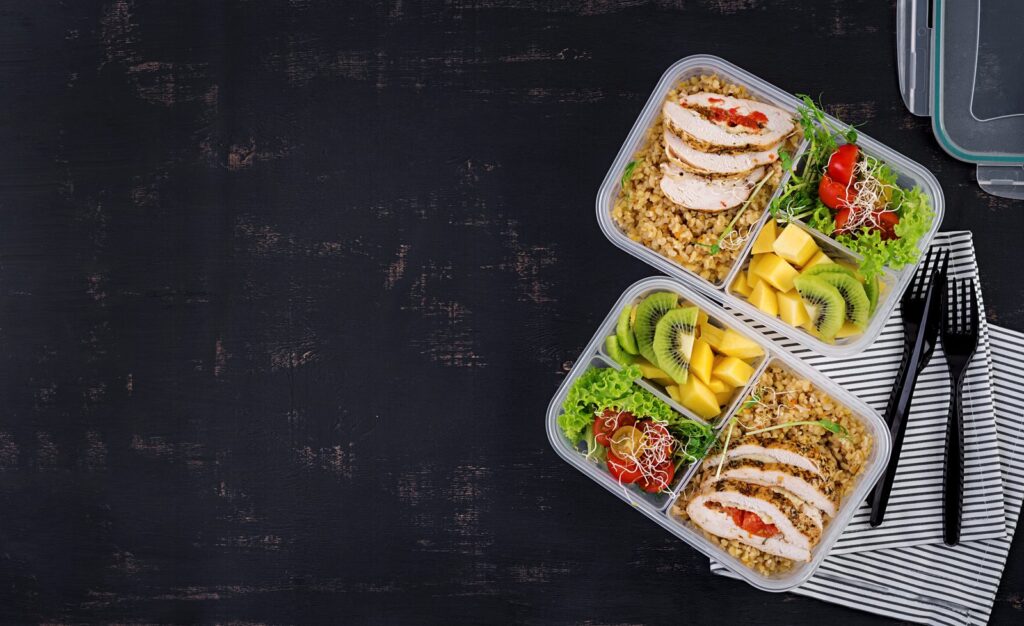
To build muscle, you need three things at the same time: progressive strength training, a small energy surplus (around 10 to 20% above your needs according to a 2019 review on natural bodybuilders) and enough protein, that is 1.4 to 2 g per kilo per day according to the International Society of Sports Nutrition (ISSN). Beyond about 1.6 g per kilo, a large meta-analysis no longer measures any extra gain in lean mass. The rest, carbohydrate and fat, serves to reach the right calorie total and to sustain training.
👉 Free tool: Protein requirements – calculate it in 30 seconds, no sign-up needed.
The key figures at a glance
| Parameter | Benchmark | Source |
|---|---|---|
| Energy surplus | about 10 to 20% above maintenance | Iraki et al., 2019 |
| Target weight gain | 0.25 to 0.5% of body weight per week (beginner or intermediate) | Iraki et al., 2019 |
| Protein per day | 1.4 to 2.0 g/kg (ISSN); 1.6 to 2.2 g/kg (Iraki) | Jäger et al., 2017; Iraki et al., 2019 |
| Protein per meal | 0.25 g/kg or 20 to 40 g, every 3 to 4 hours | Jäger et al., 2017 |
| Carbohydrate | at least 3 to 5 g/kg per day | Iraki et al., 2019 |
| Fat | 0.5 to 1.5 g/kg per day | Iraki et al., 2019 |
These ranges come from the sports literature. French reference intakes, set for the general population, are lower, and we go through them in detail below. If you are just starting out, begin by estimating your needs with our calorie needs tool, then adjust according to how your weight changes.
The calorie surplus: enough, but not too much
Muscle is built from what you eat, but the body does not turn every surplus into muscle. Beyond a certain point, the excess goes mostly to fat. A 2019 narrative review on the off-season preparation of natural bodybuilders recommends an intake about 10 to 20% higher than needs, with a weight gain of 0.25 to 0.5% of body weight per week in beginners and intermediates. Advanced lifters, who progress more slowly, should be more cautious on both dials.
| Your maintenance needs | 10% surplus | 20% surplus |
|---|---|---|
| 2,000 kcal | +200 kcal, so 2,200 kcal | +400 kcal, so 2,400 kcal |
| 2,500 kcal | +250 kcal, so 2,750 kcal | +500 kcal, so 3,000 kcal |
| 3,000 kcal | +300 kcal, so 3,300 kcal | +600 kcal, so 3,600 kcal |
| Your weight | Target gain per week (0.25 to 0.5%) | Over a month (about 4 weeks) |
|---|---|---|
| 60 kg | 150 to 300 g | 0.6 to 1.2 kg |
| 75 kg | 190 to 375 g | 0.75 to 1.5 kg |
| 90 kg | 225 to 450 g | 0.9 to 1.8 kg |
What happens when you force the dose
One study showed this in 39 elite athletes, who added four weight-training sessions a week for 8 to 12 weeks (Garthe et al., 2013). The group that followed a surplus meal plan ate more (3,585 kcal versus 2,964 kcal a day for the free-eating group) and gained more weight (+3.9% versus +1.5%). But its fat mass rose by 15%, versus 3% in the other group, and the gain in lean mass was no different between the two. Everyone improved in strength by 6 to 12%. Eating a lot more did not build more muscle: only more fat.
If the scales go up faster than the range above, trim your portions a little. If they do not move in two or three weeks, add a snack. To estimate your expenditure, our basal metabolic rate and calories burned tools give a rough order of magnitude, not a certainty: your weight over several weeks remains the best judge.
Protein: how much, really?
This is the topic where the figures vary the most, because they do not answer the same question. Public health references aim to cover the needs of almost everyone. Sports recommendations aim at muscle gain.
| Body | Population | Benchmark (g per kilo per day) |
|---|---|---|
| Afssa (now Anses), 2007 | Healthy adult | 0.83 (recommended intake) |
| Afssa, 2007 | Adult under 60, not obese | 0.83 to 2.2 considered satisfactory |
| Afssa, 2007 | Strength athlete maintaining their mass | 1.3 to 1.5 |
| Afssa, 2007 | Athlete seeking to build mass | 2 to 2.5, for limited periods |
| ISSN, 2017 | People who train | 1.4 to 2.0 |
| Morton et al., 2018 | Adults doing resistance training | no measurable extra gain beyond about 1.62 |
The Morton meta-analysis pools 49 trials and 1,863 participants. Protein supplementation increases strength and lean mass during several weeks of training, but beyond about 1.6 g per kilo per day of total intake, lean mass no longer increases. The effect is clearer in people who are already trained and decreases with age. In practice, 1.6 g per kilo is a good starting point: 96 g for 60 kg, 120 g for 75 kg, 144 g for 90 kg.
The Afssa report adds two useful points for high intakes: these periods should not be too prolonged nor exceed 6 months a year, and two thirds of the protein should come from a balanced diet, with the last third able to come from supplements. It sets 2.2 g per kilo as the threshold below which an intake cannot be considered high, on the basis of the liver’s capacity to eliminate nitrogen.
Spreading it over the day
According to the ISSN, a dose of 0.25 g of good-quality protein per kilo, or 20 to 40 g, stimulates muscle protein synthesis. These doses should contain 700 to 3,000 mg of leucine and be spread every 3 to 4 hours. The anabolic effect of exercise lasts at least 24 hours: the exact timing matters less than the total. Before bed, 30 to 40 g of casein increases overnight muscle protein synthesis. On the dairy side, fromage blanc (fresh white cheese) and skyr make easy evening snacks. All the detail around training sessions is in our guide what to eat before and after exercise.
Where to find your protein: the Ciqual figures
Here is what common portions provide, according to the Anses Ciqual 2025 table. The calorie column matters as much as the protein one: when bulking, an energy-dense food can be an asset, whereas when cutting it becomes a trap.
| Food (cooked, unless stated) | Portion | Protein | Energy |
|---|---|---|---|
| Grilled chicken breast | 100 g | 30.1 g | 141 kcal |
| Grilled beef steak | 125 g | 34.5 g | 160 kcal |
| Tuna in brine, drained | 100 g | 26.8 g | 143 kcal |
| Cooked salmon | 125 g | 29.0 g | 256 kcal |
| Hard-boiled eggs | 100 g (2 eggs) | 13.5 g | 134 kcal |
| Cooked lentils | 200 g | 20.2 g | 250 kcal |
| Plain tofu | 100 g | 13.4 g | 147 kcal |
| Fromage blanc, 2-3% fat | 150 g | 10.9 g | 114 kcal |
| Semi-skimmed milk | 250 ml | 8.7 g | 119 kcal |
| Emmental | 30 g | 8.4 g | 112 kcal |
The full ranking, by portion and by calorie, can be found in our guide to the highest-protein foods. If you eat little or no meat, pulses, tofu and dairy products do the job; good combinations are explained in plant protein: sources and combinations. Also think of fish, including oily fish.
Carbohydrate and fat: the fuel for the surplus
Once protein is in place, the rest of the calories are split between carbohydrate and fat. The Iraki review recommends moderate fat (0.5 to 1.5 g per kilo) and at least 3 to 5 g of carbohydrate per kilo, to support training volume. For 75 kg, that means 225 to 375 g of carbohydrate a day at minimum.
Carbohydrate has a specific role after a gruelling session. The European Union authorises the claim that it contributes to the recovery of muscle function after very intense or prolonged exercise that has depleted glycogen, at a rate of 4 g per kilo in total, consumed within the first 4 hours and no later than 6 hours after the effort. The wording applies to efforts that have depleted muscle glycogen, not to just any session.
| Food | Portion | Energy | Carbohydrate | Protein |
|---|---|---|---|---|
| Rolled oats | 60 g | 221 kcal | 34.6 g | 6.4 g |
| Cooked brown rice | 200 g | 374 kcal | 75.2 g | 7.7 g |
| Cooked pasta | 250 g | 418 kcal | 78.5 g | 15.2 g |
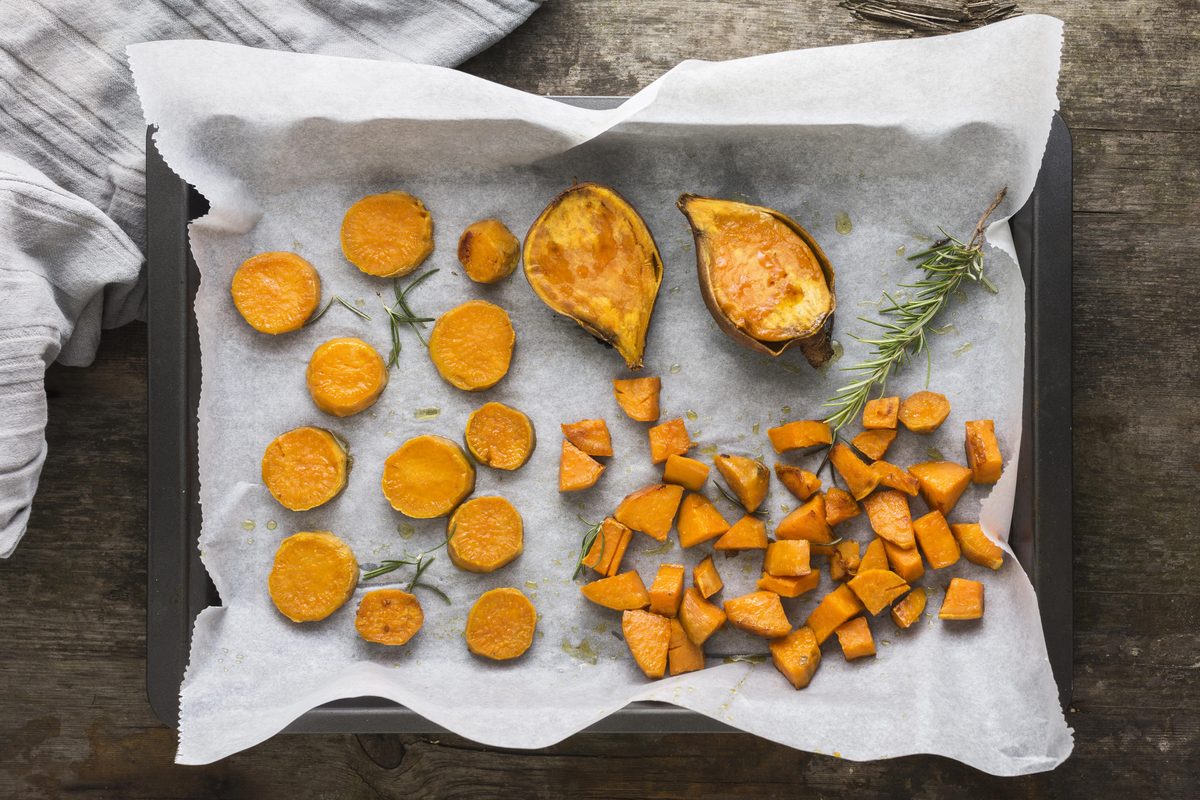
| Cooked sweet potato | 200 g | 158 kcal | 32.6 g | 3.4 g |
| Banana | 120 g | 105 kcal | 23.6 g | 1.3 g |
| Raisins | 30 g | 97 kcal | 22.0 g | 0.9 g |
| Almonds | 30 g | 184 kcal | 2.9 g | 5.6 g |
| Peanut butter | 20 g | 129 kcal | 3.5 g | 4.4 g |
| Olive oil | 10 g (one tablespoon) | 90 kcal | 0 g | 0 g |
Nuts, almond butter and oil are the most effective ways to add calories without volume: a spoonful of olive oil in your rice is 90 kcal more without the plate overflowing. This is often the solution when you cannot manage to eat enough. Wholegrain starchy foods, meanwhile, provide fibre. Manger Bouger recommends them precisely to avoid snacking between meals: an advantage in general, a possible drawback when it is appetite that is lacking.
A typical day, with the numbers
Example for a 75 kg person, built solely from Ciqual values. It is there to show orders of magnitude, not to be followed to the letter: your real needs depend on your height, your activity and your expenditure.
| Meal | Make-up | Energy | Protein |
|---|---|---|---|
| Breakfast | 60 g rolled oats, 250 ml semi-skimmed milk, 1 banana (120 g), 30 g almonds | 629 kcal | 22.0 g |
| Lunch | 100 g grilled chicken, 200 g cooked brown rice, 150 g green beans, 10 g olive oil | 649 kcal | 40.8 g |
| Snack | 150 g fromage blanc 2-3%, 60 g wholemeal bread, 20 g peanut butter | 383 kcal | 20.5 g |
| Dinner | 125 g salmon, 200 g sweet potato, 150 g broccoli, 10 g olive oil | 549 kcal | 37.2 g |
| Total | 2,210 kcal | 120.5 g, or 1.6 g/kg |
The carbohydrate in this day totals about 220 g, or 3 g per kilo: the bottom of the Iraki range. To increase calories, add a snack first (a bowl of oats with milk, a handful of almonds and a piece of fruit), then increase the starchy foods. The protein is already within range.
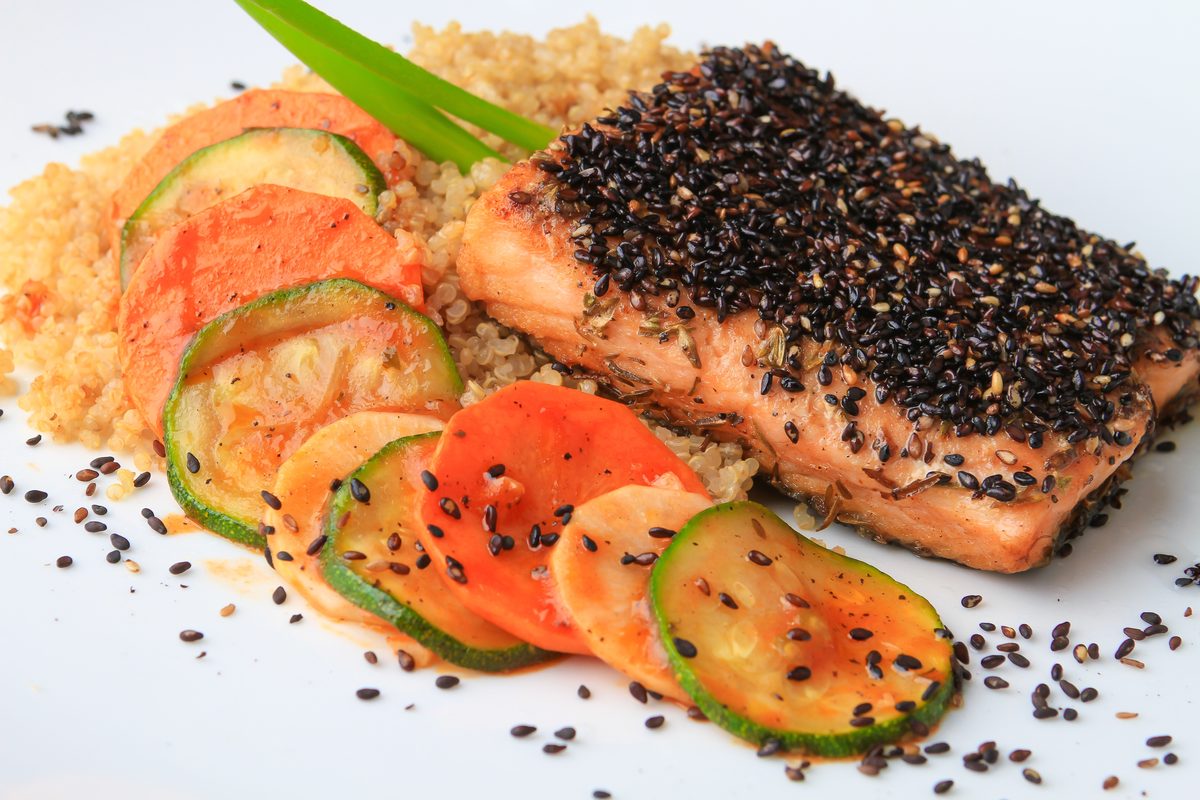
On the recipe side, « protein, starchy food, vegetables » plates are the easiest to adjust: salmon, brown rice and broccoli, chicken, sweet potato and green beans or chilli con carne. For snacks, banana protein pancakes or the protein mug cake. All our muscle-gain recipes and high-protein recipes are sorted by type.
Supplements: useful, never essential
The ISSN is clear: it is possible to meet your protein needs from food. Powder is a practical way to add good-quality protein without many calories, which mainly helps athletes with a high training volume or those short of time. It does not build muscle by itself.
- Whey: a milk protein that is digested quickly and is rich in leucine. If you buy some, compare it by the price per kilo of protein, as our whey comparison does. For a dairy-free alternative, see the plant protein comparison.
- Creatine: 3 to 5 g a day according to the Iraki review, with an effect recognised by EFSA on short, repeated efforts. Everything is in our creatine guide.
- High-calorie powders (« gainers »): read the ingredient list. If maltodextrin appears in it, our article maltodextrin: real danger or false accusation? sets out the facts. For comparison, a bowl of 60 g of rolled oats and 250 ml of semi-skimmed milk provides 340 kcal and 15 g of protein according to Ciqual.
In its 2016 opinion on supplements for athletes, Anses recommends favouring products that comply with the AFNOR NF V 94-001 anti-doping standard, replaced in 2021 by the European standard NF EN 17444, and avoiding poorly controlled sales channels.
Myths about muscle gain
« More protein, more muscle »
Only up to a point. The Morton meta-analysis finds no further gain in lean mass beyond about 1.6 g per kilo. Increasing protein further then brings no measured gain: those calories are better placed in the carbohydrate that supports training.
« When bulking, you can eat anything »
The Garthe study shows the opposite: more calories did not give more muscle, only more fat. And diet quality remains what is recommended for everyone: at least 5 portions of fruit and vegetables a day, wholegrain starchy foods, and pulses at least twice a week, according to the Santé publique France guidelines.
« You have to get your protein down within 30 minutes »
The ISSN writes that the anabolic effect of exercise lasts at least 24 hours and that benefits exist whether protein is taken before or after the session. The optimal timing is mostly a matter of individual tolerance. The day’s total and how it is spread matter more.
« Plant proteins do not build muscle »
A 2025 review concludes that, at equivalent total protein and leucine intakes, plant proteins and blends can produce comparable adaptations in the long term. The main thing is to reach the total and to vary your sources.
« You have to eat every two hours »
The ISSN speaks of intakes spread every 3 to 4 hours, and the Iraki review of 3 to 6 meals a day. Three meals and one or two snacks are plenty.
Precautions
- Kidney or liver disease: a high protein intake should be discussed with your doctor.
- Teenagers: growth has its own needs; our guide teenage nutrition gives the appropriate benchmarks.
- Duration: Afssa recommends limiting periods of very high protein intake to no more than 6 months a year.
- Relationship with food: if counting becomes an obsession or if you alternate between restriction and excess, talk to a healthcare professional.
Frequently asked questions
How long does it take to see results?
With a gain of 0.25 to 0.5% of body weight per week, a 75 kg person gains about 0.75 to 1.5 kg a month, only part of it muscle. Visible changes are measured in months, not weeks.
Can you build muscle without a calorie surplus?
Yes, especially when you are starting out, but more slowly. A moderate surplus makes progress easier; too large a surplus mostly adds fat, as the Garthe study showed in athletes.
Do you have to take whey?
No. The ISSN reminds us that food can meet your needs. Whey is practical, not necessary: the typical day above reaches 1.6 g per kilo with no supplement at all.
How much protein per meal?
The ISSN settles on 0.25 g per kilo or 20 to 40 g per serving, every 3 to 4 hours. For 75 kg, that is about 19 g per meal at minimum, more if you eat fewer meals.
Do carbohydrates in the evening make you fat?
What makes weight change is the day’s total compared with your expenditure. When bulking, evening carbohydrate contributes to the surplus and to replenishing stores, just like lunchtime carbohydrate.
This article is for information only and does not replace the advice of your doctor or a dietitian.
Our sources
- Iraki J, Fitschen P, Espinar S, Helms E. Nutrition Recommendations for Bodybuilders in the Off-Season: A Narrative Review. Sports (Basel), 2019. PMID 31247944.
- Jäger R, Kerksick CM, Campbell BI et al. International Society of Sports Nutrition Position Stand: protein and exercise. Journal of the International Society of Sports Nutrition, 2017. PMID 28642676.
- Morton RW, Murphy KT, McKellar SR et al. A systematic review, meta-analysis and meta-regression of the effect of protein supplementation on resistance training-induced gains in muscle mass and strength in healthy adults. British Journal of Sports Medicine, 2018. PMID 28698222.
- Garthe I, Raastad T, Refsnes PE, Sundgot-Borgen J. Effect of nutritional intervention on body composition and performance in elite athletes. European Journal of Sport Science, 2013. PMID 23679146.
- Afssa (now Anses). Apport en protéines : consommation, qualité, besoins et recommandations. Report, 2007.
- Anses. Avis relatif aux risques liés à la consommation de compléments alimentaires destinés aux sportifs, saisine n° 2014-SA-0008, 2016.
- European Commission. Regulation (EU) No 432/2012, annex: claim on carbohydrate and recovery of muscle function.
- Jahan-Mihan A, El Khoury D, Brewer GJ, Chapleau A. Current Perspectives on Protein Supplementation in Athletes: General Guidance and Special Considerations for Diabetes. Nutrients, 2025. PMID 41305580.
- Anses. Table de composition nutritionnelle des aliments Ciqual, 2025.
- Santé publique France, Manger Bouger. Les recommandations sur l’alimentation, l’activité physique et la sédentarité (PNNS 2019).
Further reading: maltodextrin: real danger or false accusation?, a fast carbohydrate hidden in many products.
Further reading
Food pages: Sweet potato, Brown rice, Chilli con carne, Green beans, Broccoli
Recipes to try: Marinated grilled tofu and brown rice, Teriyaki chicken and rice, Chicken and crunchy vegetable stir-fry
💼 Careers & training: interested in this field professionally? Discover our career pages: sports dietitian, personal trainer.